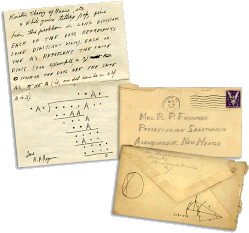
Richard P. Feynman to Frederich Hipp, April 5, 1961
Editor's Note: Frederich Hipp, a high school student, was fascinated by physics ("atomic theory and quantum mechanics in particular") and had built a cloud chamber for his science project. He was concerned, however, that he had little aptitude for math. His question to Feynman: "Can a person of normal mathematical ability master enough math to do work on some professional level in this field?"
Mr. Frederich Hipp
New Milford, Connecticut
Dear Sir:
To do any important work in physics a very good mathematical ability and aptitude are required. Some work in applications can be done without this, but it will not be very inspired.
If you must satisfy your "personal curiosity concerning the mysteries of nature" what will happen if these mysteries turn out to be laws expressed in mathematical terms (as they do turn out to be)? You cannot understand the physical world in any deep or satisfying way without using mathematical reasoning with facility. How do you know you don't have an aptitude for math? Perhaps you disliked your teacher, or it was presented wrong for your type of mind.
What do I advise? Forget it all. Don't be afraid. Do what you get the greatest pleasure from. Is it to build a cloud chamber? Then go on doing things like that. Develop your talents wherever they may lead. Damn the torpedoes—full speed ahead!
What about the math? Maybe (1) you might find it interesting later when you need it to design a new apparatus, or (2) you may not go on with your present ambition to understand everything, but instead find yourself a leader in some other direction, such as building the most ingenious rocket-ship control devices, or (3) biological problems may ultimately absorb all your interest and talent for doing experiments and learning about nature, etc.
If you have any talent, or any occupation that delights you, do it, and do it to the hilt. Don't ask why, or what difficulties you may get into.
If you are an average student in everything and no intellectual pursuit gives you real delight, then I don't know how to advise you. You will have to discuss it with someone else. It is a problem that I have not thought about very hard.
Sincerely,
R. P. Feynman
Edward Teller to Richard P. Feynman, October 27, 1965
Dear Dick:
Congratulations! It is wonderful that you and Julian should share the Nobel Prize, which I am sure you deserve in a like manner, although in no other respect do you seem to resemble each other. I think you will illustrate to the Swedes in an excellent manner that not all Americans are alike.
I wish I could be there to observe you when you are on your best behavior in your interaction with the King of Sweden. It will be quite a phenomenon.
With best wishes,
Edward Teller
Richard P. Feynman to Edward Teller, November 30, 1965
Professor Edward Teller
University of California, Davis
Livermore, California
Dear Edward:
Thank you for your kind letter of congratulations. The phenomenon you wish to observe with my interaction with the King of Sweden frightens me as much as it interests you. Anything can happen, but I suppose nothing really will. I hope I get through it alive. It was good to hear from you.
Sincerely,
Richard P. Feynman
Richard P. Feynman to Sandra Chester, date unknown
Dear Sandra,
I was delighted too when I heard about the Nobel Prize, thinking as you did that my bongo playing was at last recognized. Imagine my chagrin when I realized that there had been some mistake—they cited some marks I made on paper some 15 years ago—and not one word about percussion technique.
I know you share in my disappointment.
Thank you,
Richard P. Feynman
Richard P. Feynman to William Neva, August 14, 1975
Mr. William Neva
Henrietta, New York
Dear Mr. Neva:
Thank you for your letter and for your question about invisibility. I would suggest that the best way to get a good answer to your question is to ask a first-rate professional magician. I do not mean this answer to be facetious or humorous, I am serious. What a magician is very good at is making things appear in an unusual way without violating any physical laws, but by arranging matter in a suitable way. I know of no physical phenomenon such as X-rays, etc., which will create invisibility as you want. Therefore if it is possible at all it will be in accordance with familiar physical phenomenon. That is what a first-rate magician is good for, to create apparently impossible effects from "ordinary" causes.
Sincerely,
Richard P. Feynman
Richard P. Feynman to Arline Feynman, April 3, 1945
Tuesday Morning, 10 AM
Dearest Putzie
You will be interested in two things. First, yesterday I got everything going smoothly and so now I won't be working late hours anymore (I worked till 12 last night), and second, I took a shower. I slept late this morning just for fun and I'm beginning to take a more relaxed view of life (I even read a book for a 1/2 hour before I went to sleep). I think the worst is over and now I can take it easy.
There is a third thing you will be interested in. I love you. You are a strong and beautiful woman. You are not always as strong as other times but it rises and falls like the flow of a mountain stream. I feel I am a reservoir for your strength—without you I would be empty and weak like I was before I knew you—but your moments of strength make me strong and thus I am able to comfort you with your own strength when your stream is low.
I find it much harder these days to write these things to you—there isn't quite the personal intimate contact that I used to get out of letters. I will come Sunday and tell them to you—I will love you Sunday.
No news from here. Oh yes, we have a regular gestapo up here. They took a guy for over an hour in a smoke filled room with men sitting around in the dark—just like in the movies—firing questions at him to prove he was a Communist. They didn't succeed—because he wasn't. The poor guy couldn't work good the next day because they got him out of bed the night before. They claim they are trying to keep spies out of this place. It is dopey, because they leave the gates open at night often by mistake. Don't get scared tho they haven't found out that I am a relativist yet!
I love you sweetheart,
RPF
Richard P. Feynman to Gweneth Feynman, October 11, 1961
October 11, 1961
Hotel Amigo, Brussels
Hello, my sweetheart,
Murray and I kept each other awake arguing until we could stand it no longer. We woke up over Greenland which was even better than last time because we went right over part of it. In London we met other physicists and came to Brussels together. One of them was worried—in his guidebook the Hotel Amigo was not even mentioned. Another had a newer guide—five stars! and rumored to be the best hotel in Europe!
It is very nice indeed. All the furniture is dark red polished wood, in perfect condition; the bathroom is grand, etc. It is really too bad you didn't come to this conference instead of the other one.
At the meeting next day things started slowly. I was to talk in the afternoon. That is what I did, but I didn't really have enough time. We had to stop at 4 PM because of a reception scheduled for that night. I think my talk was OK tho—what I left out was in the written version anyway.
So that evening we went to the palace to meet the king and queen. Taxis waited for us at the hotel—long black ones—and off we went at 5 PM, arriving through the palace gates with a guard on each side, and driving under an arch where men in red coats and white stockings with a black band and gold tassel under each knee opened the doors. More guards at the entrance, in the hallway, along the stairs, and up into a ballroom, sort of. These guards stand very straight, dark grey Russian-type hats with a chin strap, dark coats, white pants, and shiny black leather boots, each holding a sword straight up.
In the "ballroom" we had to wait perhaps 20 minutes. It has inlaid parquet floors, and L in each square (Leopold—the present king's name is Baudoin, or something). The gilded walls are 18th century and on the ceiling are pictures of naked women riding chariots among the clouds or something. Lots of mirrors and gilded chairs with red cushions around the outside edge of the room—just like so many of the palaces we have seen, but this time it was alive, no museum, everything clean and shining and in perfect condition. Several palace officials were milling around among us. One had a list and told me where to stand but I didn't do it right and was out of place later.
The doors at the end of the hall open—guards are there, and the king and queen so we all enter slowly and are introduced one by one to the king and queen. The king has a young semi-dopey face and a strong handshake, the queen is very pretty. (I think her name is Fabriola—a Spanish countess she was.) We exit into another room on the left where there are lots of chairs arranged like in a theatre, with two in front, also facing forward, for K & Q later, and a table at the front with six seats is for illustrious scientists (Niels Bohr, J. Perrin (a Frenchman), J. R. Oppenheimer etc.).
It turns out the king wants to know what we are doing, so the old boys give a set of six dull lectures—all very solemn—no jokes. I had great difficulty sitting in my seat because I had a very stiff and uncomfortable back from sleeping on the plane.
That done, the K & Q pass thru the room where we met them and into a room on right (marked R). All these rooms are very big, gilded, Victorian, fancy, etc. In R are many kinds of uniforms, guards at door, red coats, white coat sort of waiters to serve drinks and hors d'oeuvres, military khaki and medals, black coat—undertaker's type (palace officials).
On the way out of L into R, I am last because I walk slowly from stiff back and find myself talking to a palace official—nice man—teaches math part time at Louvain University, but his main job is secretary to the queen. He had also tutored K when K was young and has been in palace work 23 years. At least I have somebody to talk to, some others are talking to K or to Q; everybody standing up. After a while the professor who is head of conference (Prof. Bragg) grabs me and says K wants to talk to me. I pull boner #1 by wanting to shake hands again when Bragg says, "K, this is Feynman"; apparently wrong—no hand reaches up, but after an embarrassed pause K saves day by shaking my hand. K makes polite remarks on how smart we all must be and how hard it must be to think. I answer, making jokes (having been instructed to do so by Bragg, but what does he know?)—apparently error #2. Anyway, strain is relieved when Bragg brings over some other professor—Heisenberg, I think. K forgets F and F slinks off to resume conversation with Sec'y of Q.
After considerable time—several orange juices and many very very good hors d'oeuvres later—a military uniform with medals comes over to me and says, "Talk to the queen!" Nothing I should like to do better (pretty girl, but don't worry, she's married). F arrives at scene: Q is sitting at table surrounded by three other occupied chairs—no room for F. There are several low coughs, slight confusion, etc. and lo! one of the chairs has been reluctantly vacated. Other two chairs contain one lady and one Priest in Full Regalia (who is also a physicist) named LeMaître.
We have quite a conversation (I listen, but hear no low coughs, and am not evacuated from seat) for perhaps 15 minutes. Sample:
Q: "It must be very hard work thinking about those difficult problems."
F: "No, we all do it for the fun of it."
Q: "It must be hard to learn to change all your ideas" (a thing she got from the six lectures).
F: "No, all those guys who gave you those lectures are old fogeys—all that stuff was in 1926, when I was only eight, so when I learned physics I only had to learn the new ideas. Big problem now is, will we have to change them again?"
Q: "You must feel good, working for peace like that."
F: "No, never enters my head, whether it is for peace or otherwise we don't know."
Q: "Things certainly change fast—many things have changed in the last hundred years."
F: "Not in this palace." (I thought it, but controlled myself.)
F: "Yes," and then launched into lecture on what was known in 1861 and what we found out since—adding at end, laughingly, "Can't help giving a lecture, I guess—I'm a professor, you see. Ha, ha."
Q in desperation, turns to lady on her other side and begins pleasant conversation with same.
After a few moments K comes over, whispers something to Q who stands up and they quietly go out. F returns to Sec'y of Q who personally escorts him out of palace past guards, etc.
I'm so terribly sorry you missed it. I don't know when we'll find another king for you to meet.
I was paged in the hotel this morning just before leaving with the others.
Phone call—I returned to the others and announced, "Gentlemen, that call was from the queen's secretary." All are awestruck, for it did not go unnoticed that F talked longer and harder to Q than seemed proper. I didn't tell them, however, that it was about a meeting we arranged—he was inviting me to his home to meet his wife and two (of four) of his daughters, and see his house. I had invited him to visit us in Pasadena when he came to America and this was his response.
His wife and daughters are very nice and his house was positively beautiful. You would have enjoyed that even more than visiting the palace. He planned and built his house in a Belgian style, somewhat after an old farmhouse style, but done just right. He has many old cabinets and tables inside, right beside newer stuff, very well combined. It is much easier for them to find antiques in Belgium than for you in Los Angeles as there are so many old farms, etc. He has large grounds and a vegetable garden—and a dog—from Washington—somebody gave the king and the K gave to him. The dog has a personality somewhat like Kiwi because I think he is equally loved. He even has a bench in his garden hidden under trees that he made for himself to go and sit on and look at the surrounding countryside. The house is slightly bigger than ours and the grounds are much bigger but not yet landscaped.
I told him I had a queen in a little castle in Pasadena I would like him to see—and he said he hoped he would be able to come to America and see us. He would come if the Q ever visits America again.
I am enclosing a picture of his house, and his card so I don't lose it.
I know you must feel terrible being left out this time—but I'll make it up someday somehow. Don't forget I love you very much and am proud of my family that is and my family that is to be. The secretary and his wife send their best wishes to you and our future.
I wish you were here, or next best thing, that I were there. Kiss SNORK and tell Mom all my adventures and I will be home sooner than you think.
Your husband loves you.
Your husband.
Richard P. Feynman to Alan Woodward, March 31, 1982
Alan Woodward
Southampton, Britain
Dear Mr. Woodward:
Surely increased knowledge is not incompatible with a humanitarian career—no matter what it is you learn. And surely if your professor and fellow students seem to know some things, but seem to be oblivious to other things ("outside their laboratory door," as you say) that does not exclude you from learning what they know whilst remaining deeply aware of what they are blind to.
Of course, the course that physics is taking you has something missing. You cannot develop a personality with physics alone, the rest of your life must be worked in.
Sincerely,
Richard P. Feynman
How did you become involved in this project? I heard about it happening and I felt I had to become directly involved. I have been peripherally involved on a number of projects and other books about my father—a CD-ROM about the Atomic Bomb, a theatrical play, documentaries and a feature film—but this project was one ...]
TERMS AND CONDITIONS By submitting the letter above (the “Letter”), I grant Nicholas Sparks, Willow Holdings, Inc. and Hachette Book Group, Inc. (together “Publisher”) the non-exclusive right to use the Letter in connection with advertising, promotion and/or publicity of Every Breath by Nicholas Sparks (the “Work”) (Publication Date: 10/16/18) in any and all media throughout ...]
"One of the things we can do as artists is to be truthful about what the world holds." —Tony Abbott, author of The Great Jeff and Firegirl Literature is a powerful tool that both reflects our world and widens it, allowing readers to see themselves and to see how people different from themselves ...]
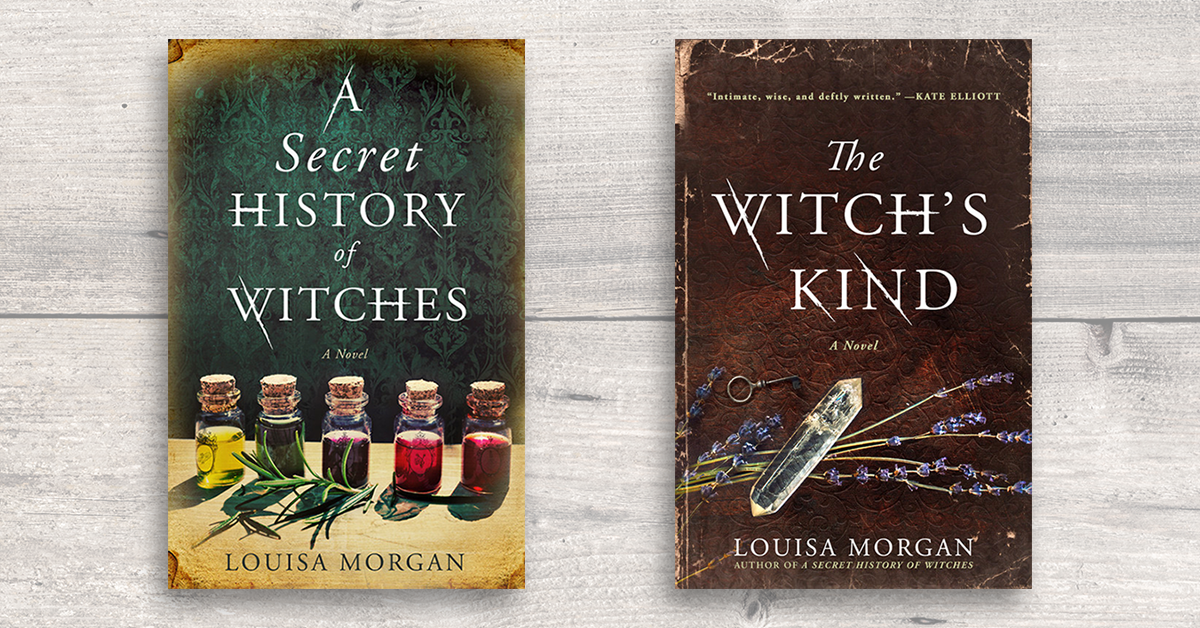
Following is a recap of major news at Hachette Book Group for the week of April 8-12, 2019:
Bestseller news: Susan Page’s The Matriarch (Twelve) debuts this week at #3 on both the Print Hardcover Nonfiction and Combined P&E bestseller lists. Commander in Cheat by Rick Reilly (Hachette Books) debuts at #6 on the Print Hardcover Nonfiction and #7 on the Combined P&E bestsellers list. Katt vs. Dogg by James Patterson & Chris Grabenstein (JIMMY Patterson) makes its debut on the NYT Children’s bestseller (Middle Grade) list at #2. HBG’s distribution clients have three books on the New York Times list this week.
Staffing news: Mary Ann Naples will join Hachette Books as Vice President & Publisher on April 22. Mary Ann was most recently VP & Publisher at the Disney Book Group, and prior to that she was SVP & Publisher of Rodale Books and Rodale Wellness. She has overseen the publication of an impressive roster of best-selling authors and franchises, and has also been an entrepreneur, working in digital start-ups and as a literary agent. Read more about our new colleague here: , .
New HUK warehouse: on Tuesday, the Hely Hutchinson Centre was officially opened by Tim Hely Hutchinson, CEO of Hachette UK until his retirement in 2017. All the publishers within the Hachette UK group and the third-party publishers distributed by Hachette will be distributed from the site by the end of the second quarter of 2019. The Centre is 242,000 square feet, will dispatch 65 million books, and has 150,000 titles in stock. It’s the most advanced of its kind in Europe.
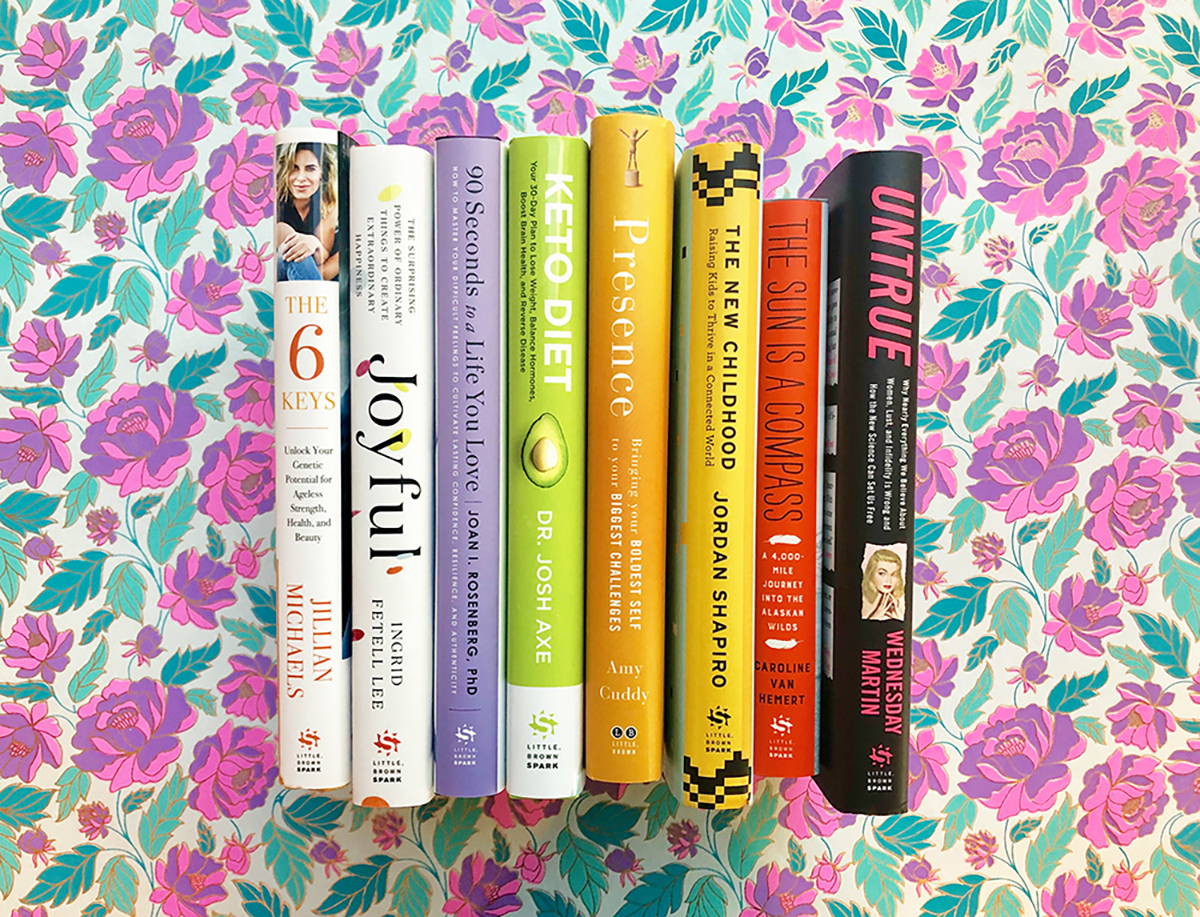
This Mother's Day celebrate mom for her unique personality, her curious mind, and her unconditional love. Here are eight books we think make great Mother's Day gifts—no matter what mom loves to read!
For the adventurous mom...
[hbg-title isbn="9780316414425" /]
For the mom who always knows how to make you smile...
[hbg-title isbn="9780316399265" /]
For the mom who taught you to be bold and follow your dreams...
[hbg-title isbn="9780316256582" /]
For the mom who is your lifelong friend...
[hbg-title isbn="9780316448642" /]
For the new mom...
[hbg-title isbn="9780316437240" /]
For the feminist mom who isn't constricted by convention...
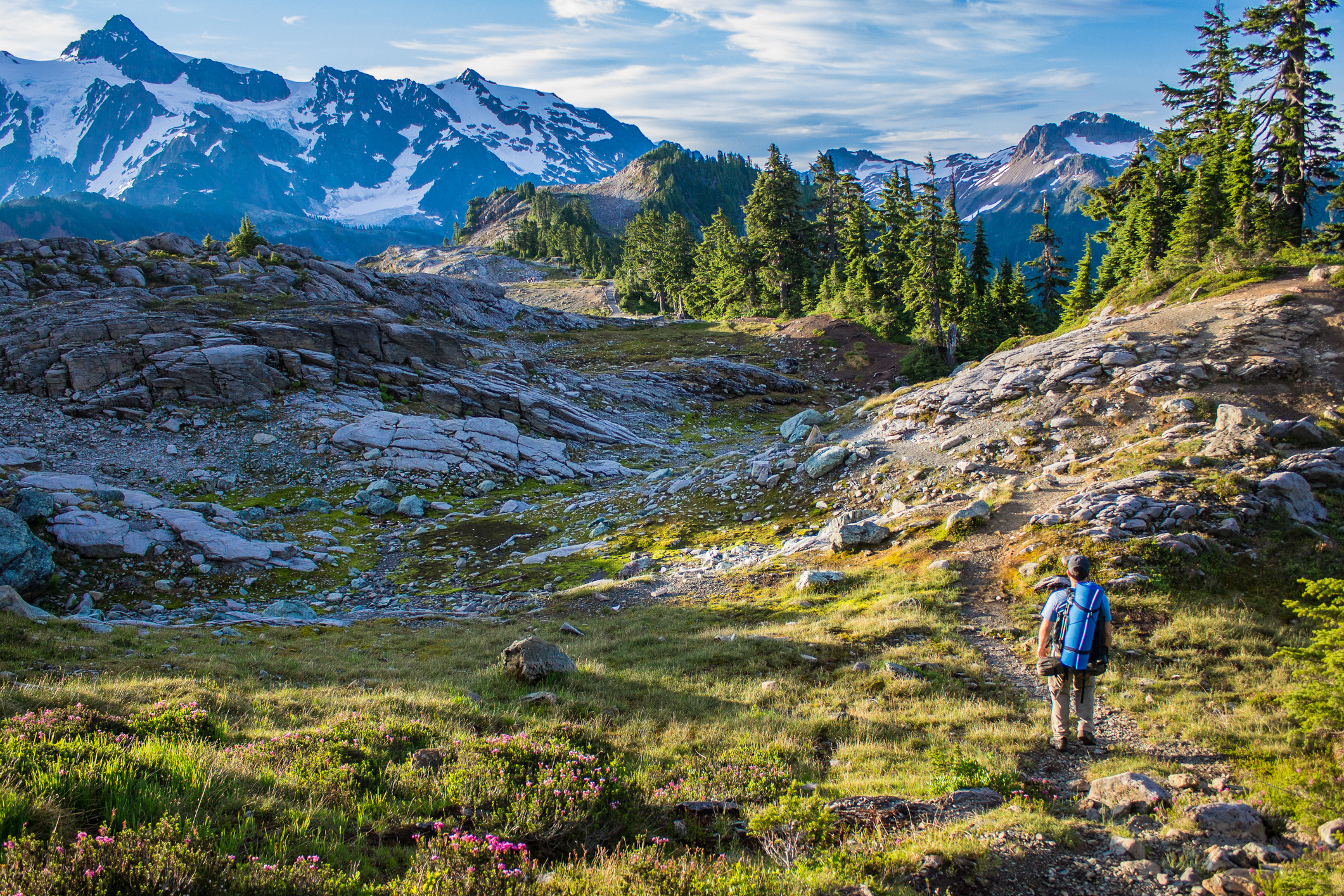
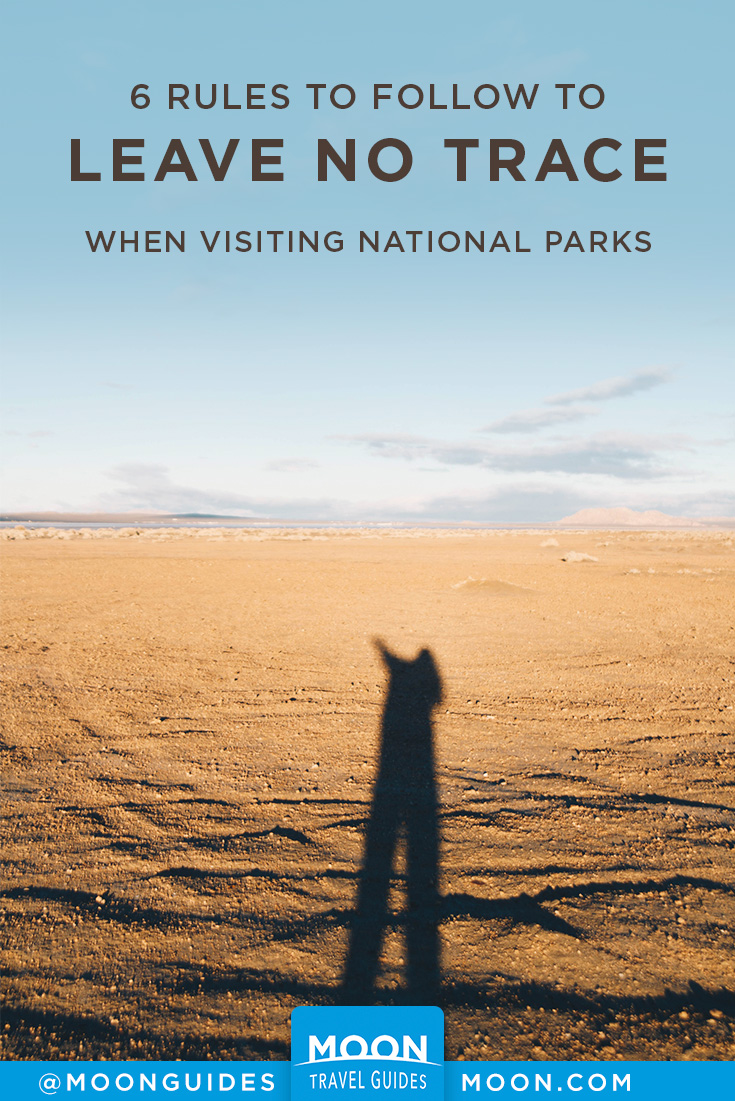
The national parks are some of our country's greatest national treasures—so it's important that while we enjoy them, we also take care of them, especially when hiking and camping in backcountry areas. To help keep the parks pristine, visitors need to take an active role in maintaining them. Here's how you can make the most of the national parks and make sure you leave no trace:
Plan Ahead and Prepare
Hiking in the backcountry is inherently risky. Three miles of hiking at the high elevations in Wyoming may be much harder than three miles in your neighborhood park back home. Choose appropriate routes for mileage and elevation gain with this in mind, and carry hiking essentials.
Travel and Camp on Durable Surfaces
In front-country and backcountry campgrounds, camp in designated sites. Protect fragile plants by staying on trails even in mud, refusing to cut switchbacks, and walking single file. If you must walk off the trail, step on rocks, snow, or dry grasses rather than wet soil and delicate plants.
Leave What You Find
Flowers, rocks, and fur tufts on shrubs are protected park resources, as are historical and cultural items. For lunch stops and camping, sit on rocks or logs where you find them rather than moving them to accommodate comfort.
Minimize Campfire Impacts
Make fires in designated fire pits only, not on beaches. Use small wrist-sized dead and downed wood, not live branches. Be aware: Fires and collecting firewood are not permitted in some places in the parks.
Respect Wildlife
Bring along binoculars, spotting scopes, and telephoto lenses to aid in watching wildlife. Keep your distance. Do not feed any wildlife, even ground squirrels. Once fed, they can become more aggressive.
Be Considerate of Other Visitors
In particular, be aware of cell phones and how their use or noise cuts into the natural soundscapes of the parks.
For formation on Leave No Trace, visit .
Happy camping!
Ready to plan your parks adventure?
[hbg-title isbn="9781640492776" summary="They’ve been dubbed America’s best idea for a reason: get inspired, get outdoors, and discover the wild beauty of the United States with Moon USA National Parks."/]
[hbg-newsletter call_to_action="Want travel inspiration sent straight to your inbox?" button_text="Sign up" list_id_override="c89b0f3998/]
Pin it for Later
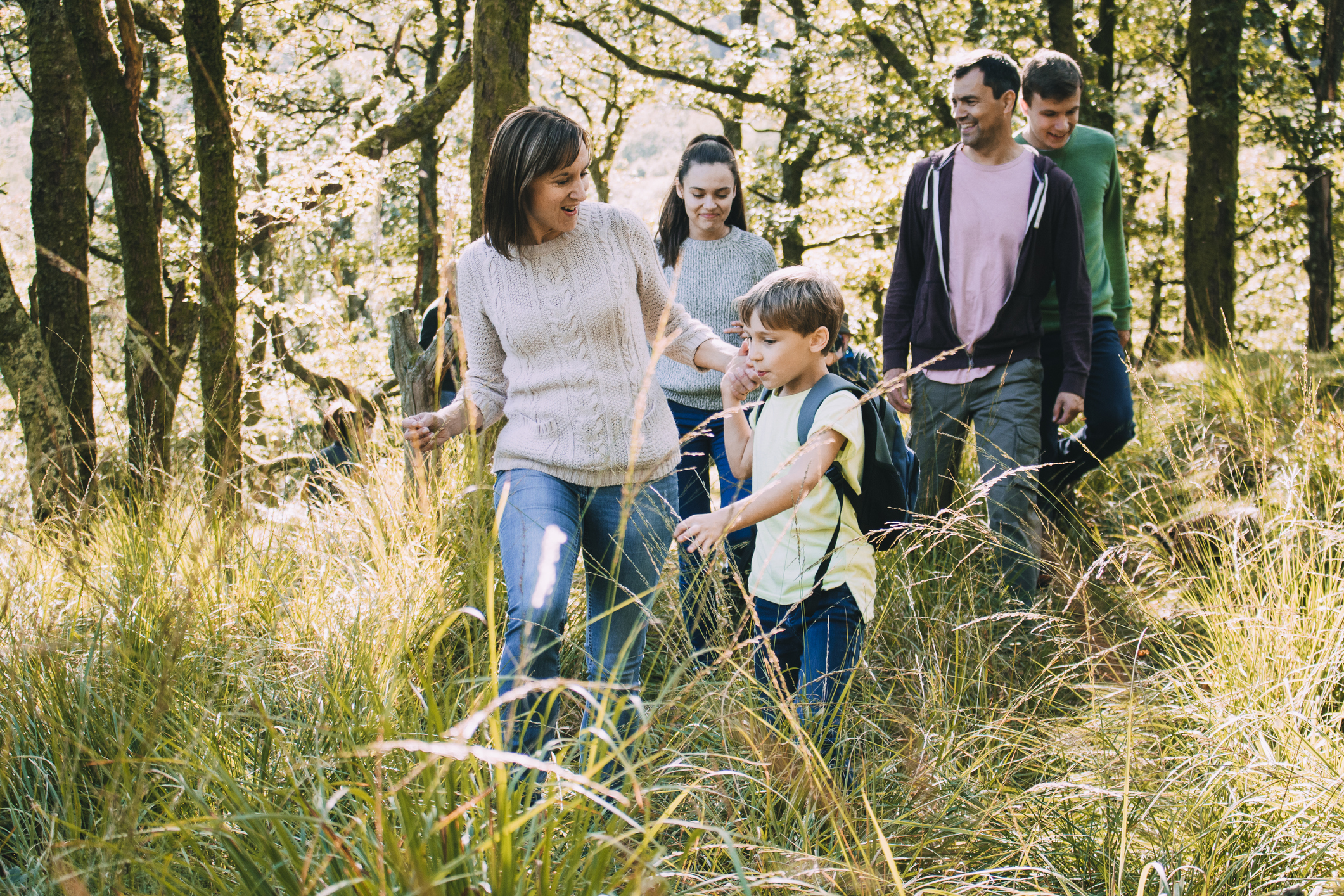
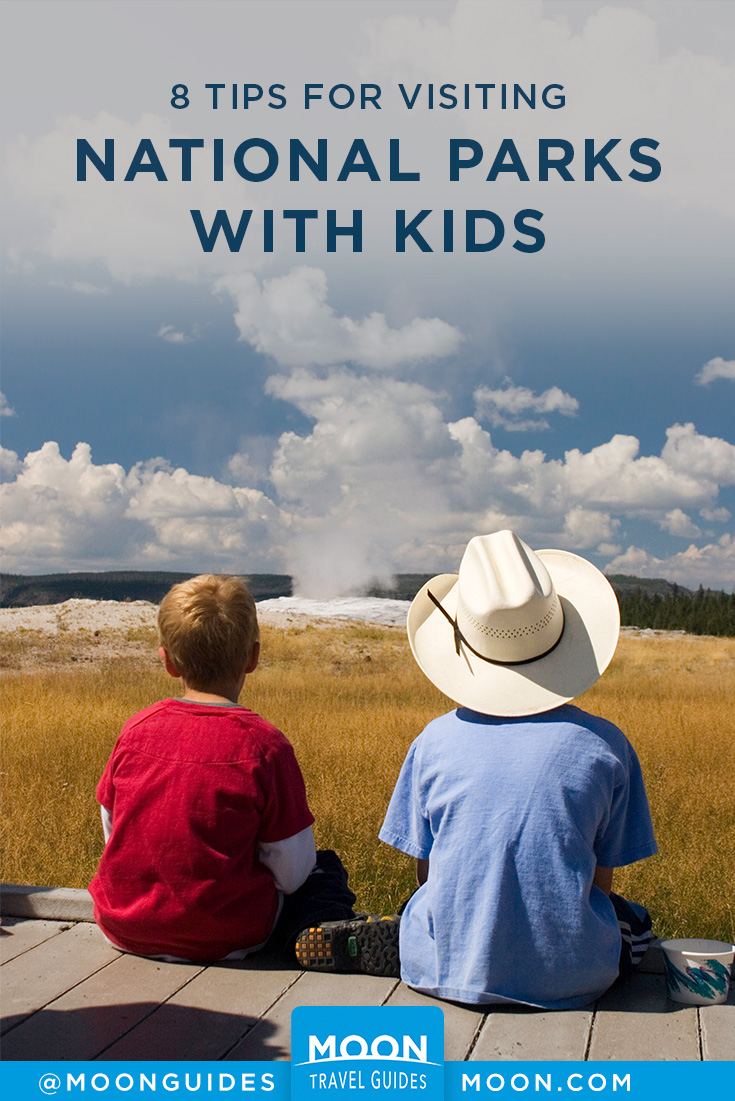
Getting kids interested in national parks can be a challenge—and so is keeping them entertained once you get there! Here are a few tips for helping your family make the most of its time in the great outdoors:
1. Can’t get your kids off their phones? Encourage them to take photos for a family album that focuses on the variety of detail on trails. Put each child in charge of a certain thing: plants, rocks, tree bark, animals, water, etc.
2. Get your younger kids involved in Junior Ranger programs! Some parks have programs for older kids, too.
3. Prepare kids for the elements with appropriate layers of clothing, footwear, mittens, and hats. Don’t forget sunscreen and bug spray, too!
4. Check your park’s specific NPS site before you leave home—you’ll find special kid-friendly programs and activities under “kids.”
5. Play trail games like “I Spy” to keep kids engaged along the way.
6. Choose shorter trails for young kids with attractions as destinations: lakes, boulders to play on, driftwood on beaches.
7. Check out the program: 4th graders can visit all national parks for free!
8. Prevent meltdowns by having snacks and water handy, even on short hikes or adventures.
For more tips for exploring the national parks with your family, pick up:
[hbg-title isbn="9781640492790" summary="They’ve been dubbed America’s best idea for a reason: get inspired, get outdoors, and discover the wild beauty of the United States with Moon USA National Parks."]
[hbg-post heading="What to read next:" id="684728,672906,669869" /]
Pin it for Later
Following is a recap of major news at Hachette Book Group for the week of April 15-19, 2019:
HBG Community Service Day: we had our second annual Community Service Day on Wednesday, and close to 600 HBG employees volunteered in a wide variety of activities – preparing food in community kitchens, delivering hot meals to homebound seniors, reading with children, repainting rooms in community centers, gardening in green spaces, caring for animals in rescue shelters, assisting with literacy and mental health awareness projects, creating handmade cards for hospitalized children, and much more.
Bestseller news: James Patterson’s The Fall of Crazy House (JIMMY Patterson) debuts at #4 on the New York Times YA Hardcover list. Also, debuting on the NYT lists are William W. Li’s Eat to Beat Disease (GCP) at #10 on the Advice, How-To, & Misc., and Miracle at St. Andrews by James Patterson & Peter de Jonge (LB) at #13 on the Print HC Fiction list. HBG’s distribution clients have a #1 bestseller with Jeff Kinney’s new addition to the Diary of the Wimpy Kid franchise, Diary of an Awesome Friendly Kid (Abrams) at the top of the Middle Grade Hardcover list. And David Sax’s The Revenge of the Analog (PublicAffairs) makes a surprise appearance at #1 on the Washington Post bestseller list this week.
LA Times Book Prize: Beth Macy’s Dopesick: Dealers, Doctors, and the Drug Company that Addicted America (LB) has won the 2018 for Science & Technology.
Ondaatje Prize shortlist: Adam Weymouth’s Kings of the Yukon (LB) has been named to the Royal Society of Literature’s 2019 shortlist. The £10,000 prize is awarded annually to a book of the highest literary merit – fiction, non-fiction, or poetry – which best evokes the spirit of a place. The winner will be announced May 13.
Major launch: Ali Benjamin’s highly anticipated The Next Great Paulie Fink (LBYR) went on sale this week with an interview on NPR’s Here & Now, coverage to come in The Denver Post, New York Times, People, and the Wall Street Journal, and a two-week national tour.


 Richard P. Feynman to Frederich Hipp, April 5, 1961



 Following is a recap of major news at Hachette Book Group for the week of April 8-12, 2019:
Bestseller news: Susan Page’s The Matriarch (Twelve) debuts this week at #3 on both the Print Hardcover Nonfiction and Combined P&E bestseller lists. Commander in Cheat by Rick Reilly (Hachette Books) debuts at #6 on the Print Hardcover Nonfiction and #7 on the Combined P&E bestsellers list. Katt vs. Dogg by James Patterson & Chris Grabenstein (JIMMY Patterson) makes its debut on the NYT Children’s bestseller (Middle Grade) list at #2. HBG’s distribution clients have three books on the New York Times list this week.
Staffing news: Mary Ann Naples will join Hachette Books as Vice President & Publisher on April 22. Mary Ann was most recently VP & Publisher at the Disney Book Group, and prior to that she was SVP & Publisher of Rodale Books and Rodale Wellness. She has overseen the publication of an impressive roster of best-selling authors and franchises, and has also been an entrepreneur, working in digital start-ups and as a literary agent. Read more about our new colleague here: , .
New HUK warehouse: on Tuesday, the Hely Hutchinson Centre was officially opened by Tim Hely Hutchinson, CEO of Hachette UK until his retirement in 2017. All the publishers within the Hachette UK group and the third-party publishers distributed by Hachette will be distributed from the site by the end of the second quarter of 2019. The Centre is 242,000 square feet, will dispatch 65 million books, and has 150,000 titles in stock. It’s the most advanced of its kind in Europe.
Following is a recap of major news at Hachette Book Group for the week of April 8-12, 2019:
Bestseller news: Susan Page’s The Matriarch (Twelve) debuts this week at #3 on both the Print Hardcover Nonfiction and Combined P&E bestseller lists. Commander in Cheat by Rick Reilly (Hachette Books) debuts at #6 on the Print Hardcover Nonfiction and #7 on the Combined P&E bestsellers list. Katt vs. Dogg by James Patterson & Chris Grabenstein (JIMMY Patterson) makes its debut on the NYT Children’s bestseller (Middle Grade) list at #2. HBG’s distribution clients have three books on the New York Times list this week.
Staffing news: Mary Ann Naples will join Hachette Books as Vice President & Publisher on April 22. Mary Ann was most recently VP & Publisher at the Disney Book Group, and prior to that she was SVP & Publisher of Rodale Books and Rodale Wellness. She has overseen the publication of an impressive roster of best-selling authors and franchises, and has also been an entrepreneur, working in digital start-ups and as a literary agent. Read more about our new colleague here: , .
New HUK warehouse: on Tuesday, the Hely Hutchinson Centre was officially opened by Tim Hely Hutchinson, CEO of Hachette UK until his retirement in 2017. All the publishers within the Hachette UK group and the third-party publishers distributed by Hachette will be distributed from the site by the end of the second quarter of 2019. The Centre is 242,000 square feet, will dispatch 65 million books, and has 150,000 titles in stock. It’s the most advanced of its kind in Europe.

 This Mother's Day celebrate mom for her unique personality, her curious mind, and her unconditional love. Here are eight books we think make great Mother's Day gifts—no matter what mom loves to read!

 The national parks are some of our country's greatest national treasures—so it's important that while we enjoy them, we also take care of them, especially when hiking and camping in backcountry areas. To help keep the parks pristine, visitors need to take an active role in maintaining them. Here's how you can make the most of the national parks and make sure you leave no trace:
Plan Ahead and Prepare
Hiking in the backcountry is inherently risky. Three miles of hiking at the high elevations in Wyoming may be much harder than three miles in your neighborhood park back home. Choose appropriate routes for mileage and elevation gain with this in mind, and carry hiking essentials.
Travel and Camp on Durable Surfaces
In front-country and backcountry campgrounds, camp in designated sites. Protect fragile plants by staying on trails even in mud, refusing to cut switchbacks, and walking single file. If you must walk off the trail, step on rocks, snow, or dry grasses rather than wet soil and delicate plants.
Leave What You Find
Flowers, rocks, and fur tufts on shrubs are protected park resources, as are historical and cultural items. For lunch stops and camping, sit on rocks or logs where you find them rather than moving them to accommodate comfort.
Minimize Campfire Impacts
Make fires in designated fire pits only, not on beaches. Use small wrist-sized dead and downed wood, not live branches. Be aware: Fires and collecting firewood are not permitted in some places in the parks.
Respect Wildlife
Bring along binoculars, spotting scopes, and telephoto lenses to aid in watching wildlife. Keep your distance. Do not feed any wildlife, even ground squirrels. Once fed, they can become more aggressive.
Be Considerate of Other Visitors
In particular, be aware of cell phones and how their use or noise cuts into the natural soundscapes of the parks.
For formation on Leave No Trace, visit .
Happy camping!
Ready to plan your parks adventure?
[hbg-title isbn="9781640492776" summary="They’ve been dubbed America’s best idea for a reason: get inspired, get outdoors, and discover the wild beauty of the United States with Moon USA National Parks."/]
[hbg-newsletter call_to_action="Want travel inspiration sent straight to your inbox?" button_text="Sign up" list_id_override="c89b0f3998/]
Pin it for Later
The national parks are some of our country's greatest national treasures—so it's important that while we enjoy them, we also take care of them, especially when hiking and camping in backcountry areas. To help keep the parks pristine, visitors need to take an active role in maintaining them. Here's how you can make the most of the national parks and make sure you leave no trace:
Plan Ahead and Prepare
Hiking in the backcountry is inherently risky. Three miles of hiking at the high elevations in Wyoming may be much harder than three miles in your neighborhood park back home. Choose appropriate routes for mileage and elevation gain with this in mind, and carry hiking essentials.
Travel and Camp on Durable Surfaces
In front-country and backcountry campgrounds, camp in designated sites. Protect fragile plants by staying on trails even in mud, refusing to cut switchbacks, and walking single file. If you must walk off the trail, step on rocks, snow, or dry grasses rather than wet soil and delicate plants.
Leave What You Find
Flowers, rocks, and fur tufts on shrubs are protected park resources, as are historical and cultural items. For lunch stops and camping, sit on rocks or logs where you find them rather than moving them to accommodate comfort.
Minimize Campfire Impacts
Make fires in designated fire pits only, not on beaches. Use small wrist-sized dead and downed wood, not live branches. Be aware: Fires and collecting firewood are not permitted in some places in the parks.
Respect Wildlife
Bring along binoculars, spotting scopes, and telephoto lenses to aid in watching wildlife. Keep your distance. Do not feed any wildlife, even ground squirrels. Once fed, they can become more aggressive.
Be Considerate of Other Visitors
In particular, be aware of cell phones and how their use or noise cuts into the natural soundscapes of the parks.
For formation on Leave No Trace, visit .
Happy camping!
Ready to plan your parks adventure?
[hbg-title isbn="9781640492776" summary="They’ve been dubbed America’s best idea for a reason: get inspired, get outdoors, and discover the wild beauty of the United States with Moon USA National Parks."/]
[hbg-newsletter call_to_action="Want travel inspiration sent straight to your inbox?" button_text="Sign up" list_id_override="c89b0f3998/]
Pin it for Later

 Getting kids interested in national parks can be a challenge—and so is keeping them entertained once you get there! Here are a few tips for helping your family make the most of its time in the great outdoors:
1. Can’t get your kids off their phones? Encourage them to take photos for a family album that focuses on the variety of detail on trails. Put each child in charge of a certain thing: plants, rocks, tree bark, animals, water, etc.
2. Get your younger kids involved in Junior Ranger programs! Some parks have programs for older kids, too.
3. Prepare kids for the elements with appropriate layers of clothing, footwear, mittens, and hats. Don’t forget sunscreen and bug spray, too!
4. Check your park’s specific NPS site before you leave home—you’ll find special kid-friendly programs and activities under “kids.”
5. Play trail games like “I Spy” to keep kids engaged along the way.
6. Choose shorter trails for young kids with attractions as destinations: lakes, boulders to play on, driftwood on beaches.
7. Check out the program: 4th graders can visit all national parks for free!
8. Prevent meltdowns by having snacks and water handy, even on short hikes or adventures.
For more tips for exploring the national parks with your family, pick up:
[hbg-title isbn="9781640492790" summary="They’ve been dubbed America’s best idea for a reason: get inspired, get outdoors, and discover the wild beauty of the United States with Moon USA National Parks."]
[hbg-post heading="What to read next:" id="684728,672906,669869" /]
Pin it for Later
Getting kids interested in national parks can be a challenge—and so is keeping them entertained once you get there! Here are a few tips for helping your family make the most of its time in the great outdoors:
1. Can’t get your kids off their phones? Encourage them to take photos for a family album that focuses on the variety of detail on trails. Put each child in charge of a certain thing: plants, rocks, tree bark, animals, water, etc.
2. Get your younger kids involved in Junior Ranger programs! Some parks have programs for older kids, too.
3. Prepare kids for the elements with appropriate layers of clothing, footwear, mittens, and hats. Don’t forget sunscreen and bug spray, too!
4. Check your park’s specific NPS site before you leave home—you’ll find special kid-friendly programs and activities under “kids.”
5. Play trail games like “I Spy” to keep kids engaged along the way.
6. Choose shorter trails for young kids with attractions as destinations: lakes, boulders to play on, driftwood on beaches.
7. Check out the program: 4th graders can visit all national parks for free!
8. Prevent meltdowns by having snacks and water handy, even on short hikes or adventures.
For more tips for exploring the national parks with your family, pick up:
[hbg-title isbn="9781640492790" summary="They’ve been dubbed America’s best idea for a reason: get inspired, get outdoors, and discover the wild beauty of the United States with Moon USA National Parks."]
[hbg-post heading="What to read next:" id="684728,672906,669869" /]
Pin it for Later

 Following is a recap of major news at Hachette Book Group for the week of April 15-19, 2019:
HBG Community Service Day: we had our second annual Community Service Day on Wednesday, and close to 600 HBG employees volunteered in a wide variety of activities – preparing food in community kitchens, delivering hot meals to homebound seniors, reading with children, repainting rooms in community centers, gardening in green spaces, caring for animals in rescue shelters, assisting with literacy and mental health awareness projects, creating handmade cards for hospitalized children, and much more.
Bestseller news: James Patterson’s The Fall of Crazy House (JIMMY Patterson) debuts at #4 on the New York Times YA Hardcover list. Also, debuting on the NYT lists are William W. Li’s Eat to Beat Disease (GCP) at #10 on the Advice, How-To, & Misc., and Miracle at St. Andrews by James Patterson & Peter de Jonge (LB) at #13 on the Print HC Fiction list. HBG’s distribution clients have a #1 bestseller with Jeff Kinney’s new addition to the Diary of the Wimpy Kid franchise, Diary of an Awesome Friendly Kid (Abrams) at the top of the Middle Grade Hardcover list. And David Sax’s The Revenge of the Analog (PublicAffairs) makes a surprise appearance at #1 on the Washington Post bestseller list this week.
LA Times Book Prize: Beth Macy’s Dopesick: Dealers, Doctors, and the Drug Company that Addicted America (LB) has won the 2018 for Science & Technology.
Ondaatje Prize shortlist: Adam Weymouth’s Kings of the Yukon (LB) has been named to the Royal Society of Literature’s 2019 shortlist. The £10,000 prize is awarded annually to a book of the highest literary merit – fiction, non-fiction, or poetry – which best evokes the spirit of a place. The winner will be announced May 13.
Major launch: Ali Benjamin’s highly anticipated The Next Great Paulie Fink (LBYR) went on sale this week with an interview on NPR’s Here & Now, coverage to come in The Denver Post, New York Times, People, and the Wall Street Journal, and a two-week national tour.
Following is a recap of major news at Hachette Book Group for the week of April 15-19, 2019:
HBG Community Service Day: we had our second annual Community Service Day on Wednesday, and close to 600 HBG employees volunteered in a wide variety of activities – preparing food in community kitchens, delivering hot meals to homebound seniors, reading with children, repainting rooms in community centers, gardening in green spaces, caring for animals in rescue shelters, assisting with literacy and mental health awareness projects, creating handmade cards for hospitalized children, and much more.
Bestseller news: James Patterson’s The Fall of Crazy House (JIMMY Patterson) debuts at #4 on the New York Times YA Hardcover list. Also, debuting on the NYT lists are William W. Li’s Eat to Beat Disease (GCP) at #10 on the Advice, How-To, & Misc., and Miracle at St. Andrews by James Patterson & Peter de Jonge (LB) at #13 on the Print HC Fiction list. HBG’s distribution clients have a #1 bestseller with Jeff Kinney’s new addition to the Diary of the Wimpy Kid franchise, Diary of an Awesome Friendly Kid (Abrams) at the top of the Middle Grade Hardcover list. And David Sax’s The Revenge of the Analog (PublicAffairs) makes a surprise appearance at #1 on the Washington Post bestseller list this week.
LA Times Book Prize: Beth Macy’s Dopesick: Dealers, Doctors, and the Drug Company that Addicted America (LB) has won the 2018 for Science & Technology.
Ondaatje Prize shortlist: Adam Weymouth’s Kings of the Yukon (LB) has been named to the Royal Society of Literature’s 2019 shortlist. The £10,000 prize is awarded annually to a book of the highest literary merit – fiction, non-fiction, or poetry – which best evokes the spirit of a place. The winner will be announced May 13.
Major launch: Ali Benjamin’s highly anticipated The Next Great Paulie Fink (LBYR) went on sale this week with an interview on NPR’s Here & Now, coverage to come in The Denver Post, New York Times, People, and the Wall Street Journal, and a two-week national tour.