Richard P. Feynman to Gweneth Feynman, October 11, 1961
October 11, 1961
Hotel Amigo, Brussels
Hello, my sweetheart,
Murray and I kept each other awake arguing until we could stand it no longer. We woke up over Greenland which was even better than last time because we went right over part of it. In London we met other physicists and came to Brussels together. One of them was worried—in his guidebook the Hotel Amigo was not even mentioned. Another had a newer guide—five stars! and rumored to be the best hotel in Europe!
It is very nice indeed. All the furniture is dark red polished wood, in perfect condition; the bathroom is grand, etc. It is really too bad you didn't come to this conference instead of the other one.
At the meeting next day things started slowly. I was to talk in the afternoon. That is what I did, but I didn't really have enough time. We had to stop at 4 PM because of a reception scheduled for that night. I think my talk was OK tho—what I left out was in the written version anyway.
So that evening we went to the palace to meet the king and queen. Taxis waited for us at the hotel—long black ones—and off we went at 5 PM, arriving through the palace gates with a guard on each side, and driving under an arch where men in red coats and white stockings with a black band and gold tassel under each knee opened the doors. More guards at the entrance, in the hallway, along the stairs, and up into a ballroom, sort of. These guards stand very straight, dark grey Russian-type hats with a chin strap, dark coats, white pants, and shiny black leather boots, each holding a sword straight up.
In the "ballroom" we had to wait perhaps 20 minutes. It has inlaid parquet floors, and L in each square (Leopold—the present king's name is Baudoin, or something). The gilded walls are 18th century and on the ceiling are pictures of naked women riding chariots among the clouds or something. Lots of mirrors and gilded chairs with red cushions around the outside edge of the room—just like so many of the palaces we have seen, but this time it was alive, no museum, everything clean and shining and in perfect condition. Several palace officials were milling around among us. One had a list and told me where to stand but I didn't do it right and was out of place later.
The doors at the end of the hall open—guards are there, and the king and queen so we all enter slowly and are introduced one by one to the king and queen. The king has a young semi-dopey face and a strong handshake, the queen is very pretty. (I think her name is Fabriola—a Spanish countess she was.) We exit into another room on the left where there are lots of chairs arranged like in a theatre, with two in front, also facing forward, for K & Q later, and a table at the front with six seats is for illustrious scientists (Niels Bohr, J. Perrin (a Frenchman), J. R. Oppenheimer etc.).
It turns out the king wants to know what we are doing, so the old boys give a set of six dull lectures—all very solemn—no jokes. I had great difficulty sitting in my seat because I had a very stiff and uncomfortable back from sleeping on the plane.
That done, the K & Q pass thru the room where we met them and into a room on right (marked R). All these rooms are very big, gilded, Victorian, fancy, etc. In R are many kinds of uniforms, guards at door, red coats, white coat sort of waiters to serve drinks and hors d'oeuvres, military khaki and medals, black coat—undertaker's type (palace officials).
On the way out of L into R, I am last because I walk slowly from stiff back and find myself talking to a palace official—nice man—teaches math part time at Louvain University, but his main job is secretary to the queen. He had also tutored K when K was young and has been in palace work 23 years. At least I have somebody to talk to, some others are talking to K or to Q; everybody standing up. After a while the professor who is head of conference (Prof. Bragg) grabs me and says K wants to talk to me. I pull boner #1 by wanting to shake hands again when Bragg says, "K, this is Feynman"; apparently wrong—no hand reaches up, but after an embarrassed pause K saves day by shaking my hand. K makes polite remarks on how smart we all must be and how hard it must be to think. I answer, making jokes (having been instructed to do so by Bragg, but what does he know?)—apparently error #2. Anyway, strain is relieved when Bragg brings over some other professor—Heisenberg, I think. K forgets F and F slinks off to resume conversation with Sec'y of Q.
After considerable time—several orange juices and many very very good hors d'oeuvres later—a military uniform with medals comes over to me and says, "Talk to the queen!" Nothing I should like to do better (pretty girl, but don't worry, she's married). F arrives at scene: Q is sitting at table surrounded by three other occupied chairs—no room for F. There are several low coughs, slight confusion, etc. and lo! one of the chairs has been reluctantly vacated. Other two chairs contain one lady and one Priest in Full Regalia (who is also a physicist) named LeMaître.
We have quite a conversation (I listen, but hear no low coughs, and am not evacuated from seat) for perhaps 15 minutes. Sample:
Q: "It must be very hard work thinking about those difficult problems."
F: "No, we all do it for the fun of it."
Q: "It must be hard to learn to change all your ideas" (a thing she got from the six lectures).
F: "No, all those guys who gave you those lectures are old fogeys—all that stuff was in 1926, when I was only eight, so when I learned physics I only had to learn the new ideas. Big problem now is, will we have to change them again?"
Q: "You must feel good, working for peace like that."
F: "No, never enters my head, whether it is for peace or otherwise we don't know."
Q: "Things certainly change fast—many things have changed in the last hundred years."
F: "Not in this palace." (I thought it, but controlled myself.)
F: "Yes," and then launched into lecture on what was known in 1861 and what we found out since—adding at end, laughingly, "Can't help giving a lecture, I guess—I'm a professor, you see. Ha, ha."
Q in desperation, turns to lady on her other side and begins pleasant conversation with same.
After a few moments K comes over, whispers something to Q who stands up and they quietly go out. F returns to Sec'y of Q who personally escorts him out of palace past guards, etc.
I'm so terribly sorry you missed it. I don't know when we'll find another king for you to meet.
I was paged in the hotel this morning just before leaving with the others.
Phone call—I returned to the others and announced, "Gentlemen, that call was from the queen's secretary." All are awestruck, for it did not go unnoticed that F talked longer and harder to Q than seemed proper. I didn't tell them, however, that it was about a meeting we arranged—he was inviting me to his home to meet his wife and two (of four) of his daughters, and see his house. I had invited him to visit us in Pasadena when he came to America and this was his response.
His wife and daughters are very nice and his house was positively beautiful. You would have enjoyed that even more than visiting the palace. He planned and built his house in a Belgian style, somewhat after an old farmhouse style, but done just right. He has many old cabinets and tables inside, right beside newer stuff, very well combined. It is much easier for them to find antiques in Belgium than for you in Los Angeles as there are so many old farms, etc. He has large grounds and a vegetable garden—and a dog—from Washington—somebody gave the king and the K gave to him. The dog has a personality somewhat like Kiwi because I think he is equally loved. He even has a bench in his garden hidden under trees that he made for himself to go and sit on and look at the surrounding countryside. The house is slightly bigger than ours and the grounds are much bigger but not yet landscaped.
I told him I had a queen in a little castle in Pasadena I would like him to see—and he said he hoped he would be able to come to America and see us. He would come if the Q ever visits America again.
I am enclosing a picture of his house, and his card so I don't lose it.
I know you must feel terrible being left out this time—but I'll make it up someday somehow. Don't forget I love you very much and am proud of my family that is and my family that is to be. The secretary and his wife send their best wishes to you and our future.
I wish you were here, or next best thing, that I were there. Kiss SNORK and tell Mom all my adventures and I will be home sooner than you think.
Your husband loves you.
Your husband.
Richard P. Feynman to Alan Woodward, March 31, 1982
Alan Woodward
Southampton, Britain
Dear Mr. Woodward:
Surely increased knowledge is not incompatible with a humanitarian career—no matter what it is you learn. And surely if your professor and fellow students seem to know some things, but seem to be oblivious to other things ("outside their laboratory door," as you say) that does not exclude you from learning what they know whilst remaining deeply aware of what they are blind to.
Of course, the course that physics is taking you has something missing. You cannot develop a personality with physics alone, the rest of your life must be worked in.
Sincerely,
Richard P. Feynman
How did you become involved in this project? I heard about it happening and I felt I had to become directly involved. I have been peripherally involved on a number of projects and other books about my father—a CD-ROM about the Atomic Bomb, a theatrical play, documentaries and a feature film—but this project was one ...]
TERMS AND CONDITIONS By submitting the letter above (the “Letter”), I grant Nicholas Sparks, Willow Holdings, Inc. and Hachette Book Group, Inc. (together “Publisher”) the non-exclusive right to use the Letter in connection with advertising, promotion and/or publicity of Every Breath by Nicholas Sparks (the “Work”) (Publication Date: 10/16/18) in any and all media throughout ...]
"One of the things we can do as artists is to be truthful about what the world holds." —Tony Abbott, author of The Great Jeff and Firegirl Literature is a powerful tool that both reflects our world and widens it, allowing readers to see themselves and to see how people different from themselves ...]
Following is a recap of major news at Hachette Book Group for the week of April 8-12, 2019:
Bestseller news: Susan Page’s The Matriarch (Twelve) debuts this week at #3 on both the Print Hardcover Nonfiction and Combined P&E bestseller lists. Commander in Cheat by Rick Reilly (Hachette Books) debuts at #6 on the Print Hardcover Nonfiction and #7 on the Combined P&E bestsellers list. Katt vs. Dogg by James Patterson & Chris Grabenstein (JIMMY Patterson) makes its debut on the NYT Children’s bestseller (Middle Grade) list at #2. HBG’s distribution clients have three books on the New York Times list this week.
Staffing news: Mary Ann Naples will join Hachette Books as Vice President & Publisher on April 22. Mary Ann was most recently VP & Publisher at the Disney Book Group, and prior to that she was SVP & Publisher of Rodale Books and Rodale Wellness. She has overseen the publication of an impressive roster of best-selling authors and franchises, and has also been an entrepreneur, working in digital start-ups and as a literary agent. Read more about our new colleague here: , .
New HUK warehouse: on Tuesday, the Hely Hutchinson Centre was officially opened by Tim Hely Hutchinson, CEO of Hachette UK until his retirement in 2017. All the publishers within the Hachette UK group and the third-party publishers distributed by Hachette will be distributed from the site by the end of the second quarter of 2019. The Centre is 242,000 square feet, will dispatch 65 million books, and has 150,000 titles in stock. It’s the most advanced of its kind in Europe.
This Mother's Day celebrate mom for her unique personality, her curious mind, and her unconditional love. Here are eight books we think make great Mother's Day gifts—no matter what mom loves to read!
For the adventurous mom...
[hbg-title isbn="9780316414425" /]
For the mom who always knows how to make you smile...
[hbg-title isbn="9780316399265" /]
For the mom who taught you to be bold and follow your dreams...
[hbg-title isbn="9780316256582" /]
For the mom who is your lifelong friend...
[hbg-title isbn="9780316448642" /]
For the new mom...
[hbg-title isbn="9780316437240" /]
For the feminist mom who isn't constricted by convention...
The national parks are some of our country's greatest national treasures—so it's important that while we enjoy them, we also take care of them, especially when hiking and camping in backcountry areas. To help keep the parks pristine, visitors need to take an active role in maintaining them. Here's how you can make the most of the national parks and make sure you leave no trace:
Plan Ahead and Prepare
Hiking in the backcountry is inherently risky. Three miles of hiking at the high elevations in Wyoming may be much harder than three miles in your neighborhood park back home. Choose appropriate routes for mileage and elevation gain with this in mind, and carry hiking essentials.
Travel and Camp on Durable Surfaces
In front-country and backcountry campgrounds, camp in designated sites. Protect fragile plants by staying on trails even in mud, refusing to cut switchbacks, and walking single file. If you must walk off the trail, step on rocks, snow, or dry grasses rather than wet soil and delicate plants.
Leave What You Find
Flowers, rocks, and fur tufts on shrubs are protected park resources, as are historical and cultural items. For lunch stops and camping, sit on rocks or logs where you find them rather than moving them to accommodate comfort.
Minimize Campfire Impacts
Make fires in designated fire pits only, not on beaches. Use small wrist-sized dead and downed wood, not live branches. Be aware: Fires and collecting firewood are not permitted in some places in the parks.
Respect Wildlife
Bring along binoculars, spotting scopes, and telephoto lenses to aid in watching wildlife. Keep your distance. Do not feed any wildlife, even ground squirrels. Once fed, they can become more aggressive.
Be Considerate of Other Visitors
In particular, be aware of cell phones and how their use or noise cuts into the natural soundscapes of the parks.
For formation on Leave No Trace, visit .
Happy camping!
Ready to plan your parks adventure?
[hbg-title isbn="9781640492776" summary="They’ve been dubbed America’s best idea for a reason: get inspired, get outdoors, and discover the wild beauty of the United States with Moon USA National Parks."/]
[hbg-newsletter call_to_action="Want travel inspiration sent straight to your inbox?" button_text="Sign up" list_id_override="c89b0f3998/]
Pin it for Later
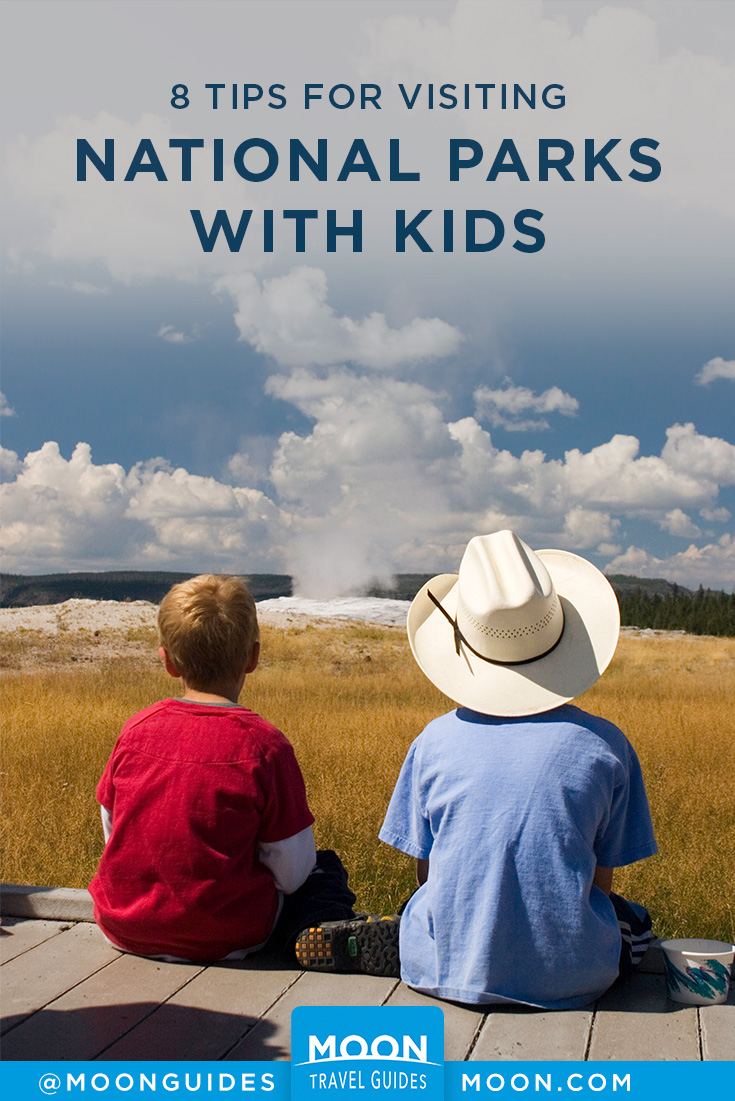
Getting kids interested in national parks can be a challenge—and so is keeping them entertained once you get there! Here are a few tips for helping your family make the most of its time in the great outdoors:
1. Can’t get your kids off their phones? Encourage them to take photos for a family album that focuses on the variety of detail on trails. Put each child in charge of a certain thing: plants, rocks, tree bark, animals, water, etc.
2. Get your younger kids involved in Junior Ranger programs! Some parks have programs for older kids, too.
3. Prepare kids for the elements with appropriate layers of clothing, footwear, mittens, and hats. Don’t forget sunscreen and bug spray, too!
4. Check your park’s specific NPS site before you leave home—you’ll find special kid-friendly programs and activities under “kids.”
5. Play trail games like “I Spy” to keep kids engaged along the way.
6. Choose shorter trails for young kids with attractions as destinations: lakes, boulders to play on, driftwood on beaches.
7. Check out the program: 4th graders can visit all national parks for free!
8. Prevent meltdowns by having snacks and water handy, even on short hikes or adventures.
For more tips for exploring the national parks with your family, pick up:
[hbg-title isbn="9781640492790" summary="They’ve been dubbed America’s best idea for a reason: get inspired, get outdoors, and discover the wild beauty of the United States with Moon USA National Parks."]
[hbg-post heading="What to read next:" id="684728,672906,669869" /]
Pin it for Later
Following is a recap of major news at Hachette Book Group for the week of April 15-19, 2019:
HBG Community Service Day: we had our second annual Community Service Day on Wednesday, and close to 600 HBG employees volunteered in a wide variety of activities – preparing food in community kitchens, delivering hot meals to homebound seniors, reading with children, repainting rooms in community centers, gardening in green spaces, caring for animals in rescue shelters, assisting with literacy and mental health awareness projects, creating handmade cards for hospitalized children, and much more.
Bestseller news: James Patterson’s The Fall of Crazy House (JIMMY Patterson) debuts at #4 on the New York Times YA Hardcover list. Also, debuting on the NYT lists are William W. Li’s Eat to Beat Disease (GCP) at #10 on the Advice, How-To, & Misc., and Miracle at St. Andrews by James Patterson & Peter de Jonge (LB) at #13 on the Print HC Fiction list. HBG’s distribution clients have a #1 bestseller with Jeff Kinney’s new addition to the Diary of the Wimpy Kid franchise, Diary of an Awesome Friendly Kid (Abrams) at the top of the Middle Grade Hardcover list. And David Sax’s The Revenge of the Analog (PublicAffairs) makes a surprise appearance at #1 on the Washington Post bestseller list this week.
LA Times Book Prize: Beth Macy’s Dopesick: Dealers, Doctors, and the Drug Company that Addicted America (LB) has won the 2018 for Science & Technology.
Ondaatje Prize shortlist: Adam Weymouth’s Kings of the Yukon (LB) has been named to the Royal Society of Literature’s 2019 shortlist. The £10,000 prize is awarded annually to a book of the highest literary merit – fiction, non-fiction, or poetry – which best evokes the spirit of a place. The winner will be announced May 13.
Major launch: Ali Benjamin’s highly anticipated The Next Great Paulie Fink (LBYR) went on sale this week with an interview on NPR’s Here & Now, coverage to come in The Denver Post, New York Times, People, and the Wall Street Journal, and a two-week national tour.
Name of town: Sweetwater Springs, NC Population: 3,210 Where did you get your inspiration for town: While Sweetwater Springs is a small mountain valley town, I modeled it after Swansboro, a small coastal town near me in North Carolina. Swansboro is a scenic town with beautiful little shops strung together along the water. Is there ...]
As I mention in the Author’s Note at the back of The Paris Orphan, I first heard of Lee Miller when I was researching my previous book, . There was a throwaway line in an article that mentioned Miller and other female war correspondents who, after World War II had ended, had not been able to continue working as serious journalists because the men had returned from overseas and taken all of the available jobs.
It caught my attention. What would it have been like to report on a war and then come home to America and be assigned completely different work? After the war, Lee Miller was relegated to photographing fashion or celebrities during the winter season at Saint-Moritz. She was also an occasional contributor of recipes for Vogue.
That article was the start of my fascination with her. I went looking for more. And I found a story so incredible I couldn’t help but be inspired by it.
Miller the Photojournalist
Miller was a photojournalist for Vogue during World War II. She took some extraordinary photographs: she stumbled upon the battle for Saint-Malo in France and photographed the U.S. Army’s first use of napalm there. She reported from Paris, Luxembourg, Alsace, Colmar, Aachen, Cologne, Frankfurt and Torgau, among other places. She was one of the first to document the horrors of the Dachau concentration camp. And she was the subject of an iconic photograph, bathing in Hitler’s bathtub in his Munich apartment, having left her filthy boots to drop the dirt of Dachau, as she put it, all over the Fuhrer’s pristine white bathroom.
Miller the Model
But Lee Miller started on the other side of the lens. She was discovered by Condé Nast on the streets of Manhattan and became a famous model for magazines like Vogue during the 1920s. I decided to use this as the starting point for my character, Jessica May, as I was fascinated by that transition. How did a woman who was so obviously beautiful manage in the male and often chauvinistic environment of an army during a war?
Just as Condé Nast discovers Lee Miller, he also discovers Jess in The Paris Orphan and Jess is one of his favorite models, as Miller was. However, to suit my story better, I moved time forward to begin Jess’s modeling career in the early 1940s.
Miller’s modeling career ended when a photograph of her was used by Kotex in an advertisement for sanitary pads. It’s so hard to imagine that this could end a career, but it did. To be seen as the “Kotex Girl” was a stigma so dreadful that no magazine wanted to use pictures of Miller again. So Miller moved to France, where she became Man Ray’s lover. He helped her develop her photography skills and she became a well-regarded surrealist photographer.
I used these elements when creating Jess’s character too. Jess has to stop modeling after a photograph of her is used by Kotex, Jess has a French photographer as a lover, and solarization is a trademark of her work, as it was Miller’s.
The Intersection of Fiction and Reality
Miller actually reported for British Vogue during the war, although many of her pieces appeared in American Vogue too. For ease of the story, I have Jess working for American Vogue in The Paris Orphan.
Jess follows in Miller’s footsteps in The Paris Orphan, working out of a field hospital when she first arrives in France after D-Day. I have given the room used by Lee Miller at the Hotel Scribe in Paris to Jess, complete with a balcony piled high with fuel cans and an acquaintance with Picasso. Miller is called la femme soldatby the joyful Parisians after the city is liberated, as is Jess. Miller stays at Hitler’s apartment in Munich and is photographed in Hitler’s bath, as is Jess in The Paris Orphan.
After the War
One of the most heartbreaking parts of Miller’s story is what happened to her after the war. She suffered from post-traumatic stress after viewing and recording so many horrors, and she tried to forget that she was ever a witness to war and all its atrocities. So effective was she at excising this from her past that, when she died at age seventy, her son, Roland Penrose, had no idea of what she had done during the war. Her work was largely forgotten.
One day, Penrose’s wife found boxes of photographs and films in the attic at Farley Farm, Miller’s home. They contained Miller’s correspondence with her Vogue editor and wartime paraphernalia. Penrose immediately understood that he had made an incredible discovery, that his mother had been a true artist, and that her words and pictures had—once upon a time, until she let the world forget them—meant something.
He resurrected Lee Miller and her work. She is now widely regarded as one of the world’s preeminent war correspondents and photographers. The idea that she had been all but forgotten haunted me, and this inspired the scenes set in contemporary times in The Paris Orphan, when D’Arcy Hallworth finds an attic full of photographs and an extraordinary legacy that should never have been lost to the past.
Next to writing, research is my true love. When I stand in the spaces I want my characters to inhabit, I can feel them and see them and bring their lives and their stories out of my imagination and into the structure of words and sentences.
The Hotel Scribe, Paris
To research The Paris Orphan, I started in Paris at the Hotel Scribe, where Lee Miller stayed during World War II and where Jessica May, my character, also stays. The hotel was used by the U.S. Army as the press office, and the hotel’s exterior is largely unchanged from that time.
Staying in the hotel for several nights allowed me to picture more vividly the scenes in my story set there, to see where Miller’s room was, and the view from her balcony. The hotel is very proud of its association with Miller.
A Chateau in the Champagne Region
From there I had the very difficult(!) job of staying in a chateau just outside Reims in France’s Champagne region, just as D’Arcy does in The Paris Orphan. How I suffer for my art!
It was a wonderful experience because I was able to wallow in the richness and lushness of the area. The extraordinarily bright pumpkins that D’Arcy sees from her window are the pumpkins I saw from my room at the chateau, as is the canal, the maze, the plane trees, the potager—or vegetable garden—and the butterflies. From inside the chateau, the black-and-white-tiled marble floor, the salon de grisailles, the boiserie, and the turret all came from the chateau I stayed at.
Crazy Trees—Les Faux de Verzy
I had heard about Les Faux de Verzy, the dwarf twisted beech trees that feature in The Paris Orphan, before I left for France. I was determined to see them, as they captured my imagination. When I told my kids we were going to spend the afternoon walking through a forest in search of crazy trees, they looked at me as if I was the one who was crazy!
But we had the perfect day. It was a little overcast and dark, haunting, mystical, magical even. We found the trees, and they were like something from myth. We all felt as if we were walking through an enchanted forest. As we left, my kids said to me that doing weird research things with Mummy always ended up being really fun! There was no way I could leave those spectacular trees out of the book.
On to Normandy
I then traveled to Normandy, which was a sobering experience. Standing on Omaha Beach, as Jess does in the book, deeply affected me. The beach is so very wide, and I could see the difficulty that any soldier would have had, jumping out of a vessel on the water, traversing through waves to the ocean’s edge, and then having to forge a way across that vast stretch of sand to safety. Almost impossible. I could feel how Jess might feel, standing there, seventy-odd years ago, a witness to the immense and terrible destruction of human life.
I visited the American Cemetery there, and then drove to Sainte-Mère Église, where there is a museum dedicated to the paratroopers. I knew little about the intricacies of battles and battalions, so seeing a mannequin dressed in a paratrooper’s uniform, plus all of the eighty kilograms of equipment they carried, and studying the maps of their campaigns and victories was hugely helpful in allowing me to better understand Dan Hallworth and what he might have faced.
In the museums of Normandy, I saw a lot of the equipment used by the soldiers and the personal items carried by them, which helped me to recreate life as it could have been: everything from U.S. Army jeeps and tanks, to long-tom guns, packs of Lucky Strikes, ration chocolate, Scott paper, and tins of Marathon foot powder—all of which appear in the book.
I was also able to see the accreditation papers, passport, uniforms, telegrams, diary, and war correspondent badge of Virginia Irwin, one of the female correspondents, at the Imperial War Museum at Duxford, England. These were all items Jess would have required, so it was wonderful to view them.
And then it was time to leave Europe and to try to write down the story that was occupying all of my thoughts. It’s my favorite of all of my books. I truly hope you enjoy reading The Paris Orphan as much as I enjoyed writing it. Thank you.
For photographs and more, visit my blog on natashalester.com.au.
One of the author’s concerns when writing the book was that the extent and magnitude of the bias and discrimination shown towards female war correspondents was so great that readers might not believe it could really have happened. Were you shocked by the any of the sexist behaviour, rules or beliefs described in the incidents in the book? Which incidents surprised you the most? How do you think it might affect a woman to have to struggle against such ingrained bias in order to do her job?
Had you heard of Lee Miller before you read the book? Have you been drawn to find out any more about Miller since reading it? What do you think of the author’s decision to create a character inspired by Miller rather than write a fictionalised account of Lee Miller’s life? Which approach do you think you might prefer as a reader?
Victorine makes a difficult decision towards the end of the novel when she withholds information from both Jess and Dan. What did you think of her decision? What might you have done in her place? Is it possible to make the wrong decision for the right reasons? How important is it to consider a person’s motivations when assessing whether their decision was right or wrong?
Both Jess and Dan make different decisions when it comes to Amelia’s ultimatum: Dan decides to marry Jess in spite of his battalion; Jess decides to leave Dan so that he has to marry Amelia. Who was the more heroic out of Jess and Dan over the course of the war, and in making that final decision? Which one of them made the “right” decision?
For much of the novel, Jess collects information about soldiers sexually assaulting civilian women. She doesn’t report on this until after the war. Do you think it was cowardly of her to wait so long? What do you think might have happened had she tried to publish the article while the war was still continuing? Was she guilty of letting other women down, or did she have no choice?
Back in London, Jess has the thought: "War makes us monsters or angels, but so too does love.” How difficult do you think it would be to fall in love during wartime, knowing that death was a very real possibility for one or both partners? Do you think this would change the kind of love a person might feel, make it tense perhaps because risk is everywhere, or less intense because the fear of death creates a fear of true intimacy? How can love make someone a monster and where does this happen in the book?
The difficulties Jess and Dan and Amelia face during the war are very different to the difficulties D’Arcy and Josh have faced in their lives. Do you think people in contemporary times are guilty of creating problems where none exist? To what extent does living through a war change how a person views life? Are contemporary concerns less important than those people faced during the 1940s or are both sets of issues equally challenging and worthy of discussion?
There are many women in the book who are based on real people including Martha Gellhorn, Lee Carson, Iris Carpenter, and Catherine Coyne. Had you heard of any of these women before reading the book? Which ones? Is it true that the stories of so many extraordinary women have been lost to history, and forgotten by those of us who come after? If so, why do you think that is? What other books have you read, or movies have you watched, that feature extraordinary women from history and what did you enjoy about them?


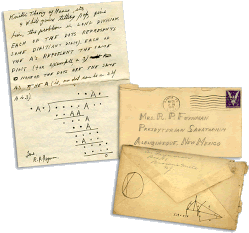 Richard P. Feynman to Gweneth Feynman, October 11, 1961
October 11, 1961
Hotel Amigo, Brussels
Hello, my sweetheart,
Murray and I kept each other awake arguing until we could stand it no longer. We woke up over Greenland which was even better than last time because we went right over part of it. In London we met other physicists and came to Brussels together. One of them was worried—in his guidebook the Hotel Amigo was not even mentioned. Another had a newer guide—five stars! and rumored to be the best hotel in Europe!
It is very nice indeed. All the furniture is dark red polished wood, in perfect condition; the bathroom is grand, etc. It is really too bad you didn't come to this conference instead of the other one.
At the meeting next day things started slowly. I was to talk in the afternoon. That is what I did, but I didn't really have enough time. We had to stop at 4 PM because of a reception scheduled for that night. I think my talk was OK tho—what I left out was in the written version anyway.
So that evening we went to the palace to meet the king and queen. Taxis waited for us at the hotel—long black ones—and off we went at 5 PM, arriving through the palace gates with a guard on each side, and driving under an arch where men in red coats and white stockings with a black band and gold tassel under each knee opened the doors. More guards at the entrance, in the hallway, along the stairs, and up into a ballroom, sort of. These guards stand very straight, dark grey Russian-type hats with a chin strap, dark coats, white pants, and shiny black leather boots, each holding a sword straight up.
In the "ballroom" we had to wait perhaps 20 minutes. It has inlaid parquet floors, and L in each square (Leopold—the present king's name is Baudoin, or something). The gilded walls are 18th century and on the ceiling are pictures of naked women riding chariots among the clouds or something. Lots of mirrors and gilded chairs with red cushions around the outside edge of the room—just like so many of the palaces we have seen, but this time it was alive, no museum, everything clean and shining and in perfect condition. Several palace officials were milling around among us. One had a list and told me where to stand but I didn't do it right and was out of place later.
The doors at the end of the hall open—guards are there, and the king and queen so we all enter slowly and are introduced one by one to the king and queen. The king has a young semi-dopey face and a strong handshake, the queen is very pretty. (I think her name is Fabriola—a Spanish countess she was.) We exit into another room on the left where there are lots of chairs arranged like in a theatre, with two in front, also facing forward, for K & Q later, and a table at the front with six seats is for illustrious scientists (Niels Bohr, J. Perrin (a Frenchman), J. R. Oppenheimer etc.).
It turns out the king wants to know what we are doing, so the old boys give a set of six dull lectures—all very solemn—no jokes. I had great difficulty sitting in my seat because I had a very stiff and uncomfortable back from sleeping on the plane.
That done, the K & Q pass thru the room where we met them and into a room on right (marked R). All these rooms are very big, gilded, Victorian, fancy, etc. In R are many kinds of uniforms, guards at door, red coats, white coat sort of waiters to serve drinks and hors d'oeuvres, military khaki and medals, black coat—undertaker's type (palace officials).
On the way out of L into R, I am last because I walk slowly from stiff back and find myself talking to a palace official—nice man—teaches math part time at Louvain University, but his main job is secretary to the queen. He had also tutored K when K was young and has been in palace work 23 years. At least I have somebody to talk to, some others are talking to K or to Q; everybody standing up. After a while the professor who is head of conference (Prof. Bragg) grabs me and says K wants to talk to me. I pull boner #1 by wanting to shake hands again when Bragg says, "K, this is Feynman"; apparently wrong—no hand reaches up, but after an embarrassed pause K saves day by shaking my hand. K makes polite remarks on how smart we all must be and how hard it must be to think. I answer, making jokes (having been instructed to do so by Bragg, but what does he know?)—apparently error #2. Anyway, strain is relieved when Bragg brings over some other professor—Heisenberg, I think. K forgets F and F slinks off to resume conversation with Sec'y of Q.
After considerable time—several orange juices and many very very good hors d'oeuvres later—a military uniform with medals comes over to me and says, "Talk to the queen!" Nothing I should like to do better (pretty girl, but don't worry, she's married). F arrives at scene: Q is sitting at table surrounded by three other occupied chairs—no room for F. There are several low coughs, slight confusion, etc. and lo! one of the chairs has been reluctantly vacated. Other two chairs contain one lady and one Priest in Full Regalia (who is also a physicist) named LeMaître.
We have quite a conversation (I listen, but hear no low coughs, and am not evacuated from seat) for perhaps 15 minutes. Sample:
Q: "It must be very hard work thinking about those difficult problems."
F: "No, we all do it for the fun of it."
Q: "It must be hard to learn to change all your ideas" (a thing she got from the six lectures).
F: "No, all those guys who gave you those lectures are old fogeys—all that stuff was in 1926, when I was only eight, so when I learned physics I only had to learn the new ideas. Big problem now is, will we have to change them again?"
Q: "You must feel good, working for peace like that."
F: "No, never enters my head, whether it is for peace or otherwise we don't know."
Q: "Things certainly change fast—many things have changed in the last hundred years."
F: "Not in this palace." (I thought it, but controlled myself.)
F: "Yes," and then launched into lecture on what was known in 1861 and what we found out since—adding at end, laughingly, "Can't help giving a lecture, I guess—I'm a professor, you see. Ha, ha."
Q in desperation, turns to lady on her other side and begins pleasant conversation with same.
After a few moments K comes over, whispers something to Q who stands up and they quietly go out. F returns to Sec'y of Q who personally escorts him out of palace past guards, etc.
I'm so terribly sorry you missed it. I don't know when we'll find another king for you to meet.
I was paged in the hotel this morning just before leaving with the others.
Phone call—I returned to the others and announced, "Gentlemen, that call was from the queen's secretary." All are awestruck, for it did not go unnoticed that F talked longer and harder to Q than seemed proper. I didn't tell them, however, that it was about a meeting we arranged—he was inviting me to his home to meet his wife and two (of four) of his daughters, and see his house. I had invited him to visit us in Pasadena when he came to America and this was his response.
His wife and daughters are very nice and his house was positively beautiful. You would have enjoyed that even more than visiting the palace. He planned and built his house in a Belgian style, somewhat after an old farmhouse style, but done just right. He has many old cabinets and tables inside, right beside newer stuff, very well combined. It is much easier for them to find antiques in Belgium than for you in Los Angeles as there are so many old farms, etc. He has large grounds and a vegetable garden—and a dog—from Washington—somebody gave the king and the K gave to him. The dog has a personality somewhat like Kiwi because I think he is equally loved. He even has a bench in his garden hidden under trees that he made for himself to go and sit on and look at the surrounding countryside. The house is slightly bigger than ours and the grounds are much bigger but not yet landscaped.
I told him I had a queen in a little castle in Pasadena I would like him to see—and he said he hoped he would be able to come to America and see us. He would come if the Q ever visits America again.
I am enclosing a picture of his house, and his card so I don't lose it.
I know you must feel terrible being left out this time—but I'll make it up someday somehow. Don't forget I love you very much and am proud of my family that is and my family that is to be. The secretary and his wife send their best wishes to you and our future.
I wish you were here, or next best thing, that I were there. Kiss SNORK and tell Mom all my adventures and I will be home sooner than you think.
Your husband loves you.
Your husband.
Richard P. Feynman to Gweneth Feynman, October 11, 1961
October 11, 1961
Hotel Amigo, Brussels
Hello, my sweetheart,
Murray and I kept each other awake arguing until we could stand it no longer. We woke up over Greenland which was even better than last time because we went right over part of it. In London we met other physicists and came to Brussels together. One of them was worried—in his guidebook the Hotel Amigo was not even mentioned. Another had a newer guide—five stars! and rumored to be the best hotel in Europe!
It is very nice indeed. All the furniture is dark red polished wood, in perfect condition; the bathroom is grand, etc. It is really too bad you didn't come to this conference instead of the other one.
At the meeting next day things started slowly. I was to talk in the afternoon. That is what I did, but I didn't really have enough time. We had to stop at 4 PM because of a reception scheduled for that night. I think my talk was OK tho—what I left out was in the written version anyway.
So that evening we went to the palace to meet the king and queen. Taxis waited for us at the hotel—long black ones—and off we went at 5 PM, arriving through the palace gates with a guard on each side, and driving under an arch where men in red coats and white stockings with a black band and gold tassel under each knee opened the doors. More guards at the entrance, in the hallway, along the stairs, and up into a ballroom, sort of. These guards stand very straight, dark grey Russian-type hats with a chin strap, dark coats, white pants, and shiny black leather boots, each holding a sword straight up.
In the "ballroom" we had to wait perhaps 20 minutes. It has inlaid parquet floors, and L in each square (Leopold—the present king's name is Baudoin, or something). The gilded walls are 18th century and on the ceiling are pictures of naked women riding chariots among the clouds or something. Lots of mirrors and gilded chairs with red cushions around the outside edge of the room—just like so many of the palaces we have seen, but this time it was alive, no museum, everything clean and shining and in perfect condition. Several palace officials were milling around among us. One had a list and told me where to stand but I didn't do it right and was out of place later.
The doors at the end of the hall open—guards are there, and the king and queen so we all enter slowly and are introduced one by one to the king and queen. The king has a young semi-dopey face and a strong handshake, the queen is very pretty. (I think her name is Fabriola—a Spanish countess she was.) We exit into another room on the left where there are lots of chairs arranged like in a theatre, with two in front, also facing forward, for K & Q later, and a table at the front with six seats is for illustrious scientists (Niels Bohr, J. Perrin (a Frenchman), J. R. Oppenheimer etc.).
It turns out the king wants to know what we are doing, so the old boys give a set of six dull lectures—all very solemn—no jokes. I had great difficulty sitting in my seat because I had a very stiff and uncomfortable back from sleeping on the plane.
That done, the K & Q pass thru the room where we met them and into a room on right (marked R). All these rooms are very big, gilded, Victorian, fancy, etc. In R are many kinds of uniforms, guards at door, red coats, white coat sort of waiters to serve drinks and hors d'oeuvres, military khaki and medals, black coat—undertaker's type (palace officials).
On the way out of L into R, I am last because I walk slowly from stiff back and find myself talking to a palace official—nice man—teaches math part time at Louvain University, but his main job is secretary to the queen. He had also tutored K when K was young and has been in palace work 23 years. At least I have somebody to talk to, some others are talking to K or to Q; everybody standing up. After a while the professor who is head of conference (Prof. Bragg) grabs me and says K wants to talk to me. I pull boner #1 by wanting to shake hands again when Bragg says, "K, this is Feynman"; apparently wrong—no hand reaches up, but after an embarrassed pause K saves day by shaking my hand. K makes polite remarks on how smart we all must be and how hard it must be to think. I answer, making jokes (having been instructed to do so by Bragg, but what does he know?)—apparently error #2. Anyway, strain is relieved when Bragg brings over some other professor—Heisenberg, I think. K forgets F and F slinks off to resume conversation with Sec'y of Q.
After considerable time—several orange juices and many very very good hors d'oeuvres later—a military uniform with medals comes over to me and says, "Talk to the queen!" Nothing I should like to do better (pretty girl, but don't worry, she's married). F arrives at scene: Q is sitting at table surrounded by three other occupied chairs—no room for F. There are several low coughs, slight confusion, etc. and lo! one of the chairs has been reluctantly vacated. Other two chairs contain one lady and one Priest in Full Regalia (who is also a physicist) named LeMaître.
We have quite a conversation (I listen, but hear no low coughs, and am not evacuated from seat) for perhaps 15 minutes. Sample:
Q: "It must be very hard work thinking about those difficult problems."
F: "No, we all do it for the fun of it."
Q: "It must be hard to learn to change all your ideas" (a thing she got from the six lectures).
F: "No, all those guys who gave you those lectures are old fogeys—all that stuff was in 1926, when I was only eight, so when I learned physics I only had to learn the new ideas. Big problem now is, will we have to change them again?"
Q: "You must feel good, working for peace like that."
F: "No, never enters my head, whether it is for peace or otherwise we don't know."
Q: "Things certainly change fast—many things have changed in the last hundred years."
F: "Not in this palace." (I thought it, but controlled myself.)
F: "Yes," and then launched into lecture on what was known in 1861 and what we found out since—adding at end, laughingly, "Can't help giving a lecture, I guess—I'm a professor, you see. Ha, ha."
Q in desperation, turns to lady on her other side and begins pleasant conversation with same.
After a few moments K comes over, whispers something to Q who stands up and they quietly go out. F returns to Sec'y of Q who personally escorts him out of palace past guards, etc.
I'm so terribly sorry you missed it. I don't know when we'll find another king for you to meet.
I was paged in the hotel this morning just before leaving with the others.
Phone call—I returned to the others and announced, "Gentlemen, that call was from the queen's secretary." All are awestruck, for it did not go unnoticed that F talked longer and harder to Q than seemed proper. I didn't tell them, however, that it was about a meeting we arranged—he was inviting me to his home to meet his wife and two (of four) of his daughters, and see his house. I had invited him to visit us in Pasadena when he came to America and this was his response.
His wife and daughters are very nice and his house was positively beautiful. You would have enjoyed that even more than visiting the palace. He planned and built his house in a Belgian style, somewhat after an old farmhouse style, but done just right. He has many old cabinets and tables inside, right beside newer stuff, very well combined. It is much easier for them to find antiques in Belgium than for you in Los Angeles as there are so many old farms, etc. He has large grounds and a vegetable garden—and a dog—from Washington—somebody gave the king and the K gave to him. The dog has a personality somewhat like Kiwi because I think he is equally loved. He even has a bench in his garden hidden under trees that he made for himself to go and sit on and look at the surrounding countryside. The house is slightly bigger than ours and the grounds are much bigger but not yet landscaped.
I told him I had a queen in a little castle in Pasadena I would like him to see—and he said he hoped he would be able to come to America and see us. He would come if the Q ever visits America again.
I am enclosing a picture of his house, and his card so I don't lose it.
I know you must feel terrible being left out this time—but I'll make it up someday somehow. Don't forget I love you very much and am proud of my family that is and my family that is to be. The secretary and his wife send their best wishes to you and our future.
I wish you were here, or next best thing, that I were there. Kiss SNORK and tell Mom all my adventures and I will be home sooner than you think.
Your husband loves you.
Your husband.




 Following is a recap of major news at Hachette Book Group for the week of April 8-12, 2019:
Bestseller news: Susan Page’s The Matriarch (Twelve) debuts this week at #3 on both the Print Hardcover Nonfiction and Combined P&E bestseller lists. Commander in Cheat by Rick Reilly (Hachette Books) debuts at #6 on the Print Hardcover Nonfiction and #7 on the Combined P&E bestsellers list. Katt vs. Dogg by James Patterson & Chris Grabenstein (JIMMY Patterson) makes its debut on the NYT Children’s bestseller (Middle Grade) list at #2. HBG’s distribution clients have three books on the New York Times list this week.
Staffing news: Mary Ann Naples will join Hachette Books as Vice President & Publisher on April 22. Mary Ann was most recently VP & Publisher at the Disney Book Group, and prior to that she was SVP & Publisher of Rodale Books and Rodale Wellness. She has overseen the publication of an impressive roster of best-selling authors and franchises, and has also been an entrepreneur, working in digital start-ups and as a literary agent. Read more about our new colleague here: , .
New HUK warehouse: on Tuesday, the Hely Hutchinson Centre was officially opened by Tim Hely Hutchinson, CEO of Hachette UK until his retirement in 2017. All the publishers within the Hachette UK group and the third-party publishers distributed by Hachette will be distributed from the site by the end of the second quarter of 2019. The Centre is 242,000 square feet, will dispatch 65 million books, and has 150,000 titles in stock. It’s the most advanced of its kind in Europe.
Following is a recap of major news at Hachette Book Group for the week of April 8-12, 2019:
Bestseller news: Susan Page’s The Matriarch (Twelve) debuts this week at #3 on both the Print Hardcover Nonfiction and Combined P&E bestseller lists. Commander in Cheat by Rick Reilly (Hachette Books) debuts at #6 on the Print Hardcover Nonfiction and #7 on the Combined P&E bestsellers list. Katt vs. Dogg by James Patterson & Chris Grabenstein (JIMMY Patterson) makes its debut on the NYT Children’s bestseller (Middle Grade) list at #2. HBG’s distribution clients have three books on the New York Times list this week.
Staffing news: Mary Ann Naples will join Hachette Books as Vice President & Publisher on April 22. Mary Ann was most recently VP & Publisher at the Disney Book Group, and prior to that she was SVP & Publisher of Rodale Books and Rodale Wellness. She has overseen the publication of an impressive roster of best-selling authors and franchises, and has also been an entrepreneur, working in digital start-ups and as a literary agent. Read more about our new colleague here: , .
New HUK warehouse: on Tuesday, the Hely Hutchinson Centre was officially opened by Tim Hely Hutchinson, CEO of Hachette UK until his retirement in 2017. All the publishers within the Hachette UK group and the third-party publishers distributed by Hachette will be distributed from the site by the end of the second quarter of 2019. The Centre is 242,000 square feet, will dispatch 65 million books, and has 150,000 titles in stock. It’s the most advanced of its kind in Europe.

 This Mother's Day celebrate mom for her unique personality, her curious mind, and her unconditional love. Here are eight books we think make great Mother's Day gifts—no matter what mom loves to read!

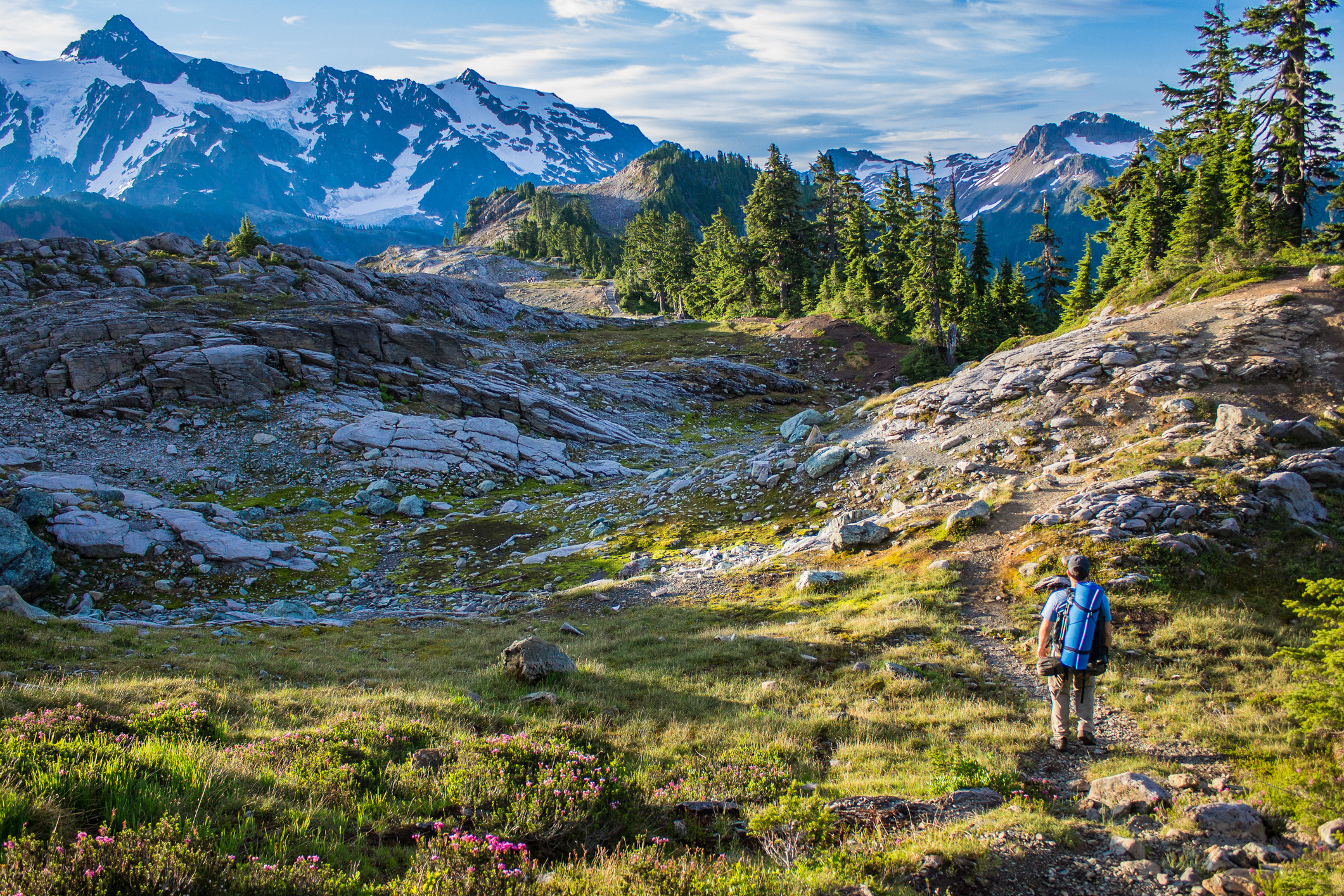 The national parks are some of our country's greatest national treasures—so it's important that while we enjoy them, we also take care of them, especially when hiking and camping in backcountry areas. To help keep the parks pristine, visitors need to take an active role in maintaining them. Here's how you can make the most of the national parks and make sure you leave no trace:
Plan Ahead and Prepare
Hiking in the backcountry is inherently risky. Three miles of hiking at the high elevations in Wyoming may be much harder than three miles in your neighborhood park back home. Choose appropriate routes for mileage and elevation gain with this in mind, and carry hiking essentials.
Travel and Camp on Durable Surfaces
In front-country and backcountry campgrounds, camp in designated sites. Protect fragile plants by staying on trails even in mud, refusing to cut switchbacks, and walking single file. If you must walk off the trail, step on rocks, snow, or dry grasses rather than wet soil and delicate plants.
Leave What You Find
Flowers, rocks, and fur tufts on shrubs are protected park resources, as are historical and cultural items. For lunch stops and camping, sit on rocks or logs where you find them rather than moving them to accommodate comfort.
Minimize Campfire Impacts
Make fires in designated fire pits only, not on beaches. Use small wrist-sized dead and downed wood, not live branches. Be aware: Fires and collecting firewood are not permitted in some places in the parks.
Respect Wildlife
Bring along binoculars, spotting scopes, and telephoto lenses to aid in watching wildlife. Keep your distance. Do not feed any wildlife, even ground squirrels. Once fed, they can become more aggressive.
Be Considerate of Other Visitors
In particular, be aware of cell phones and how their use or noise cuts into the natural soundscapes of the parks.
For formation on Leave No Trace, visit .
Happy camping!
Ready to plan your parks adventure?
[hbg-title isbn="9781640492776" summary="They’ve been dubbed America’s best idea for a reason: get inspired, get outdoors, and discover the wild beauty of the United States with Moon USA National Parks."/]
[hbg-newsletter call_to_action="Want travel inspiration sent straight to your inbox?" button_text="Sign up" list_id_override="c89b0f3998/]
Pin it for Later
The national parks are some of our country's greatest national treasures—so it's important that while we enjoy them, we also take care of them, especially when hiking and camping in backcountry areas. To help keep the parks pristine, visitors need to take an active role in maintaining them. Here's how you can make the most of the national parks and make sure you leave no trace:
Plan Ahead and Prepare
Hiking in the backcountry is inherently risky. Three miles of hiking at the high elevations in Wyoming may be much harder than three miles in your neighborhood park back home. Choose appropriate routes for mileage and elevation gain with this in mind, and carry hiking essentials.
Travel and Camp on Durable Surfaces
In front-country and backcountry campgrounds, camp in designated sites. Protect fragile plants by staying on trails even in mud, refusing to cut switchbacks, and walking single file. If you must walk off the trail, step on rocks, snow, or dry grasses rather than wet soil and delicate plants.
Leave What You Find
Flowers, rocks, and fur tufts on shrubs are protected park resources, as are historical and cultural items. For lunch stops and camping, sit on rocks or logs where you find them rather than moving them to accommodate comfort.
Minimize Campfire Impacts
Make fires in designated fire pits only, not on beaches. Use small wrist-sized dead and downed wood, not live branches. Be aware: Fires and collecting firewood are not permitted in some places in the parks.
Respect Wildlife
Bring along binoculars, spotting scopes, and telephoto lenses to aid in watching wildlife. Keep your distance. Do not feed any wildlife, even ground squirrels. Once fed, they can become more aggressive.
Be Considerate of Other Visitors
In particular, be aware of cell phones and how their use or noise cuts into the natural soundscapes of the parks.
For formation on Leave No Trace, visit .
Happy camping!
Ready to plan your parks adventure?
[hbg-title isbn="9781640492776" summary="They’ve been dubbed America’s best idea for a reason: get inspired, get outdoors, and discover the wild beauty of the United States with Moon USA National Parks."/]
[hbg-newsletter call_to_action="Want travel inspiration sent straight to your inbox?" button_text="Sign up" list_id_override="c89b0f3998/]
Pin it for Later
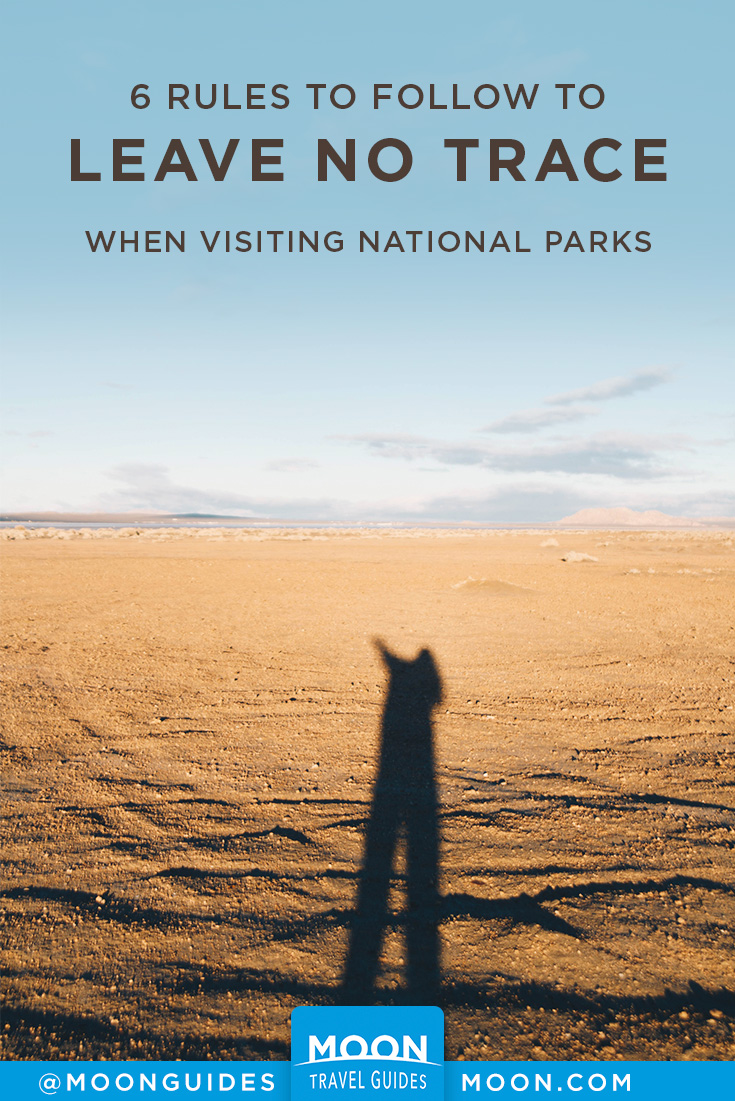

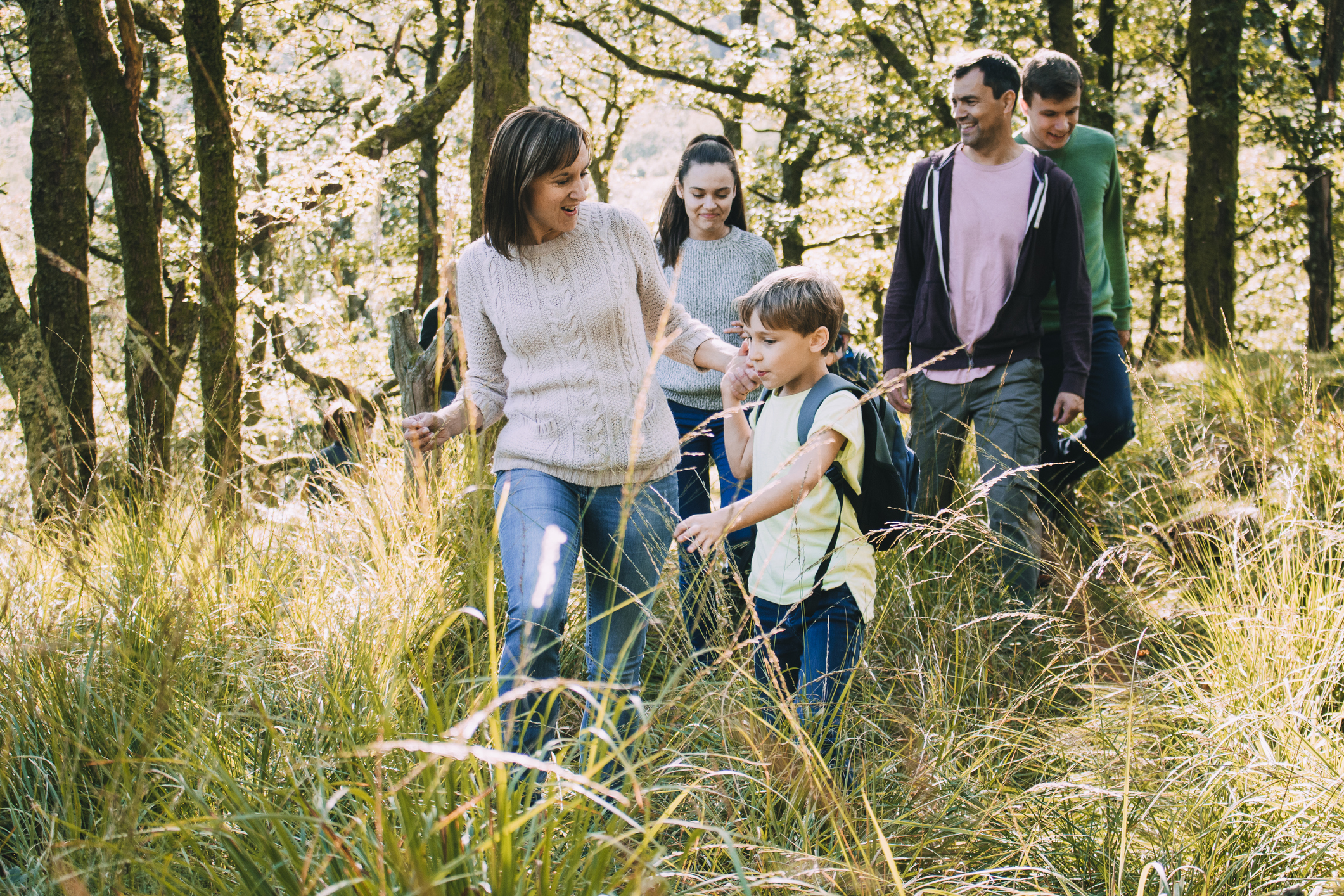 Getting kids interested in national parks can be a challenge—and so is keeping them entertained once you get there! Here are a few tips for helping your family make the most of its time in the great outdoors:
1. Can’t get your kids off their phones? Encourage them to take photos for a family album that focuses on the variety of detail on trails. Put each child in charge of a certain thing: plants, rocks, tree bark, animals, water, etc.
2. Get your younger kids involved in Junior Ranger programs! Some parks have programs for older kids, too.
3. Prepare kids for the elements with appropriate layers of clothing, footwear, mittens, and hats. Don’t forget sunscreen and bug spray, too!
4. Check your park’s specific NPS site before you leave home—you’ll find special kid-friendly programs and activities under “kids.”
5. Play trail games like “I Spy” to keep kids engaged along the way.
6. Choose shorter trails for young kids with attractions as destinations: lakes, boulders to play on, driftwood on beaches.
7. Check out the program: 4th graders can visit all national parks for free!
8. Prevent meltdowns by having snacks and water handy, even on short hikes or adventures.
For more tips for exploring the national parks with your family, pick up:
[hbg-title isbn="9781640492790" summary="They’ve been dubbed America’s best idea for a reason: get inspired, get outdoors, and discover the wild beauty of the United States with Moon USA National Parks."]
[hbg-post heading="What to read next:" id="684728,672906,669869" /]
Pin it for Later
Getting kids interested in national parks can be a challenge—and so is keeping them entertained once you get there! Here are a few tips for helping your family make the most of its time in the great outdoors:
1. Can’t get your kids off their phones? Encourage them to take photos for a family album that focuses on the variety of detail on trails. Put each child in charge of a certain thing: plants, rocks, tree bark, animals, water, etc.
2. Get your younger kids involved in Junior Ranger programs! Some parks have programs for older kids, too.
3. Prepare kids for the elements with appropriate layers of clothing, footwear, mittens, and hats. Don’t forget sunscreen and bug spray, too!
4. Check your park’s specific NPS site before you leave home—you’ll find special kid-friendly programs and activities under “kids.”
5. Play trail games like “I Spy” to keep kids engaged along the way.
6. Choose shorter trails for young kids with attractions as destinations: lakes, boulders to play on, driftwood on beaches.
7. Check out the program: 4th graders can visit all national parks for free!
8. Prevent meltdowns by having snacks and water handy, even on short hikes or adventures.
For more tips for exploring the national parks with your family, pick up:
[hbg-title isbn="9781640492790" summary="They’ve been dubbed America’s best idea for a reason: get inspired, get outdoors, and discover the wild beauty of the United States with Moon USA National Parks."]
[hbg-post heading="What to read next:" id="684728,672906,669869" /]
Pin it for Later

 Following is a recap of major news at Hachette Book Group for the week of April 15-19, 2019:
HBG Community Service Day: we had our second annual Community Service Day on Wednesday, and close to 600 HBG employees volunteered in a wide variety of activities – preparing food in community kitchens, delivering hot meals to homebound seniors, reading with children, repainting rooms in community centers, gardening in green spaces, caring for animals in rescue shelters, assisting with literacy and mental health awareness projects, creating handmade cards for hospitalized children, and much more.
Bestseller news: James Patterson’s The Fall of Crazy House (JIMMY Patterson) debuts at #4 on the New York Times YA Hardcover list. Also, debuting on the NYT lists are William W. Li’s Eat to Beat Disease (GCP) at #10 on the Advice, How-To, & Misc., and Miracle at St. Andrews by James Patterson & Peter de Jonge (LB) at #13 on the Print HC Fiction list. HBG’s distribution clients have a #1 bestseller with Jeff Kinney’s new addition to the Diary of the Wimpy Kid franchise, Diary of an Awesome Friendly Kid (Abrams) at the top of the Middle Grade Hardcover list. And David Sax’s The Revenge of the Analog (PublicAffairs) makes a surprise appearance at #1 on the Washington Post bestseller list this week.
LA Times Book Prize: Beth Macy’s Dopesick: Dealers, Doctors, and the Drug Company that Addicted America (LB) has won the 2018 for Science & Technology.
Ondaatje Prize shortlist: Adam Weymouth’s Kings of the Yukon (LB) has been named to the Royal Society of Literature’s 2019 shortlist. The £10,000 prize is awarded annually to a book of the highest literary merit – fiction, non-fiction, or poetry – which best evokes the spirit of a place. The winner will be announced May 13.
Major launch: Ali Benjamin’s highly anticipated The Next Great Paulie Fink (LBYR) went on sale this week with an interview on NPR’s Here & Now, coverage to come in The Denver Post, New York Times, People, and the Wall Street Journal, and a two-week national tour.
Following is a recap of major news at Hachette Book Group for the week of April 15-19, 2019:
HBG Community Service Day: we had our second annual Community Service Day on Wednesday, and close to 600 HBG employees volunteered in a wide variety of activities – preparing food in community kitchens, delivering hot meals to homebound seniors, reading with children, repainting rooms in community centers, gardening in green spaces, caring for animals in rescue shelters, assisting with literacy and mental health awareness projects, creating handmade cards for hospitalized children, and much more.
Bestseller news: James Patterson’s The Fall of Crazy House (JIMMY Patterson) debuts at #4 on the New York Times YA Hardcover list. Also, debuting on the NYT lists are William W. Li’s Eat to Beat Disease (GCP) at #10 on the Advice, How-To, & Misc., and Miracle at St. Andrews by James Patterson & Peter de Jonge (LB) at #13 on the Print HC Fiction list. HBG’s distribution clients have a #1 bestseller with Jeff Kinney’s new addition to the Diary of the Wimpy Kid franchise, Diary of an Awesome Friendly Kid (Abrams) at the top of the Middle Grade Hardcover list. And David Sax’s The Revenge of the Analog (PublicAffairs) makes a surprise appearance at #1 on the Washington Post bestseller list this week.
LA Times Book Prize: Beth Macy’s Dopesick: Dealers, Doctors, and the Drug Company that Addicted America (LB) has won the 2018 for Science & Technology.
Ondaatje Prize shortlist: Adam Weymouth’s Kings of the Yukon (LB) has been named to the Royal Society of Literature’s 2019 shortlist. The £10,000 prize is awarded annually to a book of the highest literary merit – fiction, non-fiction, or poetry – which best evokes the spirit of a place. The winner will be announced May 13.
Major launch: Ali Benjamin’s highly anticipated The Next Great Paulie Fink (LBYR) went on sale this week with an interview on NPR’s Here & Now, coverage to come in The Denver Post, New York Times, People, and the Wall Street Journal, and a two-week national tour.


 The world is full of magical places, from well-known sites like Stonehenge and Uluru to lesser-known destinations like Angkor Wat and the Fairy Glen on the Isle of Skye. But you don't have to travel far to find enchantment. Here are some of the most magical, mystical places in America, excerpted from Nikki Van De Car's .
Mount Shasta, California
Mount Shasta is a nearly 15,000-foot-high mountain in Northern California, and it is the root chakra of the world. In humans, the root chakra represents our most instinctive connection to the earth beneath our feet, and Mount Shasta is the base of the Earth’s energy system, from which all life stems.
Mount Shasta is within the territories of the Shasta, Wintu, Achumawi, Atsugewi, and Modoc Native American tribes and features heavily in tribal myths and legends, particularly in those of the Wintu, who trace their origins back to a sacred spring on the mountain. Each of the Native American cultures surrounding Mount Shasta tells of its hidden caves and passageways, and the Modoc tell of the Great Spirit Skell, the Spirit of the Above-World, who created Mount Shasta as a stepping-stone from heaven and made his home at its summit. Skell and Llao, the Spirit of the Below-World who lived on Mount Mazama in Oregon, often battled with boulders and lava, leading to the eruption of Mount Mazama resulting in what is now Crater Lake. Despite that lake’s beauty, it is thought by the Modoc to be a resting place of evil, while Mount Shasta is a place of light.
Visitors to Mount Shasta claim to have encountered ascended masters and other deeply spiritual beings on the mountain, and it is a center for modern nondenominational worship. These visitors also see Bigfoot pretty often. Bigfoot can be found all over North America, from Pennsylvania to Florida to Colorado, but it is really only on Mount Shasta that Bigfoot has been seen to levitate, disappear, and pass through solid objects.
But by far the most unusual tale associated with Mount Shasta is the story of Telos, a crystal city that some say is buried within the mountain and inhabited by a race of people called the Lemurians. Supposedly, Lemuria, also called Mu, existed around the same time as the city of Atlantis—reports say that this was anywhere from 400,000 to 8,000 years ago—and was a continent within the Pacific Ocean. According to one story, Lemuria and Atlantis destroyed each other, likely in some kind of thermonuclear war, and their advanced civilizations died with them—almost. The surviving Lemurians hid away in Telos—using thosesame passageways described in Native American legends.
There are reports of Lemurian sightings around the 1930s; a May 1932 edition of the L.A. Times described how the entire side of the mountain lit up, and locals, unsurprised, explained that this was the annual Lemurian Ceremony of Adoration to Gautama—Gautama apparently being America. The locals explained that the seven-foot tall, white-robed, and beautiful Lemurians came to town from time to time to purchase sulphur, salt, and lard from the local stores, paying in gold nuggets. In 1931, a forest fire ravaged much of Mount Shasta, but was stopped in its tracks by a mysterious fog; when the smoke cleared, there was a perfectly visible demarcation zone between the charred and fertile earth. Similarly, saucer-shaped lenticular clouds frequently form above Mount Shasta, and some believe they are either disguised air or spaceships built by the technologically advanced Lemurians or camouflage for the same.
Ready to go? Pick up:
[hbg-title isbn="9781640492820" summary="Immerse yourself in NorCal’s diverse cities, quaint historic towns, towering forests, and stunning coastline with Moon Northern California."/]
Sedona, Arizona
The world is full of magical places, from well-known sites like Stonehenge and Uluru to lesser-known destinations like Angkor Wat and the Fairy Glen on the Isle of Skye. But you don't have to travel far to find enchantment. Here are some of the most magical, mystical places in America, excerpted from Nikki Van De Car's .
Mount Shasta, California
Mount Shasta is a nearly 15,000-foot-high mountain in Northern California, and it is the root chakra of the world. In humans, the root chakra represents our most instinctive connection to the earth beneath our feet, and Mount Shasta is the base of the Earth’s energy system, from which all life stems.
Mount Shasta is within the territories of the Shasta, Wintu, Achumawi, Atsugewi, and Modoc Native American tribes and features heavily in tribal myths and legends, particularly in those of the Wintu, who trace their origins back to a sacred spring on the mountain. Each of the Native American cultures surrounding Mount Shasta tells of its hidden caves and passageways, and the Modoc tell of the Great Spirit Skell, the Spirit of the Above-World, who created Mount Shasta as a stepping-stone from heaven and made his home at its summit. Skell and Llao, the Spirit of the Below-World who lived on Mount Mazama in Oregon, often battled with boulders and lava, leading to the eruption of Mount Mazama resulting in what is now Crater Lake. Despite that lake’s beauty, it is thought by the Modoc to be a resting place of evil, while Mount Shasta is a place of light.
Visitors to Mount Shasta claim to have encountered ascended masters and other deeply spiritual beings on the mountain, and it is a center for modern nondenominational worship. These visitors also see Bigfoot pretty often. Bigfoot can be found all over North America, from Pennsylvania to Florida to Colorado, but it is really only on Mount Shasta that Bigfoot has been seen to levitate, disappear, and pass through solid objects.
But by far the most unusual tale associated with Mount Shasta is the story of Telos, a crystal city that some say is buried within the mountain and inhabited by a race of people called the Lemurians. Supposedly, Lemuria, also called Mu, existed around the same time as the city of Atlantis—reports say that this was anywhere from 400,000 to 8,000 years ago—and was a continent within the Pacific Ocean. According to one story, Lemuria and Atlantis destroyed each other, likely in some kind of thermonuclear war, and their advanced civilizations died with them—almost. The surviving Lemurians hid away in Telos—using thosesame passageways described in Native American legends.
There are reports of Lemurian sightings around the 1930s; a May 1932 edition of the L.A. Times described how the entire side of the mountain lit up, and locals, unsurprised, explained that this was the annual Lemurian Ceremony of Adoration to Gautama—Gautama apparently being America. The locals explained that the seven-foot tall, white-robed, and beautiful Lemurians came to town from time to time to purchase sulphur, salt, and lard from the local stores, paying in gold nuggets. In 1931, a forest fire ravaged much of Mount Shasta, but was stopped in its tracks by a mysterious fog; when the smoke cleared, there was a perfectly visible demarcation zone between the charred and fertile earth. Similarly, saucer-shaped lenticular clouds frequently form above Mount Shasta, and some believe they are either disguised air or spaceships built by the technologically advanced Lemurians or camouflage for the same.
Ready to go? Pick up:
[hbg-title isbn="9781640492820" summary="Immerse yourself in NorCal’s diverse cities, quaint historic towns, towering forests, and stunning coastline with Moon Northern California."/]
Sedona, Arizona
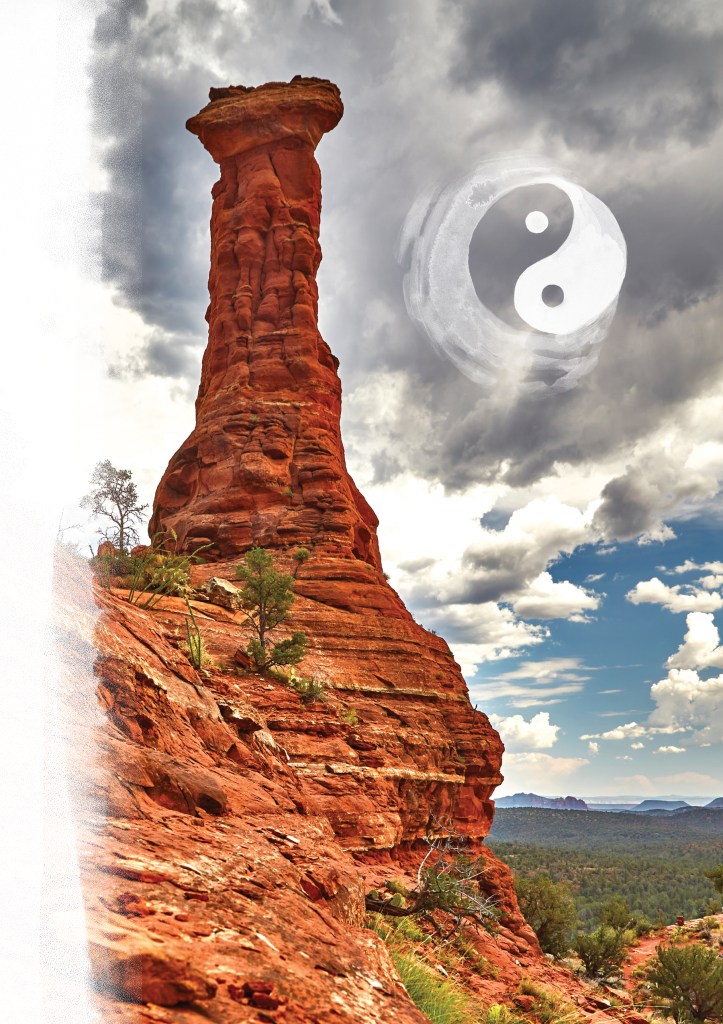 The red rocks of Sedona, Arizona, are said to contain up to fifteen vortices, or places where multiple ley lines intersect, most prominently the Plumed Serpent ley line. The most powerful vortices are Airport Mesa, Cathedral Rock, Boynton Canyon, and Bell Rock. The outcroppings were given these names in 1980 by a local medium named Page Bryant—but their power was acknowledged long before that time, as the Navajo, Yavapai, and Hopi tribes considered these sites places of power, holding sacred ceremonies there.
Airport Mesa is the most accessible to visitors, given that it’s close to the center of Sedona proper. The mesa is filled with twisted juniper trees that swirl with the energy from the vortex. Some visitors see colored orbs, but in general the energy at Airport Mesa is one of upflow, helping you find a higher perspective, as well as a sense of serenity. It’s a masculine energy, allowing you to become more decisive, empowered, and active.
Cathedral Rock, also called Red Rock Crossing, is more difficult to access, given that it’s a pretty steep climb. You don’t have to get to the very top, or the saddle, to feel the vortex, but the energy is most powerful there. Cathedral Rock has a softer, more feminine energy and will enhance both your intuition and your compassion.
Boynton Canyon, particularly the space between the thirty-foot-high knoll just past its entrance and a formation called Kachina Woman, contains a balance of these energies. The space between the masculine and feminine, between yin and yang, allows for a stronger whole, in the same way that the opposing forces of an archway can support a greater weight.
Bell Rock, a distinctive towering formation, is also covered with junipers, but the energy here is in greater balance: the masculine, the feminine, and the space in between are all very powerful in this place. Although you can climb Bell Rock and there are several hiking trails, it isn’t necessary to go all the way up to the top to experience the vortex. Visitors frequently report UFOs, odd glowing green clouds, as well as powerful feelings of joy and ecstasy.
Start planning your trip to Sedona today:
[hbg-title isbn="9781631218835" summary="Explore Arizona's vast open spaces, dreamy canyons, and colorful culture with Moon Arizona & the
Grand Canyon."]
Stardreaming, New Mexico
Stardreaming is a collection of over twenty (and counting) open-air temples and labyrinths, spanning twenty-two acres on James Jereb’s property outside Santa Fe, New Mexico. Jereb is a visual artist and writer and was called upon by ascended spiritual masters from a variety of religions to build these temples or, as he sometimes calls them, stargates. In order to construct them, 600 tons of stone, in 50 different varieties, were brought in from various parts of the United States and Mexico, ranging in size from huge boulders of granite and quartz to small chips of jasper and obsidian.
Each of the temples is different and oriented to a different stellar, lunar, or solar alignment, according to the Hermetic tradition of geometry, including the Fibonacci sequence. The temples include: Temple of the Moon, Temple of Avalon, Rainbow Whale Altar, Temple of Dreams, and many more.
Each temple has its own function and healing methodology—though every visitor experiences it differently. The Center of Illumination, an inner sanctum at Stardreaming, is a room filled with Jereb’s paintings and “light, sound, and frequency.”
For more of the Land of Enchantment, pick up .
Reprinted with permission from MAGICAL PLACES © 2019 by Nikki Van De Car, Running Press
Discover magic everywhere:
[hbg-title isbn="9780762465972" summary="MAGICAL PLACES is for armchair-voyagers and pilgrimage-makers alike. This beautiful volume will take readers on a charmed journey around the world, dipping into some of the most storied destinations in the farthest flung corners of the globe."]
The red rocks of Sedona, Arizona, are said to contain up to fifteen vortices, or places where multiple ley lines intersect, most prominently the Plumed Serpent ley line. The most powerful vortices are Airport Mesa, Cathedral Rock, Boynton Canyon, and Bell Rock. The outcroppings were given these names in 1980 by a local medium named Page Bryant—but their power was acknowledged long before that time, as the Navajo, Yavapai, and Hopi tribes considered these sites places of power, holding sacred ceremonies there.
Airport Mesa is the most accessible to visitors, given that it’s close to the center of Sedona proper. The mesa is filled with twisted juniper trees that swirl with the energy from the vortex. Some visitors see colored orbs, but in general the energy at Airport Mesa is one of upflow, helping you find a higher perspective, as well as a sense of serenity. It’s a masculine energy, allowing you to become more decisive, empowered, and active.
Cathedral Rock, also called Red Rock Crossing, is more difficult to access, given that it’s a pretty steep climb. You don’t have to get to the very top, or the saddle, to feel the vortex, but the energy is most powerful there. Cathedral Rock has a softer, more feminine energy and will enhance both your intuition and your compassion.
Boynton Canyon, particularly the space between the thirty-foot-high knoll just past its entrance and a formation called Kachina Woman, contains a balance of these energies. The space between the masculine and feminine, between yin and yang, allows for a stronger whole, in the same way that the opposing forces of an archway can support a greater weight.
Bell Rock, a distinctive towering formation, is also covered with junipers, but the energy here is in greater balance: the masculine, the feminine, and the space in between are all very powerful in this place. Although you can climb Bell Rock and there are several hiking trails, it isn’t necessary to go all the way up to the top to experience the vortex. Visitors frequently report UFOs, odd glowing green clouds, as well as powerful feelings of joy and ecstasy.
Start planning your trip to Sedona today:
[hbg-title isbn="9781631218835" summary="Explore Arizona's vast open spaces, dreamy canyons, and colorful culture with Moon Arizona & the
Grand Canyon."]
Stardreaming, New Mexico
Stardreaming is a collection of over twenty (and counting) open-air temples and labyrinths, spanning twenty-two acres on James Jereb’s property outside Santa Fe, New Mexico. Jereb is a visual artist and writer and was called upon by ascended spiritual masters from a variety of religions to build these temples or, as he sometimes calls them, stargates. In order to construct them, 600 tons of stone, in 50 different varieties, were brought in from various parts of the United States and Mexico, ranging in size from huge boulders of granite and quartz to small chips of jasper and obsidian.
Each of the temples is different and oriented to a different stellar, lunar, or solar alignment, according to the Hermetic tradition of geometry, including the Fibonacci sequence. The temples include: Temple of the Moon, Temple of Avalon, Rainbow Whale Altar, Temple of Dreams, and many more.
Each temple has its own function and healing methodology—though every visitor experiences it differently. The Center of Illumination, an inner sanctum at Stardreaming, is a room filled with Jereb’s paintings and “light, sound, and frequency.”
For more of the Land of Enchantment, pick up .
Reprinted with permission from MAGICAL PLACES © 2019 by Nikki Van De Car, Running Press
Discover magic everywhere:
[hbg-title isbn="9780762465972" summary="MAGICAL PLACES is for armchair-voyagers and pilgrimage-makers alike. This beautiful volume will take readers on a charmed journey around the world, dipping into some of the most storied destinations in the farthest flung corners of the globe."]