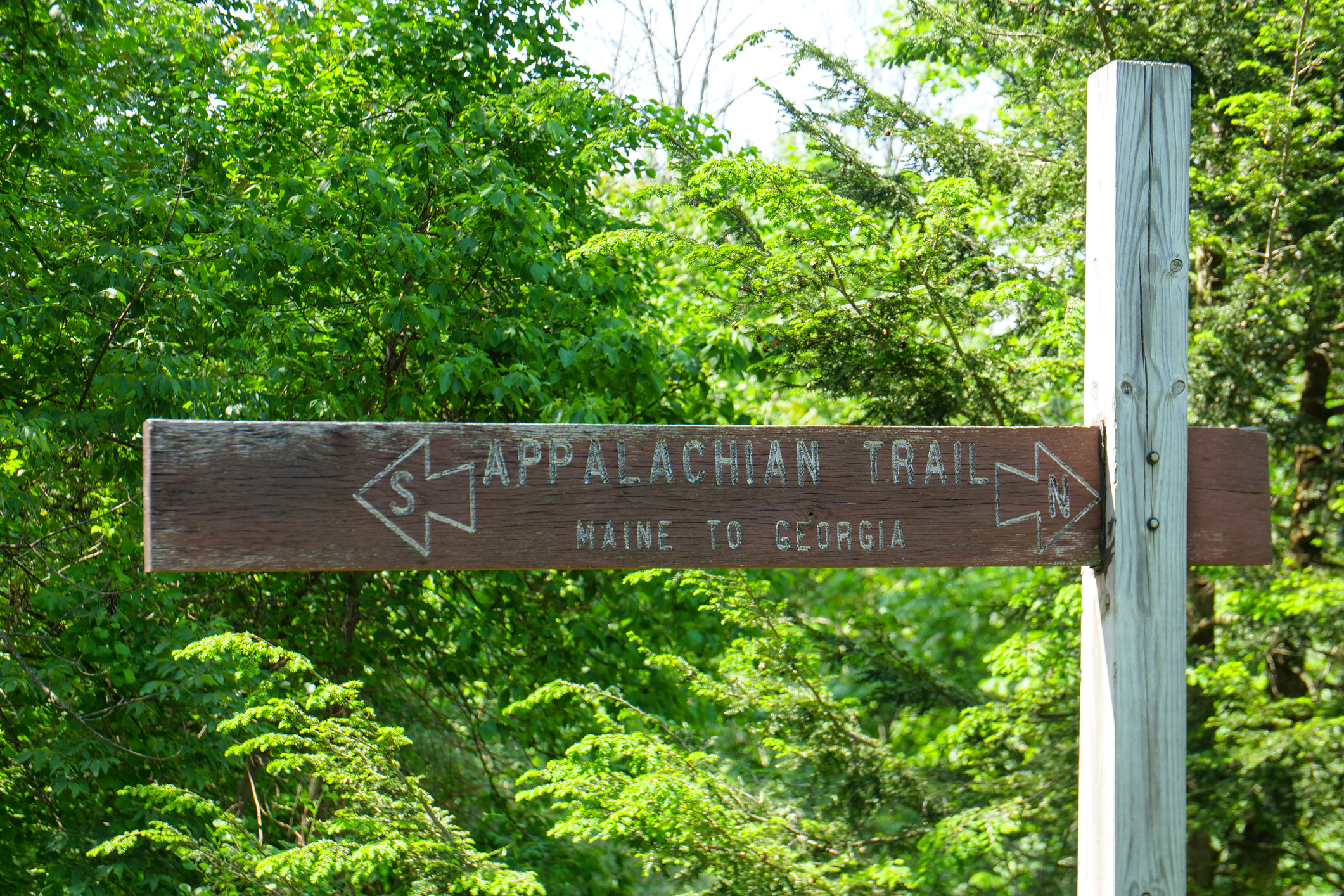
The Appalachian Trail is the longest hiking-only footpath in the world, inspiring millions to test their endurance and indulge in its beauty. Running continuously for 2,200 miles (3,540 km) from Maine to Georgia, it carves its way through wildflower fields, flowing rivers, and great peaks. But you don't have to thru-hike to get a taste of the trail. Here are some of our favorite day hikes along the way, from .
Best Hikes for Fall Foliage
Sam’s Gap to Big Bald
13 miles/20.9 km, 7 hours
Pigsah National Forest, North Carolina: This long ridge hike in the gives you all those Smoky Mountain views—without the carloads of tourists.
McAfee Knob
8.8 miles/14.2 km, 5 hours
Salem, Virginia: With its iconic perch and widescreen views, McAfee Knob has everything you want for an October hike.
Bear Mountain (CT)
6.7 miles/10.8 km, 4 hours
Mount Riga State Park, Connecticut: This fantastic hike through woods and dwarf pines reaches a large rock pile where you can view fall colors for days.
Mount Greylock
6.2 miles/3.2 km, 5 hours
New Ashford, Massachusetts: Summit this iconic peak in October and you’ll be rewarded with especially dazzling views.
Best Hikes for History
Springer Mountain Loop
4.7 miles/7.6 km, 3 hours
Chattahoochee-Oconee National Forest, Georgia: The southern terminus of the AT is an emotional beginning (or end), and it’s a doable climb for most.
Bear Mountain (NY)
4 miles/6.4 km, 3 hours
Bear Mountain State Park, New York: This is where the Appalachian Trail was born. The views aren’t bad either—you can see New York City on a clear day.
Mount Greylock
6.2 miles/3.2 km, 5 hours
New Ashford, Massachusetts: This hike has great views and a rich history, having been summited by literary greats like Henry David Thoreau and Herman Melville.
Katahdin
9.5 miles/15.3 km, 7 hours
Baxter State Park, Maine: The northern terminus of the Appalachian Trail is a great American peak with equal parts danger and excitement.
Best Hikes for Waterfalls
Tumbling Waters Trail
3 miles/4.8 km, 2 hours
Delaware Water Gap National Recreation Area, Pennsylvania: This easy hike down steps leads to two simply beautiful falls.
Buttermilk Falls Trail
2.8 miles/4.5 km, 2 hours
Delaware Water Gap National Recreation Area, New Jersey: Check out the tallest falls in New Jersey while ascending about 1,000 feet (305 m).
Race Brook Falls
4.8 miles/7.7 km, 5 hours
Sheffield, Massachusetts: Climbing up these falls until you reach the summit of Mount Everett is quite the challenge.
Thundering Brook Falls
1 mile/1.6 km, 30 minutes
Killington, Vermont: Take a stroll on a boardwalk to a pretty waterfall tucked away in busy Killington.
Start planning your Appalachian Trail adventure today:
[hbg-title isbn="9781640492714" summary="Whether you're stopping for a day trek or taking a weekend getaway, hit the road and hit the legendary trail with Moon Drive & Hike Appalachian Trail."]
[hbg-post heading="What to read next:" id="578464,578939,578404" /]
When D’Arcy arrives at the Chateau Lieu des Reves, she doesn’t shy away from indulging in the homemade pastries and food prepared for guests. Whether it’s that first dinner with Josh or the romantic picnic they share—there’s always something delicious on the menu in France.
To create your own decadent French picnic, Natasha Lester has some suggestions:
Tarte Tatin: an upside-down pastry with fruit (often apple) that is caramelized in butter and sugar before the tart is baked.
French Baguette: a classic French loaf of bread characterized by its long, thin shape and crispy crust.
Paté: a paste, pie or loaf consisting of ground liver with a variety of other ground meat (pork, poultry, fish) combined with herbs, spices and either wine or brandy. A platter of different types of paté served with slices of baguette will allow guests to sample different tastes.
Cheese: like the paté, creating a platter with a few different flavors and textures of cheese makes for a nice tasting experience served with the baguette. Some popular French cheeses include Brie, Gruyere, Roquefort, and Chevre.
Chocolate Tarts: a type of custard tart with a mixture of dark chocolate, cream and eggs are poured into a sweet pastry shell and baked until firm.
Macarons: sweet pastries made with almond powder or ground almond, they come in a variety of flavors denoted by different colors and types of filling. Note that macarons are different from the macaroon, which is coconut based.
Palmiers: pastry in the shape of a palm leaf or heart. They are also known as French Hearts or Elephant Ear among other names.
Cherry Clafoutis: a type of tart consisting of a sweet custard batter mixed with ripe cherries and baked. While cherries are the traditional fruit used in this dish, other fruits can be substituted.
Champagne or wine is always a good choice to pair with any of these treats and plentiful around France. But if you’re looking for something a little bolder Natasha has shared her favorite recipe for a Manhattan.
2 oz. Whiskey
1 oz. sweet vermouth
2 dashes Angostura Bitters
Luke Jennings is the author of the memoir Blood Knots, short-listed for the Samuel Johnson and William Hill prizes, and of several novels, including the Booker Prize-nominated Atlantic. His previous book Codename Villanelle is the basis for BBC America’s new TV series Killing Eve starring Sandra Oh and Jodie Comer.As a journalist he has written for The Observer, Vanity Fair, the New Yorker and Time.
About the Killing Eve Books by Luke Jennings
[hbg-title isbn="9780316512510" summary="%3Cp%3EThe%20breakneck%20thriller%20by%20Luke%20Jennings%20that%20inspired%20TV%20sensation%20%3Ci%3EKilling%20Eve%3C%2Fi%3E%2C%20starring%20Sandra%20Oh%2C%20%E2%80%9Cunlike%20any%20other%20spy%20drama%20you%E2%80%99ve%20seen.%E2%80%9D%20%E2%80%93%C2%A0%3Ci%3EDaily%20Beast%3C%2Fi%3E%3C%2Fp%3E%3Cp%3EVillanelle%20(a%20codename%2C%20of%20course)%20is%20one%20of%20the%20world%E2%80%99s%20most%20skilled%20assassins.%20A%20catlike%20psychopath%20whose%20love%20for%20the%20creature%20comforts%20of%20her%20luxurious%20lifestyle%20is%20second%20only%20to%20her%20love%20of%20the%20game%2C%20she%20specializes%20in%20murdering%20the%20world%E2%80%99s%20richest%20and%20most%20powerful.%20But%20when%20she%20murders%20an%20influential%20Russian%20politician%2C%20she%20draws%20a%20relentless%20foe%20to%20her%20tail.%3C%2Fp%3E%3Cdiv%3E%3Cdiv%3EEve%20Polastri%20(not%20a%20codename)%20is%20a%20former%20MI6%20operative%20hired%20by%20the%20national%20security%20services%20for%20a%20singular%20task%3A%20to%20find%20and%20capture%20or%20kill%20the%20assassin%20responsible%2C%20and%20those%20who%20have%20aided%20her.%20Eve%2C%20whose%20quiet%20and%20otherwise%20unextraordinary%20life%20belies%20her%20quick%20wit%20and%20keen%20intellect%2C%20accepts%20the%20mission.%3C%2Fdiv%3E%3Cdiv%3EThe%20ensuing%20chase%20will%20lead%20them%20on%20a%20trail%20around%20the%20world%2C%20intersecting%20with%20corrupt%20governments%20and%20powerful%20criminal%20organizations%2C%20all%20leading%20towards%20a%20final%20confrontation%20from%20which%20neither%20will%20emerge%20unscathed.%C2%A0%3Ci%3ECodename%20Villanelle%C2%A0%3C%2Fi%3Eis%20a%20sleek%2C%20fast-paced%20international%20thriller%20from%20an%20exciting%20new%20voice%20in%20fiction.%3C%2Fdiv%3E%3C%2Fdiv%3E" /]
[hbg-title isbn="9780316524346" summary="%3Cdiv%3E%E2%80%9CIf%20you%20want%20us%20to%20remain%20silent%20%E2%80%94%20if%20you%20want%20to%20retain%20your%20freedom%2C%20your%20job%2C%20and%20your%20reputation%20%E2%80%94%20you%20need%20to%20tell%20us%20everything%2C%20and%20I%20mean%20everything.%20.%20.%E2%80%9D%3C%2Fdiv%3E%3Cdiv%3EWe%20last%20saw%20Eve%20and%20Villanelle%20in%20a%20spy%20vs.%20spy%20race%20around%20the%20world%2C%20crossing%20powerful%20criminal%20organizations%20and%20dangerous%20governments%2C%20each%20trying%20to%20come%20out%20on%20top.%20But%20they%20aren%E2%80%99t%20finished%20yet.%3C%2Fdiv%3E%3Cdiv%3EIn%20this%20sequel%20to%C2%A0%3Ci%3EKilling%20Eve%3A%20Codename%20Villanelle%2C%C2%A0%3C%2Fi%3Eformer%20M16%20operative%3Ci%3E%C2%A0%3C%2Fi%3EEve%20reveals%20a%20new%20side%20to%20her%20strengths%2C%20while%20coming%20ever%20closer%20to%20a%20confrontation%20with%20Villanelle%2C%20the%20evasive%20and%20skilled%20assassin.%3C%2Fdiv%3E" /]
[hbg-newsletter call_to_action="Get the Best in Mystery and Thriller Delivered to Your Inbox" button_text="Sign Up " list_id_override="3f93767de1" /]
[hbg-post heading="What to Read & Watch Next" id="642977,642989,675968,672778,642980,487505" /]
OFFICIAL RULES NO PURCHASE NECESSARY TO ENTER OR WIN. This sweepstakes (“Promotion”) may only be entered in or from the 50 United States and the District of Columbia. The Promotion will be announced on Instagram via @orbitbooks_us (the “Promotion Post”). Eligibility. Participation open only to legal residents of the fifty United States and the District of Columbia, who ...]
Amelia Westlake Was Never Here was inspired by a hoax that two friends and I invented in our final year of high school. Our aim was to amuse ourselves and, with any luck, our fellow classmates by creating an imaginary student called Amelia Westlake. We began small, putting Amelia’s name down on lists for sports teams, graffitiing it on school desks, and accepting birthday party invitations on her behalf. We waited to see if anyone noticed.
They noticed. It is safe to say our classmates became somewhat obsessed with finding out who Amelia Westlake was. We carried on pranking until the end of the year without anyone discovering the truth. Amelia Westlake donated prizes to Trivia Night, she sent postcards from exotic locations, she even entered a painting (depicting a giant question mark) in the final year art exhibition. Our hoax was the most fun thing I did in my entire school career, and every time I see Amelia Westlake’s name on the cover of my published book, I want to laugh out loud. It’s her best prank yet.
What became clear as I began writing her story, though, was that I wanted to convey more than just the fun my friends and I had that year. Amelia Westlake Was Never Here also provided an opportunity to explore serious topics like power and privilege, the disadvantages that young women particularly face, and how there are ways—often creative ones—in which young people can harness their talents and skills to challenge power. To find their voice.
When my friends and I were conducting our hoax, I hadn’t found my voice yet. I was an obedient teenager who studied hard and was trying her best to be interested in boys. I didn’t even know any lesbians, so the thought that I was a lesbian myself was inconceivable.
Except that it wasn’t inconceivable. Not really. Not to me. Just to everyone around me. What was inconceivable was that I would ever admit the truth.
In this respect, Harriet and Will, the two main characters in Amelia Westlake Was Never Here, have a better experience of high school than I did. They live in a world where they can be more open about their sexuality. But they still face hurdles on the road to equality—both as lesbians and as young women.
What Harriet and Will must learn is that they can stand up for themselves, that while in some respects they are disadvantaged, they have an immense amount of privilege, which they can harness not just for their own benefit, but for others who are less empowered.
In the novel, Amelia Westlake’s motto is “Play the Power, not the Game.” It is a call to arms to young people everywhere to challenge the structures around you; don’t comply with them. Stand up for yourself and others. Take action. Be creative. Be brave. And have yourself some fun along the way.
[hbg-title isbn="9780316450669" /]
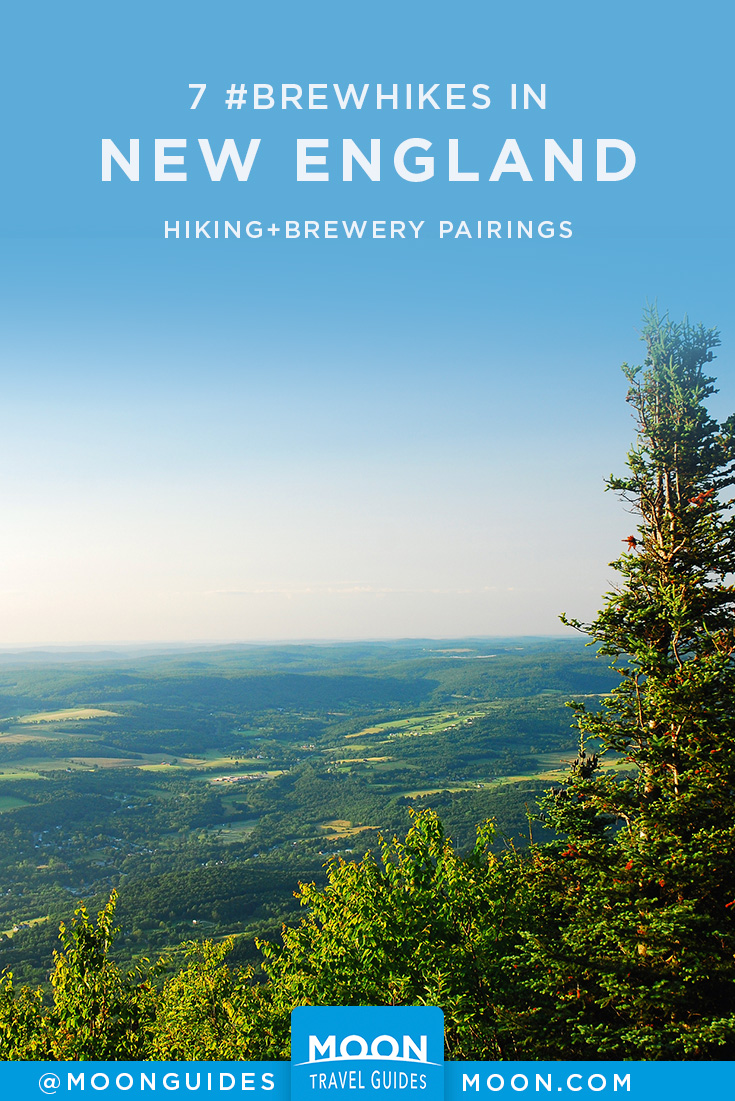
Gorgeous scenery and craft brewing are two of the things New England does best. So why not combine them for the perfect New England day? From the mountains of New Hampshire to the shores of Maine, here are 7 #brewhikes to try.
1. North Western Massachusetts – North Adams
Outdoorsy options are plentiful in this part of Western Mass. But if you’re up for a challenge, there’s no better hike than to the top of , the highest point in Massachusetts. Enjoy any one of the 70 trails within the reservation, like the challenging 9.6-mile loop to the peak that traces Henry David Thoreau’s 1844 hike, or a slightly more low-key 6.2-mile round-trip summit hike that takes about 4-5 hours from the Mount Greylock Campground.
Once you’re at the top, take a moment to catch your breath and take in views that stretch to Vermont and New York. By this point you’ll be craving a cold one, and you’ll be in luck—because from the end of the trail it’s about a half-hour drive to . The space is a nod to North Adams’s industrial past, with gorgeous brick walls and a 40-foot bar made by local workers. Its diverse lineup of beers manages to bridge the divide between visiting art lovers (mind-bending contemporary art is right next door at Mass MoCA!) and the local crowd. Plus, there’s pizza.
2. South Western Massachusetts – Great Barrington
If you find yourself in the southern stretch of the Berkshires, get a taste of the Appalachian Trail in , which has miles of hiking and multiuse trails. Walking on the Appalachian is generally an out-and-back that can be as long or as short as you like, but the forest’s most popular option is the gorgeous Benedict Pond Loop Trail, an easy hike that wraps 1.5 miles around a tree-fringed lake.
After, swing by for their serious list of beers, plus a sprawling menu of sandwiches, salads, burgers, and more. Head straight through the dining room for the bar, where regulars’ mugs hang overhead and every possible surface is covered in coasters from breweries around the world. The tap list changes with the season, but the Black Bear Stout and Barrington Brown are local favorites.
3. Central Vermont – Woodstock & Vicinity
Seven miles east of Woodstock, Quechee Gorge Trail is a pleasant 2.2-mile round-trip hike that starts at the visitors center and leads into Vermont’s deepest gorge, which was carved by retreating glaciers. On a hot day, it’s a lovely place to take a dip in the water.
Follow up this short trail with a can from , which is about a half an hour drive away. Long Trail started filling kegs in 1989, and its flagship amber ale is now ubiquitous in Vermont. If that’s the only Long Trail brew you’ve tried, you’ll be astounded by the selection at the brewery, which keeps around 13 beers on tap. Standouts include the barrel-aged Triple Bag, but the bartenders are through-and-through beer geeks who can guide your selection. The brewery also has a menu of pub food featuring wings, burgers, and other beer-friendly meals. A raised walkway overlooks the bottling and brewing facility, giving you a fascinating bird’s-eye view of the action.
4. Northwest Vermont – Stowe
Though it has a reputation for being a ski town, there’s plenty of hiking (and drinking!) options in Stowe. One of the best is the steep, 1.1-mile hike from Smuggler’s Notch Road to , a scenic body of water that dazzles in autumn. Once there, take the additional 1.4-mile loop around the pond, and then head back into town to treat yourself.
Stowe is blessed with a wealth of locally-made craft beers, starting with the Austrian lagers at . Favorites include the malty Vienna Style Lager and the Helles Lager, and the Bierhall’s menu of Austrian pub food—think cheddar and beer soup, hot soft pretzels, and many kinds of sausages—are perfect pairings for the entire lineup. In contrast, the beers at are defined by their distinctiveness. The brewer is consistently creative, with seasonal specials along with a list of mainstays: Try the Pink ‘n’ Pale, an American pale ale brewed with a hint of bitter grapefruit.
5. Northwest Vermont – Burlington
Just south of Burlington in Charlotte you’ll find , whose namesake low-lying peak offers incredible views of Lake Champlain, the Adirondacks, and more. Starting at the parking lot, the 1.9-mile Mount Philo Trail loops up to the summit. It’s a relatively easy, family-friendly hike with a huge payoff at the top.
Back in Burlington, you’re not likely to run out of craft beer options—after all, Vermont has more breweries per capita than any other state! If all the choices make you think you’d like a tour guide (and chauffeur), you can hop on the bus with , which will take you to all the hotspots. has something for most beer lovers, starting with the flagship Conehead, a single hop wheat IPA that’s brewed with Citra hops and is aromatic and hoppy without being overpowering. Another favorite is the London Calling, an English ordinary bitter that’s malty and mellow—and not particularly bitter. makes European-style beers in a nondescript industrial building. The tasting room has more charm and is lined with old beer cans and historical images of Burlington. Try the hugely popular Yorkshire Porter, an English dark ale that’s rich and full bodied, or Argument, an English India pale ale that’s brewed true to style: strong and bitter. , a relatively recent addition to Burlington’s beer scene, has hoppy, aromatic beers made by passionate beer geeks.
6. Northwest New Hampshire – White Mountains & Franconia Range
For the ultimate hike in the Franconia Range, plan for at least six hours on the , a rugged trail that goes up and over three peaks: Little Haystack Mountain, Mount Lincoln, and Mount Lafayette. You’ll climb 3,480 feet in about four miles, passing waterfalls, knife-edge ridges, and other scenic views. (Pro tip: for a slightly more moderate hike, try the instead.)
Afterwards, it’s about a 15-minute drive north to the , which brews small-barrel batches of European-style beers that range from more familiar Hefeweizens to offbeat pours, like a sour brown wild ale, Leipzig-style gose, and Czech black lagers. If you’re feeling famished after the trek, take a seat in the historic riverside barn or kick back on the patio with one of their Neapolitan-style pizzas.
7. Southern Maine – Portland
If urban “hikes” are more your thing, check out in Portland. Back Cove is a 3.6-mile paved trail that circles a small estuary just north of downtown. If you’re headed from north to south, the trail connects to the Eastern Promenade, a slender waterfront park that 2.1 miles end-to-end, with walking trails, a popular swimming beach, and jaw-dropping sunrise views. Check out for more maps and directions to some of the city’s best offerings.
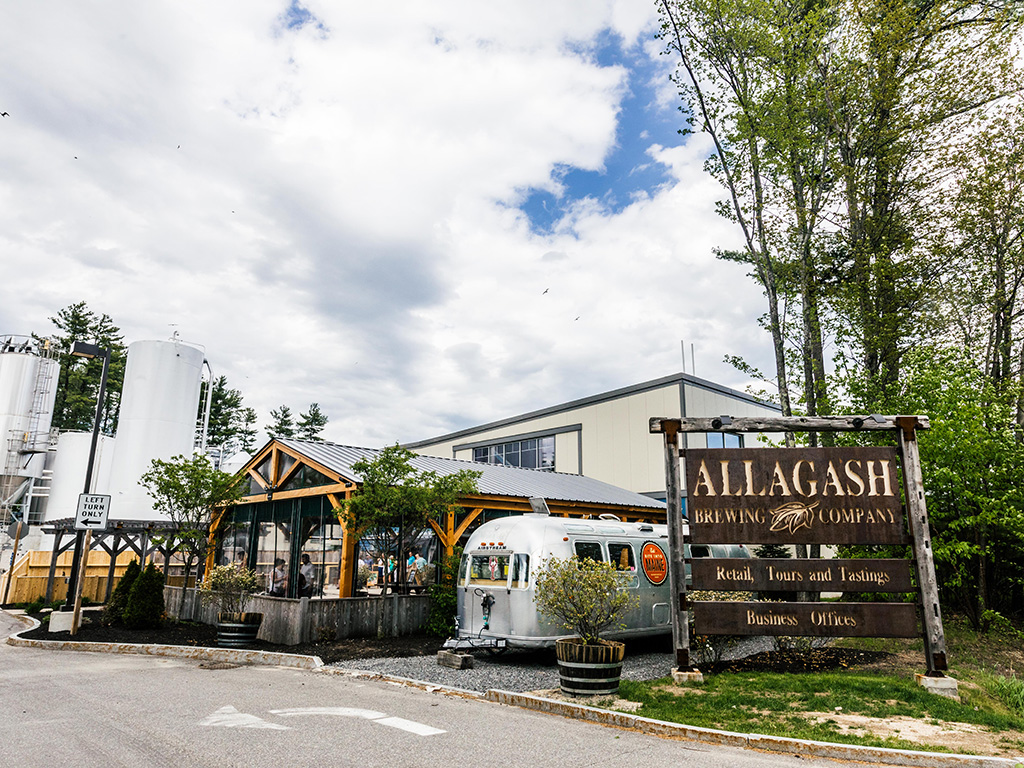
Afterwards, explore the cutting edge of American beer with a cluster of breweries that are walking distance from downtown. (The is also an option.) Don’t miss , which has a diverse list of beers on tap, including the flagship Daymark American Pale Ale, a gorgeously balanced brew made with locally grown rye. Devoted beer geeks should head next door to , which uses many local ingredients in its offerings, including whiskey, rum, gin, and the unusual Black Cap Barley Spirit, made entirely with Maine-grown barley and filtered through Maine maple charcoal. started in Kennebunkport, but the heart of Maine’s largest brewery is just on the edge of downtown Portland. The tasting room has a brewpub feel, with barrels of aging beers stacked high against the walls, and a huge selection of brews on draft. Finally, stop for a tasting at , which turns out beers beloved across New England, like the refreshing Allagash White and a rich-tasting tripel that packs a malty wallop.
Find more trails and ales to inspire your next #brewhike:
[hbg-title isbn="9781640491748" summary="Explore the best of New England’s historic cities, admire the famed fall foliage, and stroll the stunning coastline with Moon Travel Guides."/]
Pin it for Later
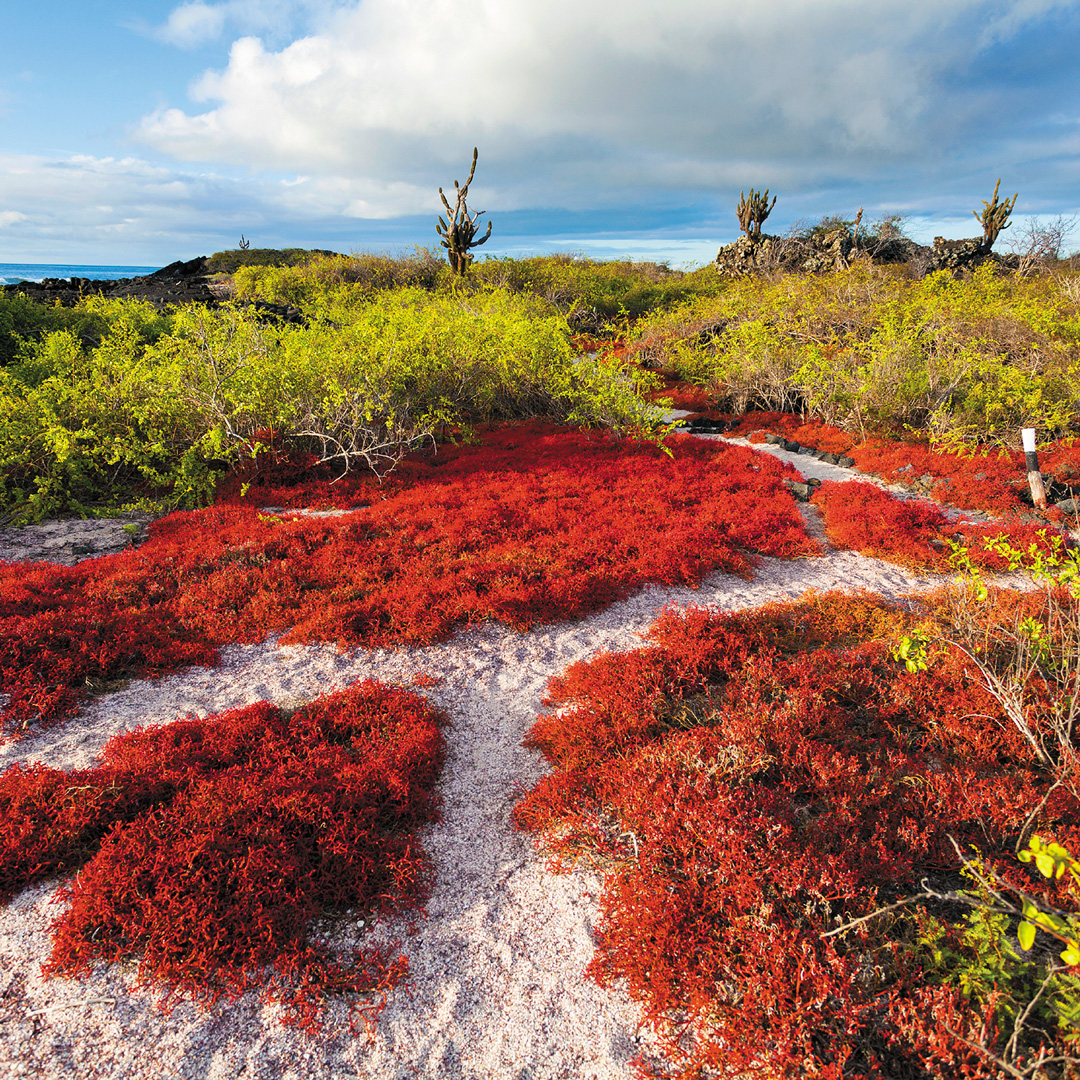
Floreana has been a day tour destination from Santa Cruz for years. The residents of Floreana call it “lightning tourism” because big tour groups “strike” the island for an instant and then are gone. While visitors may eat lunch at a restaurant in town, the residents see little of the profits. Floreana residents don’t want the large-scale development and numbers of tourists that visit the other ports. Puerto Ayora may not seem hectic to you, but if you compare its throngs of souvenir shops, luxury hotels, spas, and touts to Floreana’s sleepy dirt roads and population of 130, it might as well be New York City. The challenge has been to maintain the uniqueness of Floreana’s slow pace of life while creating economic opportunities for the locals.
To that end, Floreana has worked with the national park and several conservation organizations to develop an entirely different model of tourism. The goal is to serve a limited number of tourists and ensure that the profits flow equitably into the community. Unlike Santa Cruz where multiple tour operators tout their services every time you walk down the street, Floreana has only one. The single community tourism operator (Centro Comunitario Floreana) directs the flow of group tours to hostels and restaurants and is the only company authorized to operate day tours to the beautiful Post Office Bay, Mirador de la Baronesa, and La Botella. As an independent traveler, consider yourself lucky; you can choose where to stay and eat. In contrast, when large tour groups arrive, people are assigned to stay in community-run guest houses and eat in community-run restaurants on a rotation schedule. A percentage of the proceeds goes back to CECFLOR for its operating costs, to support the local school and other projects to benefit the community.
A key difference you may notice is that all of CECFLOR’s tours are run by local community guides. There are no naturalist guides living on Floreana, so the national park has authorized CECFLOR to send tourists to protected areas with locals instead. Unlike naturalist guides, community guides are locals who have other jobs outside of tourism; these tours are a source of extra income. Their English may be quite limited and they don’t have the training that naturalist guides go through, but they do know the sites well and can point out animal species to you.
As an outsider, it may seem unfair that you aren’t allowed to walk on your own to Post Office Bay and Mirador de la Baronesa, but Floreana residents can go alone. Keep in mind, however, that many residents of Floreana are older; they lived on the island before the national park came into existence in 1959. For years the national park only allowed visits with a naturalist guide, but since no naturalist guides live on Floreana, it effectively prevented anyone from going unless they were on cruise ships. Under the new rules, residents can finally return to their favorite childhood haunts.
Floreana's Community Tourism Guesthouses
Floreana has seven mom-and-pop guesthouses that are affiliated with the community tourism project. These houses currently offer the same price of $35 per person, though there is a surprising variation in quality and amenities. The following list is ordered roughly in order of quality, best options first. Unless noted, these guesthouses do not include breakfast or air-conditioning. Note that there are plans to continue investing in renovating the guesthouses; prices may potentially increase.
None of these guesthouses use online booking platforms; make your reservation through the direct emails provided below or through CECFLOR with a special request for the guesthouse of your choice.
Casa Santa Maria (Ignacio Hernández, tel. 5/253-5022, malourdes.soria@hotmail.com, $35 pp), run by the seasoned owners of the Floreana Lava Lodge, boasts six relatively modern rooms with mini-fridge, safe-deposit box, and hot water; it’s a block inland. Ask for a room on the third floor.
Casa de Emperatriz (12 de Febrero, tel. 5/253-5014, orquideasalgado@hotmail.com, $35 pp) has three rather dingy rooms a couple blocks inland by the main road, but it is the only budget option on the island with air-conditioning. Some rooms also have mini-fridges.
Casa de Lelia (Ignacio Hernández and Oswaldo Rosero, tel. 5/253-5041, leliaflorimarc8@gmail.com, $35 pp), a block inland, has pleasant rooms with remodeled bathrooms, hammocks, and hot water; some rooms have mini-fridges.
Los Cactus (Oswaldo and La Baronesa, tel. 5/253-5011, loscactus.gps@gmail.com, $35 pp), is slightly inland near the dock. There are four basic, modern-style guest rooms; the two on the second floor have limited views of the bay. There is a kitchen that guests are sometimes allowed to use, but it’s best to ask.
Casa El Pajas (Wittmer at Zavala, tel. 5/253-5002, hospedaje.elpajas@gmail.com, $35 pp) has an attractive tiki-style log cabin vibe but is located a little farther inland than the other options. There is also a breezy second-floor sitting area and a couple hammocks.
Cabañas Leocarpus (12 de Febrero, tel. 5/253-5054, veritoemi2006@gmail.com, $35 pp) on the main street has a similar rustic vibe. The guest rooms on the second floor have a very distant view to the sea. Each has one double bed and one single bed.
Casa de Huéspedes Hildita (12 de Febrero and Juan Salgado, tel. 5/253-5079, $35 pp) has five guest rooms built around an empty gravel courtyard. Be aware, however, that while water is a precious resource on the entire island, this hostal has the strictest water usage policy.
Related Travel Guide
[hbg-title isbn="9781640492882" summary="The Galápagos archipelago is one of the most beautiful, wild, and untouched places on earth. Travel back in time with Moon Galápagos Islands."/]
Pin it for Later
Peru's tourism has seen a massive boom in recent years. More than 3,000 tourists per day trample the grounds of the ancient Inca city, well above the limit set by UNESCO. Such popularity comes at a price: Because Machu Picchu is built on a humanmade mound of earth, the ground is comparatively soft and the site is actually sinking, albeit very slowly. Due to the influx of tourists, Peru is implementing new measures to visit Machu Picchu in order to ensure sustainability, including establishing two entry windows (6am-noon and noon-5:30pm), predetermined paths for tourists to walk on while in the sanctuary, and time limits at specific spots in the ruins.
If you’re headed to Machu Picchu, there are plenty of ways for you to minimize your environmental impact while making the most of your trip of a lifetime! Here's where to start.
Pass on Plastic
Every time travelers buy a plastic water bottle, they are contributing to a waste problem that is reaching epic proportions all over Peru. Nearly 200 million plastic bottles are produced every month in Peru alone, and a good chunk of these are consumed by tourists—who understandably need a few liters of purified water for each day in Peru. Here's what you can do to help:
Carry a reusable hard plastic water bottle and fill it with treated or boiled water.
Buy sodas and water in refillable glass bottles.
Request that your hotel provide water tanks (bidones) or at the very least boiled water for refilling bottles.
Reuse plastic bags over and over and do not accept new ones.
Spread the word!
Pick a Responsible Trekking Agency
Among the more than 150 licensed trekking agencies operating in Cusco, the standards of service and social and environmental responsibilities vary greatly. It's important to be discerning and to research thoroughly before booking. , , and are a few great choices: Not only is their experience and professionalism unsurpassed, but they consistently recycle their trash, pack out all human waste, treat water carefully, and pay porters fair wages.
Shop Local
From beautiful crafts and Andean paintings to gorgeous ceramics and weavings, there are tons of souvenir options to bring home from your adventure, and they can be a great way to support the local economy.
A great association in Cusco, run by the altruistic Franco Negri, is Casa Ecológica (Portal de Carnes 236, interior 2, cell tel. 984-117-962, 9am-9:30pm daily), which was created to promote sustainable development in rural communities. The shop sells traditional crafts produced with natural fibers, as well as organic cosmetics and food products.
You'll find some of the highest-quality textiles for sale in all of Cusco at the (Av. El Sol 603, tel. 084/22-8117, 7:30am-8:30pm daily). Nilda Callañaupa, a weaver and scholar from Chinchero, set up the center with the admirable goal of recovering ancient technologies, showcasing high-quality weavings, and sending revenue straight back to the remote, neglected villages that produce them. Local weavers give daily demonstrations, and there are displays that explain all the plants, minerals, and berries used for natural dyes.
Volunteer!
Why not give back to the community while you're there? There are hundreds of volunteer opportunities in Peru involving art and culture, community development, disability and addiction services, ecotourism and the environment, education, health care, and services for children and women. Although these organizations don't pay salaries, they often provide food or accommodation in exchange for your time.
The nonprofit (Lima tel. 01/447-5190) is dedicated to conserving natural biodiversity, and its volunteers play a firsthand role in helping that mission happen. The two-week to monthlong volunteer programs take participants to the ocean to research dolphin populations or dive into open water to collect marine species. (Only experienced divers can apply for the latter option.) A rainforest trip to Manu involves researching tapirs, macaws, and giant river otters. Lima's is a solid resource that hooks up volunteers with organizations. There are also many Peru-based volunteer organizations: check out programs in Huancayo; the organization in Carhuaz in the Cordillera Blanca; and in Ollantaytambo.
Related Travel Guide
[hbg-title isbn="9781640493162" summary="Mystical, timeless, and full of adventure: embark on the trip of a lifetime to the jewel of Peru with Moon Travel Guides." /]
Pin it for Later
If you're interested in community-based tourism in Cambodia, this quick round-up of the best performances, hotels, shops and more is an excellent place to start.
“Community-based tourism” is a hot topic in Cambodia, where many worthy projects compete with more conventional—and even downright crooked—enterprises in a rapidly growing economy. The below are guaranteed ways to put your money toward a good cause.
Sights and Performances
, located near Banteay Srei, is managed by a Canadian NGO, with proceeds going to a home for impoverished children.
is a rewarding attraction in Siem Reap that trains underprivileged students to become circus performers.
in Siem Reap hosts shadow puppet theater shows performed by kids from the Krousar Thmey NGO.
is an NGO that stages excellent traditional dance performances in the garden of the National Museum in Phnom Penh.
Tours
Tonlé Sap Lake Tours are available through the or both of which support conservation efforts.
Khmer Architecture Tours in Phnom Penh are offered by the excellent an NGO that promotes and documents modern Khmer architecture.
Hotels and Homestays
sponsors higher education for all its staff and some of its tuk-tuk drivers.
, near Siem Reap’s airport, provides training to young Cambodians, and visitors are welcome to stay or eat here.
, in Siem Reap, works closely with several social organizations to promote responsible tourism and hosts apsara dance performances organized by the NGO Sangkheum Center for Children.
is an excellent hotel in Siem Reap that runs a foundation to support projects in education, business, and health care.
provides income for local families and allows visitors a window into Khmer life.
Restaurants
Sala Bai, in Siem Reap, trains young Cambodians in the restaurant business.
The Haven is a Swiss-run restaurant in Siem Reap that employs disadvantaged young adults.
Common Grounds is an American-style coffeehouse in Siem Reap whose profits go to a number of NGOs in Cambodia.
Footprint Café, in Siem Reap, donates 100 percent of its net profits to the local community as grants for educational projects.
Kinyei Café is an NGO affiliate that trains local youth in Battambang.
Jai Baan Restaurant, in Battambang, is NGO-managed and offers gourmet dining.
Shops
, in Siem Reap, sells products made by underprivileged Cambodians.
, in Siem Reap, produces great pottery and reinvests its profits into local job creation and cultural preservation.
trains and employs rural, in some cases disabled, tailors in its Siem Reap shop, which purchases and recycles waste from the community to make its products.
, in Phnom Penh, offers employment to vulnerable Cambodians, who produce jewelry and toys
, in Phnom Penh, support projects in the Cambodian and Vietnamese countryside
Related Travel Guide
[hbg-title isbn="9781640492493" summary="The ancient temples at Angkor Wat are unlike anything else on earth. Step back in time and take the trip of a lifetime with Moon Travel Guides."/]
Richard P. Feynman to Frederich Hipp, April 5, 1961
Editor's Note: Frederich Hipp, a high school student, was fascinated by physics ("atomic theory and quantum mechanics in particular") and had built a cloud chamber for his science project. He was concerned, however, that he had little aptitude for math. His question to Feynman: "Can a person of normal mathematical ability master enough math to do work on some professional level in this field?"
Mr. Frederich Hipp
New Milford, Connecticut
Dear Sir:
To do any important work in physics a very good mathematical ability and aptitude are required. Some work in applications can be done without this, but it will not be very inspired.
If you must satisfy your "personal curiosity concerning the mysteries of nature" what will happen if these mysteries turn out to be laws expressed in mathematical terms (as they do turn out to be)? You cannot understand the physical world in any deep or satisfying way without using mathematical reasoning with facility. How do you know you don't have an aptitude for math? Perhaps you disliked your teacher, or it was presented wrong for your type of mind.
What do I advise? Forget it all. Don't be afraid. Do what you get the greatest pleasure from. Is it to build a cloud chamber? Then go on doing things like that. Develop your talents wherever they may lead. Damn the torpedoes—full speed ahead!
What about the math? Maybe (1) you might find it interesting later when you need it to design a new apparatus, or (2) you may not go on with your present ambition to understand everything, but instead find yourself a leader in some other direction, such as building the most ingenious rocket-ship control devices, or (3) biological problems may ultimately absorb all your interest and talent for doing experiments and learning about nature, etc.
If you have any talent, or any occupation that delights you, do it, and do it to the hilt. Don't ask why, or what difficulties you may get into.
If you are an average student in everything and no intellectual pursuit gives you real delight, then I don't know how to advise you. You will have to discuss it with someone else. It is a problem that I have not thought about very hard.
Sincerely,
R. P. Feynman
Edward Teller to Richard P. Feynman, October 27, 1965
Dear Dick:
Congratulations! It is wonderful that you and Julian should share the Nobel Prize, which I am sure you deserve in a like manner, although in no other respect do you seem to resemble each other. I think you will illustrate to the Swedes in an excellent manner that not all Americans are alike.
I wish I could be there to observe you when you are on your best behavior in your interaction with the King of Sweden. It will be quite a phenomenon.
With best wishes,
Edward Teller
Richard P. Feynman to Edward Teller, November 30, 1965
Professor Edward Teller
University of California, Davis
Livermore, California
Dear Edward:
Thank you for your kind letter of congratulations. The phenomenon you wish to observe with my interaction with the King of Sweden frightens me as much as it interests you. Anything can happen, but I suppose nothing really will. I hope I get through it alive. It was good to hear from you.
Sincerely,
Richard P. Feynman
Richard P. Feynman to Sandra Chester, date unknown
Dear Sandra,
I was delighted too when I heard about the Nobel Prize, thinking as you did that my bongo playing was at last recognized. Imagine my chagrin when I realized that there had been some mistake—they cited some marks I made on paper some 15 years ago—and not one word about percussion technique.
I know you share in my disappointment.
Thank you,
Richard P. Feynman
Richard P. Feynman to William Neva, August 14, 1975
Mr. William Neva
Henrietta, New York
Dear Mr. Neva:
Thank you for your letter and for your question about invisibility. I would suggest that the best way to get a good answer to your question is to ask a first-rate professional magician. I do not mean this answer to be facetious or humorous, I am serious. What a magician is very good at is making things appear in an unusual way without violating any physical laws, but by arranging matter in a suitable way. I know of no physical phenomenon such as X-rays, etc., which will create invisibility as you want. Therefore if it is possible at all it will be in accordance with familiar physical phenomenon. That is what a first-rate magician is good for, to create apparently impossible effects from "ordinary" causes.
Sincerely,
Richard P. Feynman
Richard P. Feynman to Arline Feynman, April 3, 1945
Tuesday Morning, 10 AM
Dearest Putzie
You will be interested in two things. First, yesterday I got everything going smoothly and so now I won't be working late hours anymore (I worked till 12 last night), and second, I took a shower. I slept late this morning just for fun and I'm beginning to take a more relaxed view of life (I even read a book for a 1/2 hour before I went to sleep). I think the worst is over and now I can take it easy.
There is a third thing you will be interested in. I love you. You are a strong and beautiful woman. You are not always as strong as other times but it rises and falls like the flow of a mountain stream. I feel I am a reservoir for your strength—without you I would be empty and weak like I was before I knew you—but your moments of strength make me strong and thus I am able to comfort you with your own strength when your stream is low.
I find it much harder these days to write these things to you—there isn't quite the personal intimate contact that I used to get out of letters. I will come Sunday and tell them to you—I will love you Sunday.
No news from here. Oh yes, we have a regular gestapo up here. They took a guy for over an hour in a smoke filled room with men sitting around in the dark—just like in the movies—firing questions at him to prove he was a Communist. They didn't succeed—because he wasn't. The poor guy couldn't work good the next day because they got him out of bed the night before. They claim they are trying to keep spies out of this place. It is dopey, because they leave the gates open at night often by mistake. Don't get scared tho they haven't found out that I am a relativist yet!
I love you sweetheart,
RPF
Richard P. Feynman to Gweneth Feynman, October 11, 1961
October 11, 1961
Hotel Amigo, Brussels
Hello, my sweetheart,
Murray and I kept each other awake arguing until we could stand it no longer. We woke up over Greenland which was even better than last time because we went right over part of it. In London we met other physicists and came to Brussels together. One of them was worried—in his guidebook the Hotel Amigo was not even mentioned. Another had a newer guide—five stars! and rumored to be the best hotel in Europe!
It is very nice indeed. All the furniture is dark red polished wood, in perfect condition; the bathroom is grand, etc. It is really too bad you didn't come to this conference instead of the other one.
At the meeting next day things started slowly. I was to talk in the afternoon. That is what I did, but I didn't really have enough time. We had to stop at 4 PM because of a reception scheduled for that night. I think my talk was OK tho—what I left out was in the written version anyway.
So that evening we went to the palace to meet the king and queen. Taxis waited for us at the hotel—long black ones—and off we went at 5 PM, arriving through the palace gates with a guard on each side, and driving under an arch where men in red coats and white stockings with a black band and gold tassel under each knee opened the doors. More guards at the entrance, in the hallway, along the stairs, and up into a ballroom, sort of. These guards stand very straight, dark grey Russian-type hats with a chin strap, dark coats, white pants, and shiny black leather boots, each holding a sword straight up.
In the "ballroom" we had to wait perhaps 20 minutes. It has inlaid parquet floors, and L in each square (Leopold—the present king's name is Baudoin, or something). The gilded walls are 18th century and on the ceiling are pictures of naked women riding chariots among the clouds or something. Lots of mirrors and gilded chairs with red cushions around the outside edge of the room—just like so many of the palaces we have seen, but this time it was alive, no museum, everything clean and shining and in perfect condition. Several palace officials were milling around among us. One had a list and told me where to stand but I didn't do it right and was out of place later.
The doors at the end of the hall open—guards are there, and the king and queen so we all enter slowly and are introduced one by one to the king and queen. The king has a young semi-dopey face and a strong handshake, the queen is very pretty. (I think her name is Fabriola—a Spanish countess she was.) We exit into another room on the left where there are lots of chairs arranged like in a theatre, with two in front, also facing forward, for K & Q later, and a table at the front with six seats is for illustrious scientists (Niels Bohr, J. Perrin (a Frenchman), J. R. Oppenheimer etc.).
It turns out the king wants to know what we are doing, so the old boys give a set of six dull lectures—all very solemn—no jokes. I had great difficulty sitting in my seat because I had a very stiff and uncomfortable back from sleeping on the plane.
That done, the K & Q pass thru the room where we met them and into a room on right (marked R). All these rooms are very big, gilded, Victorian, fancy, etc. In R are many kinds of uniforms, guards at door, red coats, white coat sort of waiters to serve drinks and hors d'oeuvres, military khaki and medals, black coat—undertaker's type (palace officials).
On the way out of L into R, I am last because I walk slowly from stiff back and find myself talking to a palace official—nice man—teaches math part time at Louvain University, but his main job is secretary to the queen. He had also tutored K when K was young and has been in palace work 23 years. At least I have somebody to talk to, some others are talking to K or to Q; everybody standing up. After a while the professor who is head of conference (Prof. Bragg) grabs me and says K wants to talk to me. I pull boner #1 by wanting to shake hands again when Bragg says, "K, this is Feynman"; apparently wrong—no hand reaches up, but after an embarrassed pause K saves day by shaking my hand. K makes polite remarks on how smart we all must be and how hard it must be to think. I answer, making jokes (having been instructed to do so by Bragg, but what does he know?)—apparently error #2. Anyway, strain is relieved when Bragg brings over some other professor—Heisenberg, I think. K forgets F and F slinks off to resume conversation with Sec'y of Q.
After considerable time—several orange juices and many very very good hors d'oeuvres later—a military uniform with medals comes over to me and says, "Talk to the queen!" Nothing I should like to do better (pretty girl, but don't worry, she's married). F arrives at scene: Q is sitting at table surrounded by three other occupied chairs—no room for F. There are several low coughs, slight confusion, etc. and lo! one of the chairs has been reluctantly vacated. Other two chairs contain one lady and one Priest in Full Regalia (who is also a physicist) named LeMaître.
We have quite a conversation (I listen, but hear no low coughs, and am not evacuated from seat) for perhaps 15 minutes. Sample:
Q: "It must be very hard work thinking about those difficult problems."
F: "No, we all do it for the fun of it."
Q: "It must be hard to learn to change all your ideas" (a thing she got from the six lectures).
F: "No, all those guys who gave you those lectures are old fogeys—all that stuff was in 1926, when I was only eight, so when I learned physics I only had to learn the new ideas. Big problem now is, will we have to change them again?"
Q: "You must feel good, working for peace like that."
F: "No, never enters my head, whether it is for peace or otherwise we don't know."
Q: "Things certainly change fast—many things have changed in the last hundred years."
F: "Not in this palace." (I thought it, but controlled myself.)
F: "Yes," and then launched into lecture on what was known in 1861 and what we found out since—adding at end, laughingly, "Can't help giving a lecture, I guess—I'm a professor, you see. Ha, ha."
Q in desperation, turns to lady on her other side and begins pleasant conversation with same.
After a few moments K comes over, whispers something to Q who stands up and they quietly go out. F returns to Sec'y of Q who personally escorts him out of palace past guards, etc.
I'm so terribly sorry you missed it. I don't know when we'll find another king for you to meet.
I was paged in the hotel this morning just before leaving with the others.
Phone call—I returned to the others and announced, "Gentlemen, that call was from the queen's secretary." All are awestruck, for it did not go unnoticed that F talked longer and harder to Q than seemed proper. I didn't tell them, however, that it was about a meeting we arranged—he was inviting me to his home to meet his wife and two (of four) of his daughters, and see his house. I had invited him to visit us in Pasadena when he came to America and this was his response.
His wife and daughters are very nice and his house was positively beautiful. You would have enjoyed that even more than visiting the palace. He planned and built his house in a Belgian style, somewhat after an old farmhouse style, but done just right. He has many old cabinets and tables inside, right beside newer stuff, very well combined. It is much easier for them to find antiques in Belgium than for you in Los Angeles as there are so many old farms, etc. He has large grounds and a vegetable garden—and a dog—from Washington—somebody gave the king and the K gave to him. The dog has a personality somewhat like Kiwi because I think he is equally loved. He even has a bench in his garden hidden under trees that he made for himself to go and sit on and look at the surrounding countryside. The house is slightly bigger than ours and the grounds are much bigger but not yet landscaped.
I told him I had a queen in a little castle in Pasadena I would like him to see—and he said he hoped he would be able to come to America and see us. He would come if the Q ever visits America again.
I am enclosing a picture of his house, and his card so I don't lose it.
I know you must feel terrible being left out this time—but I'll make it up someday somehow. Don't forget I love you very much and am proud of my family that is and my family that is to be. The secretary and his wife send their best wishes to you and our future.
I wish you were here, or next best thing, that I were there. Kiss SNORK and tell Mom all my adventures and I will be home sooner than you think.
Your husband loves you.
Your husband.
Richard P. Feynman to Alan Woodward, March 31, 1982
Alan Woodward
Southampton, Britain
Dear Mr. Woodward:
Surely increased knowledge is not incompatible with a humanitarian career—no matter what it is you learn. And surely if your professor and fellow students seem to know some things, but seem to be oblivious to other things ("outside their laboratory door," as you say) that does not exclude you from learning what they know whilst remaining deeply aware of what they are blind to.
Of course, the course that physics is taking you has something missing. You cannot develop a personality with physics alone, the rest of your life must be worked in.
Sincerely,
Richard P. Feynman
How did you become involved in this project? I heard about it happening and I felt I had to become directly involved. I have been peripherally involved on a number of projects and other books about my father—a CD-ROM about the Atomic Bomb, a theatrical play, documentaries and a feature film—but this project was one ...]
TERMS AND CONDITIONS By submitting the letter above (the “Letter”), I grant Nicholas Sparks, Willow Holdings, Inc. and Hachette Book Group, Inc. (together “Publisher”) the non-exclusive right to use the Letter in connection with advertising, promotion and/or publicity of Every Breath by Nicholas Sparks (the “Work”) (Publication Date: 10/16/18) in any and all media throughout ...]
"One of the things we can do as artists is to be truthful about what the world holds." —Tony Abbott, author of The Great Jeff and Firegirl Literature is a powerful tool that both reflects our world and widens it, allowing readers to see themselves and to see how people different from themselves ...]


 The Appalachian Trail is the longest hiking-only footpath in the world, inspiring millions to test their endurance and indulge in its beauty. Running continuously for 2,200 miles (3,540 km) from Maine to Georgia, it carves its way through wildflower fields, flowing rivers, and great peaks. But you don't have to thru-hike to get a taste of the trail. Here are some of our favorite day hikes along the way, from .

 When D’Arcy arrives at the Chateau Lieu des Reves, she doesn’t shy away from indulging in the homemade pastries and food prepared for guests. Whether it’s that first dinner with Josh or the romantic picnic they share—there’s always something delicious on the menu in France.
To create your own decadent French picnic, Natasha Lester has some suggestions:
Tarte Tatin: an upside-down pastry with fruit (often apple) that is caramelized in butter and sugar before the tart is baked.
French Baguette: a classic French loaf of bread characterized by its long, thin shape and crispy crust.
Paté: a paste, pie or loaf consisting of ground liver with a variety of other ground meat (pork, poultry, fish) combined with herbs, spices and either wine or brandy. A platter of different types of paté served with slices of baguette will allow guests to sample different tastes.
Cheese: like the paté, creating a platter with a few different flavors and textures of cheese makes for a nice tasting experience served with the baguette. Some popular French cheeses include Brie, Gruyere, Roquefort, and Chevre.
Chocolate Tarts: a type of custard tart with a mixture of dark chocolate, cream and eggs are poured into a sweet pastry shell and baked until firm.
Macarons: sweet pastries made with almond powder or ground almond, they come in a variety of flavors denoted by different colors and types of filling. Note that macarons are different from the macaroon, which is coconut based.
Palmiers: pastry in the shape of a palm leaf or heart. They are also known as French Hearts or Elephant Ear among other names.
Cherry Clafoutis: a type of tart consisting of a sweet custard batter mixed with ripe cherries and baked. While cherries are the traditional fruit used in this dish, other fruits can be substituted.
Champagne or wine is always a good choice to pair with any of these treats and plentiful around France. But if you’re looking for something a little bolder Natasha has shared her favorite recipe for a Manhattan.
When D’Arcy arrives at the Chateau Lieu des Reves, she doesn’t shy away from indulging in the homemade pastries and food prepared for guests. Whether it’s that first dinner with Josh or the romantic picnic they share—there’s always something delicious on the menu in France.
To create your own decadent French picnic, Natasha Lester has some suggestions:
Tarte Tatin: an upside-down pastry with fruit (often apple) that is caramelized in butter and sugar before the tart is baked.
French Baguette: a classic French loaf of bread characterized by its long, thin shape and crispy crust.
Paté: a paste, pie or loaf consisting of ground liver with a variety of other ground meat (pork, poultry, fish) combined with herbs, spices and either wine or brandy. A platter of different types of paté served with slices of baguette will allow guests to sample different tastes.
Cheese: like the paté, creating a platter with a few different flavors and textures of cheese makes for a nice tasting experience served with the baguette. Some popular French cheeses include Brie, Gruyere, Roquefort, and Chevre.
Chocolate Tarts: a type of custard tart with a mixture of dark chocolate, cream and eggs are poured into a sweet pastry shell and baked until firm.
Macarons: sweet pastries made with almond powder or ground almond, they come in a variety of flavors denoted by different colors and types of filling. Note that macarons are different from the macaroon, which is coconut based.
Palmiers: pastry in the shape of a palm leaf or heart. They are also known as French Hearts or Elephant Ear among other names.
Cherry Clafoutis: a type of tart consisting of a sweet custard batter mixed with ripe cherries and baked. While cherries are the traditional fruit used in this dish, other fruits can be substituted.
Champagne or wine is always a good choice to pair with any of these treats and plentiful around France. But if you’re looking for something a little bolder Natasha has shared her favorite recipe for a Manhattan.

 By , author of and
 Luke Jennings is the author of the memoir Blood Knots, short-listed for the Samuel Johnson and William Hill prizes, and of several novels, including the Booker Prize-nominated Atlantic. His previous book Codename Villanelle is the basis for BBC America’s new TV series Killing Eve starring Sandra Oh and Jodie Comer. As a journalist he has written for The Observer, Vanity Fair, the New Yorker and Time.


 Amelia Westlake Was Never Here was inspired by a hoax that two friends and I invented in our final year of high school. Our aim was to amuse ourselves and, with any luck, our fellow classmates by creating an imaginary student called Amelia Westlake. We began small, putting Amelia’s name down on lists for sports teams, graffitiing it on school desks, and accepting birthday party invitations on her behalf. We waited to see if anyone noticed.
They noticed. It is safe to say our classmates became somewhat obsessed with finding out who Amelia Westlake was. We carried on pranking until the end of the year without anyone discovering the truth. Amelia Westlake donated prizes to Trivia Night, she sent postcards from exotic locations, she even entered a painting (depicting a giant question mark) in the final year art exhibition. Our hoax was the most fun thing I did in my entire school career, and every time I see Amelia Westlake’s name on the cover of my published book, I want to laugh out loud. It’s her best prank yet.
What became clear as I began writing her story, though, was that I wanted to convey more than just the fun my friends and I had that year. Amelia Westlake Was Never Here also provided an opportunity to explore serious topics like power and privilege, the disadvantages that young women particularly face, and how there are ways—often creative ones—in which young people can harness their talents and skills to challenge power. To find their voice.
When my friends and I were conducting our hoax, I hadn’t found my voice yet. I was an obedient teenager who studied hard and was trying her best to be interested in boys. I didn’t even know any lesbians, so the thought that I was a lesbian myself was inconceivable.
Except that it wasn’t inconceivable. Not really. Not to me. Just to everyone around me. What was inconceivable was that I would ever admit the truth.
In this respect, Harriet and Will, the two main characters in Amelia Westlake Was Never Here, have a better experience of high school than I did. They live in a world where they can be more open about their sexuality. But they still face hurdles on the road to equality—both as lesbians and as young women.
What Harriet and Will must learn is that they can stand up for themselves, that while in some respects they are disadvantaged, they have an immense amount of privilege, which they can harness not just for their own benefit, but for others who are less empowered.
In the novel, Amelia Westlake’s motto is “Play the Power, not the Game.” It is a call to arms to young people everywhere to challenge the structures around you; don’t comply with them. Stand up for yourself and others. Take action. Be creative. Be brave. And have yourself some fun along the way.
[hbg-title isbn="9780316450669" /]
Amelia Westlake Was Never Here was inspired by a hoax that two friends and I invented in our final year of high school. Our aim was to amuse ourselves and, with any luck, our fellow classmates by creating an imaginary student called Amelia Westlake. We began small, putting Amelia’s name down on lists for sports teams, graffitiing it on school desks, and accepting birthday party invitations on her behalf. We waited to see if anyone noticed.
They noticed. It is safe to say our classmates became somewhat obsessed with finding out who Amelia Westlake was. We carried on pranking until the end of the year without anyone discovering the truth. Amelia Westlake donated prizes to Trivia Night, she sent postcards from exotic locations, she even entered a painting (depicting a giant question mark) in the final year art exhibition. Our hoax was the most fun thing I did in my entire school career, and every time I see Amelia Westlake’s name on the cover of my published book, I want to laugh out loud. It’s her best prank yet.
What became clear as I began writing her story, though, was that I wanted to convey more than just the fun my friends and I had that year. Amelia Westlake Was Never Here also provided an opportunity to explore serious topics like power and privilege, the disadvantages that young women particularly face, and how there are ways—often creative ones—in which young people can harness their talents and skills to challenge power. To find their voice.
When my friends and I were conducting our hoax, I hadn’t found my voice yet. I was an obedient teenager who studied hard and was trying her best to be interested in boys. I didn’t even know any lesbians, so the thought that I was a lesbian myself was inconceivable.
Except that it wasn’t inconceivable. Not really. Not to me. Just to everyone around me. What was inconceivable was that I would ever admit the truth.
In this respect, Harriet and Will, the two main characters in Amelia Westlake Was Never Here, have a better experience of high school than I did. They live in a world where they can be more open about their sexuality. But they still face hurdles on the road to equality—both as lesbians and as young women.
What Harriet and Will must learn is that they can stand up for themselves, that while in some respects they are disadvantaged, they have an immense amount of privilege, which they can harness not just for their own benefit, but for others who are less empowered.
In the novel, Amelia Westlake’s motto is “Play the Power, not the Game.” It is a call to arms to young people everywhere to challenge the structures around you; don’t comply with them. Stand up for yourself and others. Take action. Be creative. Be brave. And have yourself some fun along the way.
[hbg-title isbn="9780316450669" /]
 Gorgeous scenery and craft brewing are two of the things New England does best. So why not combine them for the perfect New England day? From the mountains of New Hampshire to the shores of Maine, here are 7 #brewhikes to try.
1. North Western Massachusetts – North Adams
Outdoorsy options are plentiful in this part of Western Mass. But if you’re up for a challenge, there’s no better hike than to the top of , the highest point in Massachusetts. Enjoy any one of the 70 trails within the reservation, like the challenging 9.6-mile loop to the peak that traces Henry David Thoreau’s 1844 hike, or a slightly more low-key 6.2-mile round-trip summit hike that takes about 4-5 hours from the Mount Greylock Campground.
Once you’re at the top, take a moment to catch your breath and take in views that stretch to Vermont and New York. By this point you’ll be craving a cold one, and you’ll be in luck—because from the end of the trail it’s about a half-hour drive to . The space is a nod to North Adams’s industrial past, with gorgeous brick walls and a 40-foot bar made by local workers. Its diverse lineup of beers manages to bridge the divide between visiting art lovers (mind-bending contemporary art is right next door at Mass MoCA!) and the local crowd. Plus, there’s pizza.
2. South Western Massachusetts – Great Barrington
If you find yourself in the southern stretch of the Berkshires, get a taste of the Appalachian Trail in , which has miles of hiking and multiuse trails. Walking on the Appalachian is generally an out-and-back that can be as long or as short as you like, but the forest’s most popular option is the gorgeous Benedict Pond Loop Trail, an easy hike that wraps 1.5 miles around a tree-fringed lake.
After, swing by for their serious list of beers, plus a sprawling menu of sandwiches, salads, burgers, and more. Head straight through the dining room for the bar, where regulars’ mugs hang overhead and every possible surface is covered in coasters from breweries around the world. The tap list changes with the season, but the Black Bear Stout and Barrington Brown are local favorites.
3. Central Vermont – Woodstock & Vicinity
Seven miles east of Woodstock, Quechee Gorge Trail is a pleasant 2.2-mile round-trip hike that starts at the visitors center and leads into Vermont’s deepest gorge, which was carved by retreating glaciers. On a hot day, it’s a lovely place to take a dip in the water.
Follow up this short trail with a can from , which is about a half an hour drive away. Long Trail started filling kegs in 1989, and its flagship amber ale is now ubiquitous in Vermont. If that’s the only Long Trail brew you’ve tried, you’ll be astounded by the selection at the brewery, which keeps around 13 beers on tap. Standouts include the barrel-aged Triple Bag, but the bartenders are through-and-through beer geeks who can guide your selection. The brewery also has a menu of pub food featuring wings, burgers, and other beer-friendly meals. A raised walkway overlooks the bottling and brewing facility, giving you a fascinating bird’s-eye view of the action.
4. Northwest Vermont – Stowe
Though it has a reputation for being a ski town, there’s plenty of hiking (and drinking!) options in Stowe. One of the best is the steep, 1.1-mile hike from Smuggler’s Notch Road to , a scenic body of water that dazzles in autumn. Once there, take the additional 1.4-mile loop around the pond, and then head back into town to treat yourself.
Stowe is blessed with a wealth of locally-made craft beers, starting with the Austrian lagers at . Favorites include the malty Vienna Style Lager and the Helles Lager, and the Bierhall’s menu of Austrian pub food—think cheddar and beer soup, hot soft pretzels, and many kinds of sausages—are perfect pairings for the entire lineup. In contrast, the beers at are defined by their distinctiveness. The brewer is consistently creative, with seasonal specials along with a list of mainstays: Try the Pink ‘n’ Pale, an American pale ale brewed with a hint of bitter grapefruit.
5. Northwest Vermont – Burlington
Just south of Burlington in Charlotte you’ll find , whose namesake low-lying peak offers incredible views of Lake Champlain, the Adirondacks, and more. Starting at the parking lot, the 1.9-mile Mount Philo Trail loops up to the summit. It’s a relatively easy, family-friendly hike with a huge payoff at the top.
Back in Burlington, you’re not likely to run out of craft beer options—after all, Vermont has more breweries per capita than any other state! If all the choices make you think you’d like a tour guide (and chauffeur), you can hop on the bus with , which will take you to all the hotspots. has something for most beer lovers, starting with the flagship Conehead, a single hop wheat IPA that’s brewed with Citra hops and is aromatic and hoppy without being overpowering. Another favorite is the London Calling, an English ordinary bitter that’s malty and mellow—and not particularly bitter. makes European-style beers in a nondescript industrial building. The tasting room has more charm and is lined with old beer cans and historical images of Burlington. Try the hugely popular Yorkshire Porter, an English dark ale that’s rich and full bodied, or Argument, an English India pale ale that’s brewed true to style: strong and bitter. , a relatively recent addition to Burlington’s beer scene, has hoppy, aromatic beers made by passionate beer geeks.
6. Northwest New Hampshire – White Mountains & Franconia Range
For the ultimate hike in the Franconia Range, plan for at least six hours on the , a rugged trail that goes up and over three peaks: Little Haystack Mountain, Mount Lincoln, and Mount Lafayette. You’ll climb 3,480 feet in about four miles, passing waterfalls, knife-edge ridges, and other scenic views. (Pro tip: for a slightly more moderate hike, try the instead.)
Afterwards, it’s about a 15-minute drive north to the , which brews small-barrel batches of European-style beers that range from more familiar Hefeweizens to offbeat pours, like a sour brown wild ale, Leipzig-style gose, and Czech black lagers. If you’re feeling famished after the trek, take a seat in the historic riverside barn or kick back on the patio with one of their Neapolitan-style pizzas.
7. Southern Maine – Portland
If urban “hikes” are more your thing, check out in Portland. Back Cove is a 3.6-mile paved trail that circles a small estuary just north of downtown. If you’re headed from north to south, the trail connects to the Eastern Promenade, a slender waterfront park that 2.1 miles end-to-end, with walking trails, a popular swimming beach, and jaw-dropping sunrise views. Check out for more maps and directions to some of the city’s best offerings.
Afterwards, explore the cutting edge of American beer with a cluster of breweries that are walking distance from downtown. (The is also an option.) Don’t miss , which has a diverse list of beers on tap, including the flagship Daymark American Pale Ale, a gorgeously balanced brew made with locally grown rye. Devoted beer geeks should head next door to , which uses many local ingredients in its offerings, including whiskey, rum, gin, and the unusual Black Cap Barley Spirit, made entirely with Maine-grown barley and filtered through Maine maple charcoal. started in Kennebunkport, but the heart of Maine’s largest brewery is just on the edge of downtown Portland. The tasting room has a brewpub feel, with barrels of aging beers stacked high against the walls, and a huge selection of brews on draft. Finally, stop for a tasting at , which turns out beers beloved across New England, like the refreshing Allagash White and a rich-tasting tripel that packs a malty wallop.
Gorgeous scenery and craft brewing are two of the things New England does best. So why not combine them for the perfect New England day? From the mountains of New Hampshire to the shores of Maine, here are 7 #brewhikes to try.
1. North Western Massachusetts – North Adams
Outdoorsy options are plentiful in this part of Western Mass. But if you’re up for a challenge, there’s no better hike than to the top of , the highest point in Massachusetts. Enjoy any one of the 70 trails within the reservation, like the challenging 9.6-mile loop to the peak that traces Henry David Thoreau’s 1844 hike, or a slightly more low-key 6.2-mile round-trip summit hike that takes about 4-5 hours from the Mount Greylock Campground.
Once you’re at the top, take a moment to catch your breath and take in views that stretch to Vermont and New York. By this point you’ll be craving a cold one, and you’ll be in luck—because from the end of the trail it’s about a half-hour drive to . The space is a nod to North Adams’s industrial past, with gorgeous brick walls and a 40-foot bar made by local workers. Its diverse lineup of beers manages to bridge the divide between visiting art lovers (mind-bending contemporary art is right next door at Mass MoCA!) and the local crowd. Plus, there’s pizza.
2. South Western Massachusetts – Great Barrington
If you find yourself in the southern stretch of the Berkshires, get a taste of the Appalachian Trail in , which has miles of hiking and multiuse trails. Walking on the Appalachian is generally an out-and-back that can be as long or as short as you like, but the forest’s most popular option is the gorgeous Benedict Pond Loop Trail, an easy hike that wraps 1.5 miles around a tree-fringed lake.
After, swing by for their serious list of beers, plus a sprawling menu of sandwiches, salads, burgers, and more. Head straight through the dining room for the bar, where regulars’ mugs hang overhead and every possible surface is covered in coasters from breweries around the world. The tap list changes with the season, but the Black Bear Stout and Barrington Brown are local favorites.
3. Central Vermont – Woodstock & Vicinity
Seven miles east of Woodstock, Quechee Gorge Trail is a pleasant 2.2-mile round-trip hike that starts at the visitors center and leads into Vermont’s deepest gorge, which was carved by retreating glaciers. On a hot day, it’s a lovely place to take a dip in the water.
Follow up this short trail with a can from , which is about a half an hour drive away. Long Trail started filling kegs in 1989, and its flagship amber ale is now ubiquitous in Vermont. If that’s the only Long Trail brew you’ve tried, you’ll be astounded by the selection at the brewery, which keeps around 13 beers on tap. Standouts include the barrel-aged Triple Bag, but the bartenders are through-and-through beer geeks who can guide your selection. The brewery also has a menu of pub food featuring wings, burgers, and other beer-friendly meals. A raised walkway overlooks the bottling and brewing facility, giving you a fascinating bird’s-eye view of the action.
4. Northwest Vermont – Stowe
Though it has a reputation for being a ski town, there’s plenty of hiking (and drinking!) options in Stowe. One of the best is the steep, 1.1-mile hike from Smuggler’s Notch Road to , a scenic body of water that dazzles in autumn. Once there, take the additional 1.4-mile loop around the pond, and then head back into town to treat yourself.
Stowe is blessed with a wealth of locally-made craft beers, starting with the Austrian lagers at . Favorites include the malty Vienna Style Lager and the Helles Lager, and the Bierhall’s menu of Austrian pub food—think cheddar and beer soup, hot soft pretzels, and many kinds of sausages—are perfect pairings for the entire lineup. In contrast, the beers at are defined by their distinctiveness. The brewer is consistently creative, with seasonal specials along with a list of mainstays: Try the Pink ‘n’ Pale, an American pale ale brewed with a hint of bitter grapefruit.
5. Northwest Vermont – Burlington
Just south of Burlington in Charlotte you’ll find , whose namesake low-lying peak offers incredible views of Lake Champlain, the Adirondacks, and more. Starting at the parking lot, the 1.9-mile Mount Philo Trail loops up to the summit. It’s a relatively easy, family-friendly hike with a huge payoff at the top.
Back in Burlington, you’re not likely to run out of craft beer options—after all, Vermont has more breweries per capita than any other state! If all the choices make you think you’d like a tour guide (and chauffeur), you can hop on the bus with , which will take you to all the hotspots. has something for most beer lovers, starting with the flagship Conehead, a single hop wheat IPA that’s brewed with Citra hops and is aromatic and hoppy without being overpowering. Another favorite is the London Calling, an English ordinary bitter that’s malty and mellow—and not particularly bitter. makes European-style beers in a nondescript industrial building. The tasting room has more charm and is lined with old beer cans and historical images of Burlington. Try the hugely popular Yorkshire Porter, an English dark ale that’s rich and full bodied, or Argument, an English India pale ale that’s brewed true to style: strong and bitter. , a relatively recent addition to Burlington’s beer scene, has hoppy, aromatic beers made by passionate beer geeks.
6. Northwest New Hampshire – White Mountains & Franconia Range
For the ultimate hike in the Franconia Range, plan for at least six hours on the , a rugged trail that goes up and over three peaks: Little Haystack Mountain, Mount Lincoln, and Mount Lafayette. You’ll climb 3,480 feet in about four miles, passing waterfalls, knife-edge ridges, and other scenic views. (Pro tip: for a slightly more moderate hike, try the instead.)
Afterwards, it’s about a 15-minute drive north to the , which brews small-barrel batches of European-style beers that range from more familiar Hefeweizens to offbeat pours, like a sour brown wild ale, Leipzig-style gose, and Czech black lagers. If you’re feeling famished after the trek, take a seat in the historic riverside barn or kick back on the patio with one of their Neapolitan-style pizzas.
7. Southern Maine – Portland
If urban “hikes” are more your thing, check out in Portland. Back Cove is a 3.6-mile paved trail that circles a small estuary just north of downtown. If you’re headed from north to south, the trail connects to the Eastern Promenade, a slender waterfront park that 2.1 miles end-to-end, with walking trails, a popular swimming beach, and jaw-dropping sunrise views. Check out for more maps and directions to some of the city’s best offerings.
Afterwards, explore the cutting edge of American beer with a cluster of breweries that are walking distance from downtown. (The is also an option.) Don’t miss , which has a diverse list of beers on tap, including the flagship Daymark American Pale Ale, a gorgeously balanced brew made with locally grown rye. Devoted beer geeks should head next door to , which uses many local ingredients in its offerings, including whiskey, rum, gin, and the unusual Black Cap Barley Spirit, made entirely with Maine-grown barley and filtered through Maine maple charcoal. started in Kennebunkport, but the heart of Maine’s largest brewery is just on the edge of downtown Portland. The tasting room has a brewpub feel, with barrels of aging beers stacked high against the walls, and a huge selection of brews on draft. Finally, stop for a tasting at , which turns out beers beloved across New England, like the refreshing Allagash White and a rich-tasting tripel that packs a malty wallop.

 Floreana has been a day tour destination from Santa Cruz for years. The residents of Floreana call it “lightning tourism” because big tour groups “strike” the island for an instant and then are gone. While visitors may eat lunch at a restaurant in town, the residents see little of the profits. Floreana residents don’t want the large-scale development and numbers of tourists that visit the other ports. Puerto Ayora may not seem hectic to you, but if you compare its throngs of souvenir shops, luxury hotels, spas, and touts to Floreana’s sleepy dirt roads and population of 130, it might as well be New York City. The challenge has been to maintain the uniqueness of Floreana’s slow pace of life while creating economic opportunities for the locals.
To that end, Floreana has worked with the national park and several conservation organizations to develop an entirely different model of tourism. The goal is to serve a limited number of tourists and ensure that the profits flow equitably into the community. Unlike Santa Cruz where multiple tour operators tout their services every time you walk down the street, Floreana has only one. The single community tourism operator (Centro Comunitario Floreana) directs the flow of group tours to hostels and restaurants and is the only company authorized to operate day tours to the beautiful Post Office Bay, Mirador de la Baronesa, and La Botella. As an independent traveler, consider yourself lucky; you can choose where to stay and eat. In contrast, when large tour groups arrive, people are assigned to stay in community-run guest houses and eat in community-run restaurants on a rotation schedule. A percentage of the proceeds goes back to CECFLOR for its operating costs, to support the local school and other projects to benefit the community.
A key difference you may notice is that all of CECFLOR’s tours are run by local community guides. There are no naturalist guides living on Floreana, so the national park has authorized CECFLOR to send tourists to protected areas with locals instead. Unlike naturalist guides, community guides are locals who have other jobs outside of tourism; these tours are a source of extra income. Their English may be quite limited and they don’t have the training that naturalist guides go through, but they do know the sites well and can point out animal species to you.
As an outsider, it may seem unfair that you aren’t allowed to walk on your own to Post Office Bay and Mirador de la Baronesa, but Floreana residents can go alone. Keep in mind, however, that many residents of Floreana are older; they lived on the island before the national park came into existence in 1959. For years the national park only allowed visits with a naturalist guide, but since no naturalist guides live on Floreana, it effectively prevented anyone from going unless they were on cruise ships. Under the new rules, residents can finally return to their favorite childhood haunts.
Floreana's Community Tourism Guesthouses
Floreana has seven mom-and-pop guesthouses that are affiliated with the community tourism project. These houses currently offer the same price of $35 per person, though there is a surprising variation in quality and amenities. The following list is ordered roughly in order of quality, best options first. Unless noted, these guesthouses do not include breakfast or air-conditioning. Note that there are plans to continue investing in renovating the guesthouses; prices may potentially increase.
None of these guesthouses use online booking platforms; make your reservation through the direct emails provided below or through CECFLOR with a special request for the guesthouse of your choice.
Casa Santa Maria (Ignacio Hernández, tel. 5/253-5022, malourdes.soria@hotmail.com, $35 pp), run by the seasoned owners of the Floreana Lava Lodge, boasts six relatively modern rooms with mini-fridge, safe-deposit box, and hot water; it’s a block inland. Ask for a room on the third floor.
Casa de Emperatriz (12 de Febrero, tel. 5/253-5014, orquideasalgado@hotmail.com, $35 pp) has three rather dingy rooms a couple blocks inland by the main road, but it is the only budget option on the island with air-conditioning. Some rooms also have mini-fridges.
Casa de Lelia (Ignacio Hernández and Oswaldo Rosero, tel. 5/253-5041, leliaflorimarc8@gmail.com, $35 pp), a block inland, has pleasant rooms with remodeled bathrooms, hammocks, and hot water; some rooms have mini-fridges.
Los Cactus (Oswaldo and La Baronesa, tel. 5/253-5011, loscactus.gps@gmail.com, $35 pp), is slightly inland near the dock. There are four basic, modern-style guest rooms; the two on the second floor have limited views of the bay. There is a kitchen that guests are sometimes allowed to use, but it’s best to ask.
Casa El Pajas (Wittmer at Zavala, tel. 5/253-5002, hospedaje.elpajas@gmail.com, $35 pp) has an attractive tiki-style log cabin vibe but is located a little farther inland than the other options. There is also a breezy second-floor sitting area and a couple hammocks.
Cabañas Leocarpus (12 de Febrero, tel. 5/253-5054, veritoemi2006@gmail.com, $35 pp) on the main street has a similar rustic vibe. The guest rooms on the second floor have a very distant view to the sea. Each has one double bed and one single bed.
Casa de Huéspedes Hildita (12 de Febrero and Juan Salgado, tel. 5/253-5079, $35 pp) has five guest rooms built around an empty gravel courtyard. Be aware, however, that while water is a precious resource on the entire island, this hostal has the strictest water usage policy.
Related Travel Guide
[hbg-title isbn="9781640492882" summary="The Galápagos archipelago is one of the most beautiful, wild, and untouched places on earth. Travel back in time with Moon Galápagos Islands."/]
Pin it for Later
Floreana has been a day tour destination from Santa Cruz for years. The residents of Floreana call it “lightning tourism” because big tour groups “strike” the island for an instant and then are gone. While visitors may eat lunch at a restaurant in town, the residents see little of the profits. Floreana residents don’t want the large-scale development and numbers of tourists that visit the other ports. Puerto Ayora may not seem hectic to you, but if you compare its throngs of souvenir shops, luxury hotels, spas, and touts to Floreana’s sleepy dirt roads and population of 130, it might as well be New York City. The challenge has been to maintain the uniqueness of Floreana’s slow pace of life while creating economic opportunities for the locals.
To that end, Floreana has worked with the national park and several conservation organizations to develop an entirely different model of tourism. The goal is to serve a limited number of tourists and ensure that the profits flow equitably into the community. Unlike Santa Cruz where multiple tour operators tout their services every time you walk down the street, Floreana has only one. The single community tourism operator (Centro Comunitario Floreana) directs the flow of group tours to hostels and restaurants and is the only company authorized to operate day tours to the beautiful Post Office Bay, Mirador de la Baronesa, and La Botella. As an independent traveler, consider yourself lucky; you can choose where to stay and eat. In contrast, when large tour groups arrive, people are assigned to stay in community-run guest houses and eat in community-run restaurants on a rotation schedule. A percentage of the proceeds goes back to CECFLOR for its operating costs, to support the local school and other projects to benefit the community.
A key difference you may notice is that all of CECFLOR’s tours are run by local community guides. There are no naturalist guides living on Floreana, so the national park has authorized CECFLOR to send tourists to protected areas with locals instead. Unlike naturalist guides, community guides are locals who have other jobs outside of tourism; these tours are a source of extra income. Their English may be quite limited and they don’t have the training that naturalist guides go through, but they do know the sites well and can point out animal species to you.
As an outsider, it may seem unfair that you aren’t allowed to walk on your own to Post Office Bay and Mirador de la Baronesa, but Floreana residents can go alone. Keep in mind, however, that many residents of Floreana are older; they lived on the island before the national park came into existence in 1959. For years the national park only allowed visits with a naturalist guide, but since no naturalist guides live on Floreana, it effectively prevented anyone from going unless they were on cruise ships. Under the new rules, residents can finally return to their favorite childhood haunts.
Floreana's Community Tourism Guesthouses
Floreana has seven mom-and-pop guesthouses that are affiliated with the community tourism project. These houses currently offer the same price of $35 per person, though there is a surprising variation in quality and amenities. The following list is ordered roughly in order of quality, best options first. Unless noted, these guesthouses do not include breakfast or air-conditioning. Note that there are plans to continue investing in renovating the guesthouses; prices may potentially increase.
None of these guesthouses use online booking platforms; make your reservation through the direct emails provided below or through CECFLOR with a special request for the guesthouse of your choice.
Casa Santa Maria (Ignacio Hernández, tel. 5/253-5022, malourdes.soria@hotmail.com, $35 pp), run by the seasoned owners of the Floreana Lava Lodge, boasts six relatively modern rooms with mini-fridge, safe-deposit box, and hot water; it’s a block inland. Ask for a room on the third floor.
Casa de Emperatriz (12 de Febrero, tel. 5/253-5014, orquideasalgado@hotmail.com, $35 pp) has three rather dingy rooms a couple blocks inland by the main road, but it is the only budget option on the island with air-conditioning. Some rooms also have mini-fridges.
Casa de Lelia (Ignacio Hernández and Oswaldo Rosero, tel. 5/253-5041, leliaflorimarc8@gmail.com, $35 pp), a block inland, has pleasant rooms with remodeled bathrooms, hammocks, and hot water; some rooms have mini-fridges.
Los Cactus (Oswaldo and La Baronesa, tel. 5/253-5011, loscactus.gps@gmail.com, $35 pp), is slightly inland near the dock. There are four basic, modern-style guest rooms; the two on the second floor have limited views of the bay. There is a kitchen that guests are sometimes allowed to use, but it’s best to ask.
Casa El Pajas (Wittmer at Zavala, tel. 5/253-5002, hospedaje.elpajas@gmail.com, $35 pp) has an attractive tiki-style log cabin vibe but is located a little farther inland than the other options. There is also a breezy second-floor sitting area and a couple hammocks.
Cabañas Leocarpus (12 de Febrero, tel. 5/253-5054, veritoemi2006@gmail.com, $35 pp) on the main street has a similar rustic vibe. The guest rooms on the second floor have a very distant view to the sea. Each has one double bed and one single bed.
Casa de Huéspedes Hildita (12 de Febrero and Juan Salgado, tel. 5/253-5079, $35 pp) has five guest rooms built around an empty gravel courtyard. Be aware, however, that while water is a precious resource on the entire island, this hostal has the strictest water usage policy.
Related Travel Guide
[hbg-title isbn="9781640492882" summary="The Galápagos archipelago is one of the most beautiful, wild, and untouched places on earth. Travel back in time with Moon Galápagos Islands."/]
Pin it for Later
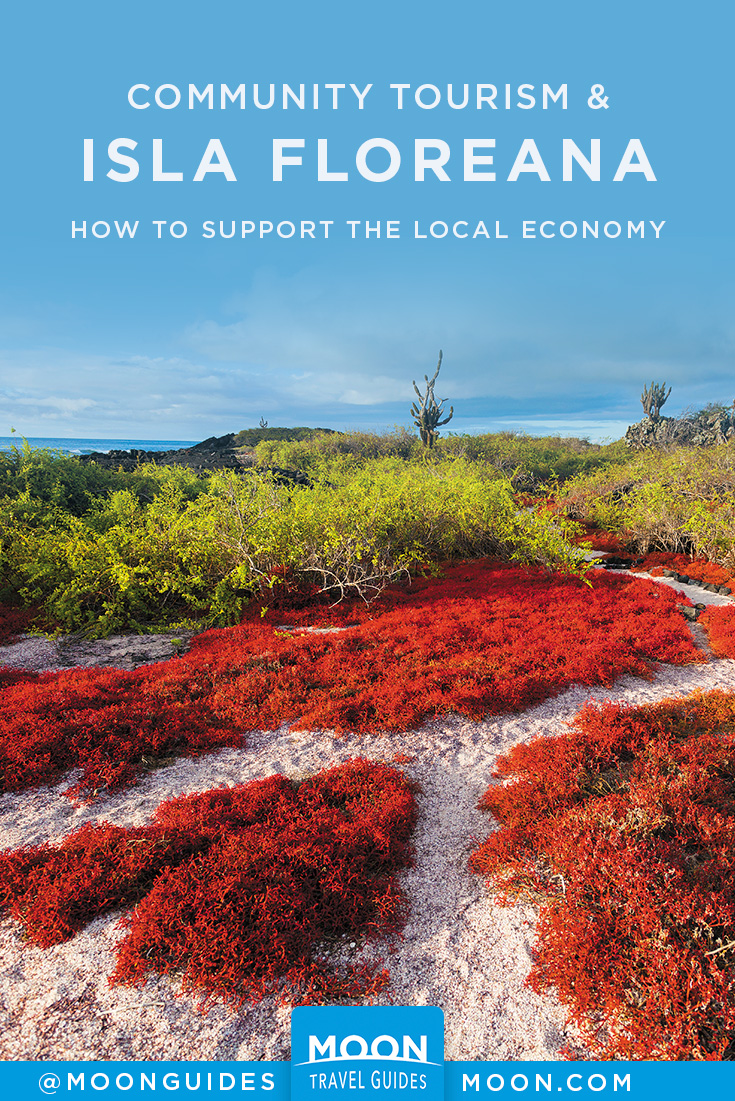

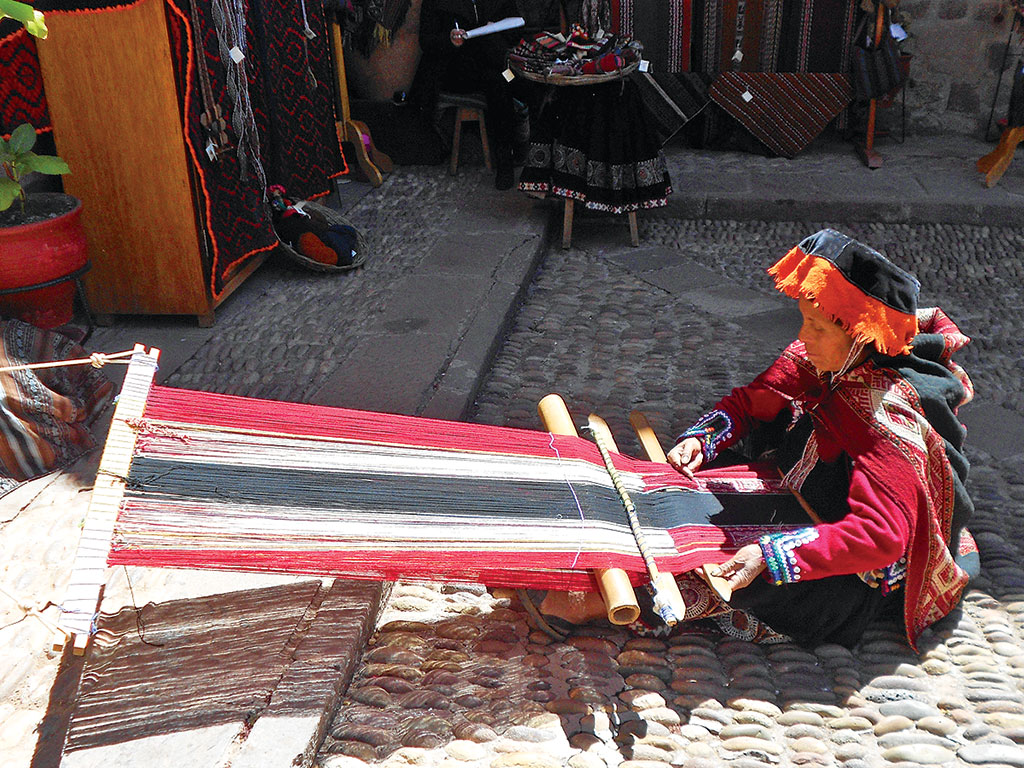 Peru's tourism has seen a massive boom in recent years. More than 3,000 tourists per day trample the grounds of the ancient Inca city, well above the limit set by UNESCO. Such popularity comes at a price: Because Machu Picchu is built on a humanmade mound of earth, the ground is comparatively soft and the site is actually sinking, albeit very slowly. Due to the influx of tourists, Peru is implementing new measures to visit Machu Picchu in order to ensure sustainability, including establishing two entry windows (6am-noon and noon-5:30pm), predetermined paths for tourists to walk on while in the sanctuary, and time limits at specific spots in the ruins.
If you’re headed to Machu Picchu, there are plenty of ways for you to minimize your environmental impact while making the most of your trip of a lifetime! Here's where to start.
Pass on Plastic
Every time travelers buy a plastic water bottle, they are contributing to a waste problem that is reaching epic proportions all over Peru. Nearly 200 million plastic bottles are produced every month in Peru alone, and a good chunk of these are consumed by tourists—who understandably need a few liters of purified water for each day in Peru. Here's what you can do to help:
Peru's tourism has seen a massive boom in recent years. More than 3,000 tourists per day trample the grounds of the ancient Inca city, well above the limit set by UNESCO. Such popularity comes at a price: Because Machu Picchu is built on a humanmade mound of earth, the ground is comparatively soft and the site is actually sinking, albeit very slowly. Due to the influx of tourists, Peru is implementing new measures to visit Machu Picchu in order to ensure sustainability, including establishing two entry windows (6am-noon and noon-5:30pm), predetermined paths for tourists to walk on while in the sanctuary, and time limits at specific spots in the ruins.
If you’re headed to Machu Picchu, there are plenty of ways for you to minimize your environmental impact while making the most of your trip of a lifetime! Here's where to start.
Pass on Plastic
Every time travelers buy a plastic water bottle, they are contributing to a waste problem that is reaching epic proportions all over Peru. Nearly 200 million plastic bottles are produced every month in Peru alone, and a good chunk of these are consumed by tourists—who understandably need a few liters of purified water for each day in Peru. Here's what you can do to help:


 If you're interested in community-based tourism in Cambodia, this quick round-up of the best performances, hotels, shops and more is an excellent place to start.
“Community-based tourism” is a hot topic in Cambodia, where many worthy projects compete with more conventional—and even downright crooked—enterprises in a rapidly growing economy. The below are guaranteed ways to put your money toward a good cause.
Sights and Performances
If you're interested in community-based tourism in Cambodia, this quick round-up of the best performances, hotels, shops and more is an excellent place to start.
“Community-based tourism” is a hot topic in Cambodia, where many worthy projects compete with more conventional—and even downright crooked—enterprises in a rapidly growing economy. The below are guaranteed ways to put your money toward a good cause.
Sights and Performances

 Richard P. Feynman to Frederich Hipp, April 5, 1961